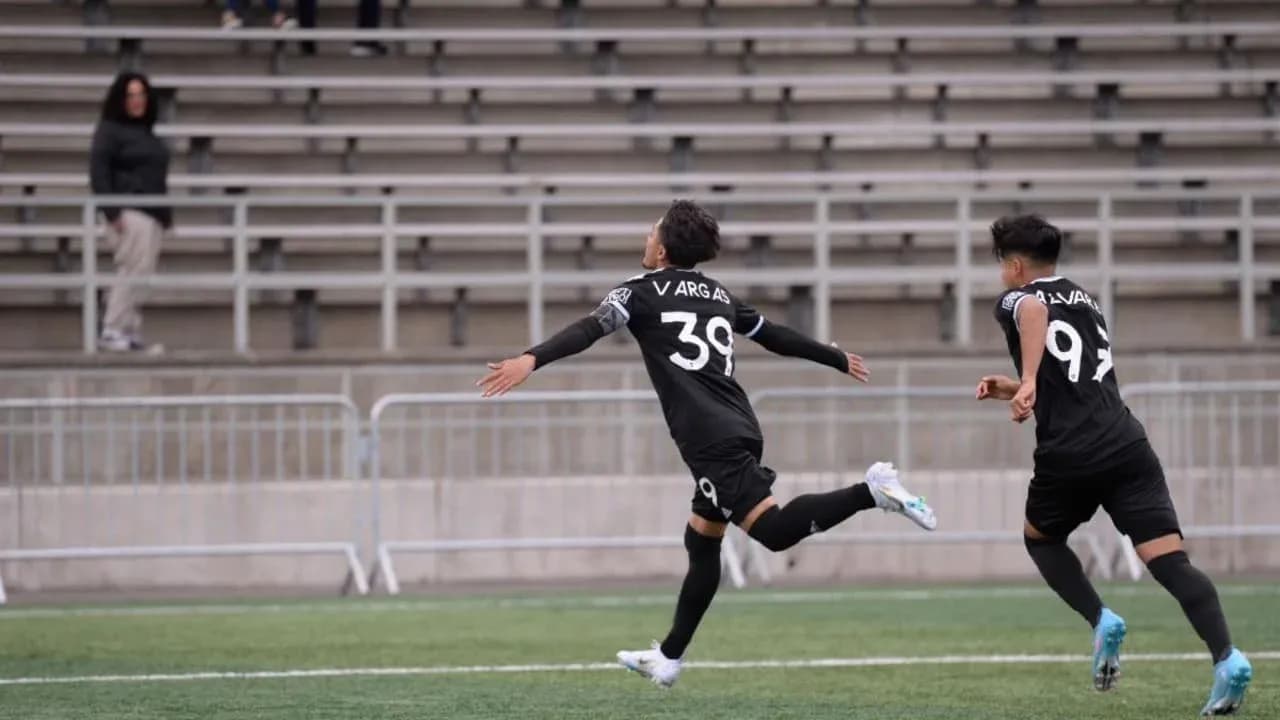
Columbus Crew II vs Toronto II: A Penalty Showdown
Historic Crew Stadium under the lights, a group-stage tie in MLS Next Pro that refused to resolve itself in 120 minutes. Columbus Crew II and Toronto II traded blows to a 2–2 draw, only for the visitors to hold their nerve from the spot, winning the shootout 3–1 after a long night that laid bare the strengths and flaws of two ambitious Eastern Conference projects.
I. The Big Picture – Diverging paths, converging on penalties
Following this result, Columbus Crew II remain one of the division’s more volatile sides. In total this campaign they have played 12 league matches, winning 7 and losing 5, without a single draw in regulation. Their goal difference overall is +1, with 22 goals for and 21 against, a statistical reflection of a team that lives on the edge.
At home, though, Columbus have been formidable. Across 6 home fixtures they have won 5 and lost just 1, scoring 13 and conceding 7. That translates to 2.2 goals scored at home on average and 1.2 conceded – the profile of a front-foot, risk-taking side that expects to dictate the tempo at Historic Crew Stadium.
Toronto II arrived as a different kind of chaos merchant. In total this campaign they have played 11 matches, with 5 wins and 6 losses, and no draws in regulation either. Their overall goal difference is exactly 0, with 19 goals for and 19 against, underscoring their tendency to trade chances rather than shut games down. On their travels, they have 3 wins and 4 defeats from 7 away matches, scoring 12 and conceding 12 – again, perfectly balanced in numbers, but rarely in mood.
In that context, a 2–2 that spilled into penalties felt almost inevitable: two teams that do not do stalemates forced into one, then separated only by the smallest margins from 12 yards.
II. Tactical Voids and Discipline – Edges and absences in the dark
With no formal injury list provided, both coaches appeared to lean into continuity and trust in their young cores. Federico Higuain set up Columbus Crew II around a spine that has grown used to high-scoring, high-risk football. L. Pruter started in goal, shielded by a defensive unit including B. Adu-Gyamfi, Q. Elliot, R. Aoki and I. Heffess. Ahead of them, the likes of T. Brown, K. Gbamble and J. Chirinos were tasked with connecting a mobile front line of T. Karumanchi, Z. Zengue and C. Adams.
Gianni Cimini’s Toronto II mirrored that youth-first approach. A. De Rosario anchored the XI, with R. Campbell-Dennis, R. Fisher, M. Chisholm and L. Costabile forming the defensive and build-up base. In midfield and attack, D. Dixon, B. Boneau, M. Stojadinovic, F. Bank, K. Kerr and A. Bossenberry gave Toronto layers of running and pressing options.
Disciplinary trends heading into this game framed a subtle tactical tension. Columbus, in total this campaign, have seen their yellow cards cluster in the 61–75 minute window, where 30.43% of their cautions arrive – a clear indicator of a team that often has to foul to regain control as matches open up. They also carry a sharp early-game edge: 100.00% of their red cards have come in the 0–15 minute range, hinting at an aggressive, sometimes overzealous start.
Toronto’s card profile is more evenly spread but still telling. In total this campaign, 25.00% of their yellows come between 31–45 minutes and 20.00% between 46–60, with another 20.00% in the 76–90 range. They tend to get dragged into duels as each half matures, a sign of a side that presses and counters rather than sitting in a low block.
Over 120 minutes here, that discipline equation mattered: Columbus needed to manage their emotional spikes, while Toronto had to avoid the creeping accumulation that often undermines their control late in halves.
III. Key Matchups – Hunter vs Shield, Engine vs Enforcer
Without explicit top-scorer data, the “Hunter vs Shield” duel becomes more structural than individual. Columbus’ attack at home has been prolific: 13 goals in 6 home matches, with an average of 2.2 goals per home game. That attacking wave, driven by the fluid movements of Z. Zengue and the work rate of C. Adams, was always going to stress a Toronto back line that, on their travels, concedes 1.7 goals per away match on average and has shipped 12 in 7 games.
The reverse battle was just as intriguing. Toronto II’s away output – 12 goals in 7 matches, an average of 1.7 on their travels – met a Columbus defense that, at home, usually allows 1.2 goals per game. Players like K. Kerr and F. Bank, supported by the runs of D. Dixon and the presence of A. Bossenberry, tested whether Columbus’ home solidity could survive 120 minutes of transition pressure.
In the “Engine Room”, Higuain leaned on the composure of T. Brown and the energy of K. Gbamble to knit play and protect the back line. Their task was to control the rhythm against Toronto’s central cluster of B. Boneau and M. Stojadinovic, who under Cimini are encouraged to break lines quickly and feed runners early. Over a long night, whichever engine tired first would concede territory and chances.
The benches offered different kinds of levers. Columbus’ options – S. Lapkes, G. De Libera, M. Nyeman, N. Rincon, C. Mrowka and C. Rogers – gave Higuain the ability to refresh legs in midfield and wide areas, maintaining intensity. Toronto’s deeper bench, with Z. Nakhly, D. Barrow, J. Nolan, J. Nugent, E. Omoregbe, T. Blyth, S. Pinnock, D. Nue-Brito and L. Dawson, allowed Cimini to rotate his front line repeatedly, crucial for sustaining pressing triggers into extra time.
IV. Statistical Prognosis – Margins, xG shadows and the penalty edge
Even without explicit xG numbers, the season data sketches the expected flow. Columbus at home, with 2.2 goals scored and 1.2 conceded on average, tend to generate more and better chances than their visitors. Toronto away, with 1.7 goals for and 1.7 against on their travels, are used to open, chance-heavy games but not necessarily to controlling them.
In total this campaign, Columbus have kept 2 clean sheets, both at home, while Toronto have 3 clean sheets overall, 2 of them away. Both can lock things down in moments, but their aggregate numbers suggest a match more likely to tilt toward attacking exchanges than defensive mastery – exactly what unfolded in a 2–2 that stretched to 120 minutes.
From the spot, the pre-game data tilted ever so slightly toward Toronto. In total this campaign, they had taken 1 penalty and scored it, a 100.00% conversion rate. Columbus, by contrast, had not yet been awarded a penalty and therefore had no competitive shootout reference in this dataset. In a razor-thin contest where the open-play balance roughly matched the season-long profiles, that marginal psychological edge from the spot aligned with the outcome: Toronto II, calm and clinical in the shootout, Columbus Crew II left to reckon with the cruelty of a night where their home dominance in league play could not quite carry them over the line.