
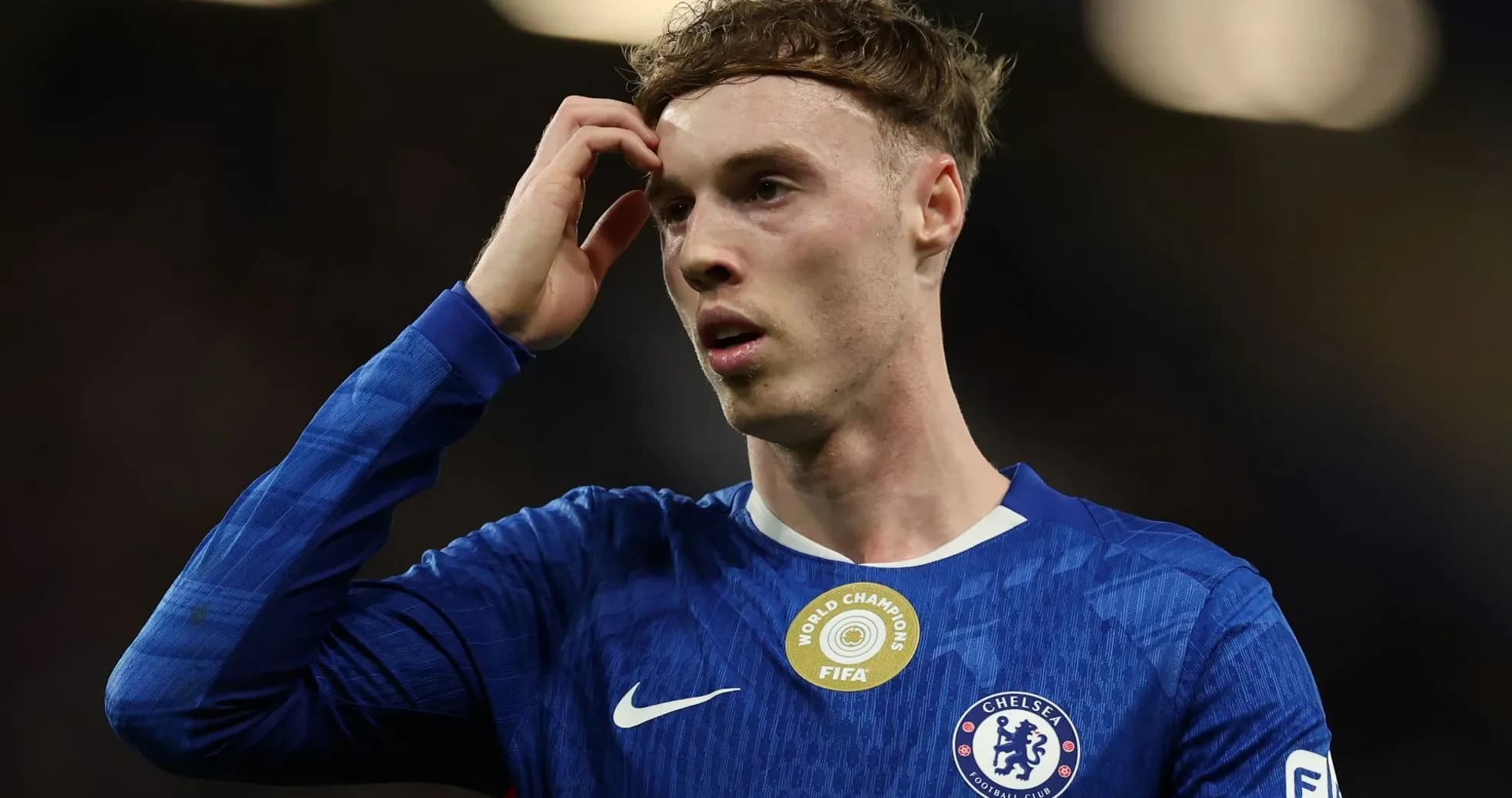
Cole Palmer's Rise at Chelsea: A Test of Consistency
Cole Palmer arrived at Chelsea like a lightning bolt. A young attacker Manchester City were prepared to let go, suddenly running games at Stamford Bridge, forcing his way into the England set-up and making his old manager Pep Guardiola look, briefly, as if he might have miscalculated.
That kind of rise creates noise. Hype. Expectation. It also creates a question that every young star eventually has to answer: was it a breakout, or just a bright flare?
For former Chelsea defender Frank Leboeuf, the answer lies in what comes next under new head coach Xabi Alonso.
Leboeuf, speaking to GOAL courtesy of Betinia NJ, did not hide his admiration for Palmer’s raw talent or the shock his emergence caused after leaving City. Guardiola, he suggested, may already regret allowing the forward to slip away.
“Coming from nowhere, that was crazy,” Leboeuf said, reflecting on Palmer’s explosion onto the Premier League stage in west London. The surprise was genuine, the impact immediate. But for a World Cup winner who has seen careers rise and fall at the highest level, one spectacular season is never enough.
You become a great player, Leboeuf stressed, when you repeat it. Again and again.
He pointed to the gold standard. Cristiano Ronaldo. Lionel Messi. Seventeen seasons at the top, delivering relentlessly. Even Kylian Mbappe, for all his brilliance, still has to complete the full arc of his career before the “legend” label can truly be fixed to his name.
That is the level of consistency Leboeuf believes defines greatness. Not the first explosion, but the fifth, tenth, fifteenth season in which you still bend games to your will.
The same logic, he argued, applies to international football. The first cap feels like a coronation. The shirt, the anthem, the pride. But in France, Leboeuf noted, you are not really considered an “international” until you reach 10 caps. The reasoning is brutal and simple: you must prove you belong there, not once, but over time.
Palmer, he feels, has not yet had that chance to establish such rhythm. The 14-cap forward has already tasted the national team environment, but his momentum has been checked.
Leboeuf sees reasons for that. Tactical choices that shunted him out to the right flank, away from his most natural zones. Coaching decisions that did not always play to his strengths. Injuries that broke his flow and blunted his edge. The result, in Leboeuf’s eyes, was a player unable to keep pushing, keep working, keep showing the full breadth of his ability week after week.
Yet the talent, he insists, has never been in doubt.
“You cannot deny it,” Leboeuf said. “Every time he touches the ball, something happens, or something can happen.” That sense of danger, of possibility, is what made Palmer such a revelation when he first arrived at Chelsea. It is also what makes his next step so compelling.
Because now comes the hard part.
Palmer’s omission from England’s World Cup squad cut deep. For Leboeuf, that decision should serve as a jolt, a sharp reminder that nothing is guaranteed, even for the most gifted.
He called it “a big slap in the face” – the kind of blow that can either bruise a player’s confidence or ignite his response. In Leboeuf’s view, it must be the latter. The message to Palmer is clear: go back to work. Strip it all back. Approach the game with humility. Prove it all over again.
Under Alonso, Chelsea will ask questions of themselves and of their young star. Can he adapt to a new manager’s ideas? Can he handle different demands, new roles, fresh scrutiny? Can he turn that initial burst of brilliance into a body of work that stands up to the harshest comparisons?
Palmer has already shown he can shock people. Now he has to show he can sustain it.



