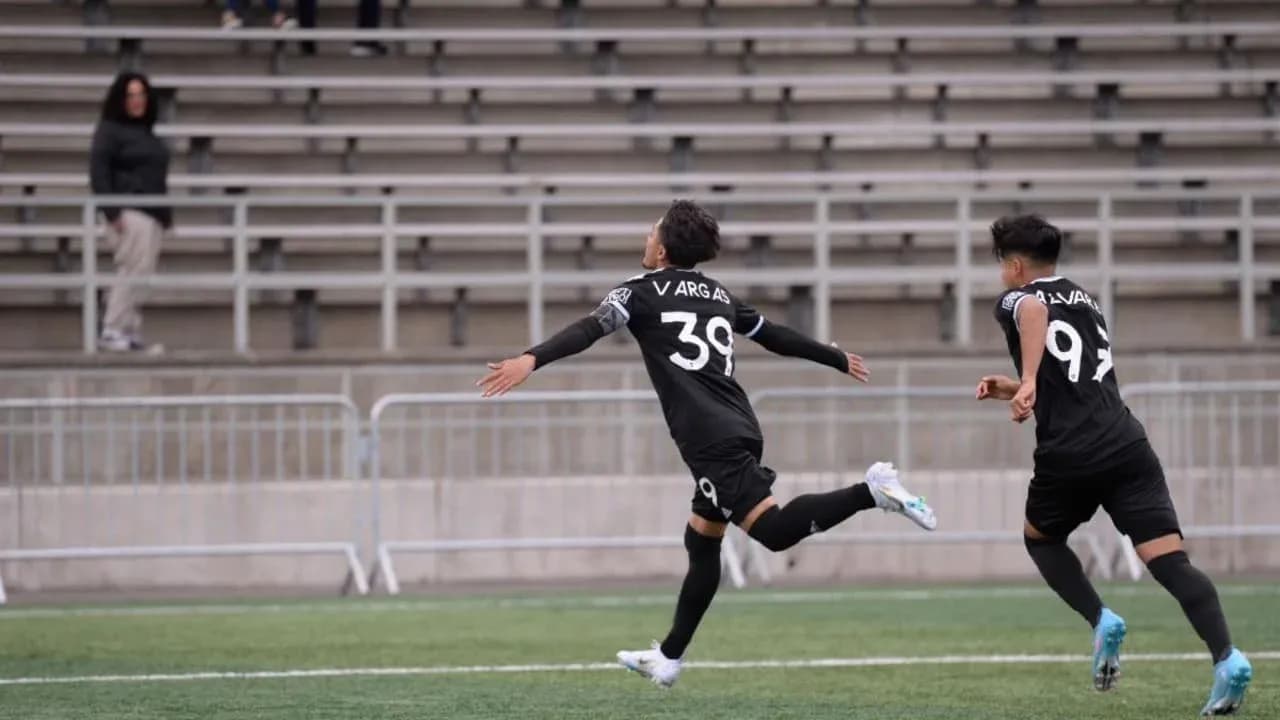
Chattanooga Edges Carolina Core 1–0: A Tactical Analysis
Under the Tennessee lights at Finley Stadium, Chattanooga edged Carolina Core 1–0, a narrow scoreline that echoed the broader gap between these two MLS Next Pro projects. Following this result, Chattanooga’s campaign snapshot is that of an ambitious, volatile contender: 11 matches played overall, 6 wins, 0 draws, 5 defeats, with 19 goals scored and 17 conceded. The overall goal difference of +2 (19 minus 17) reinforces the story of a side that plays on the edge, leaning into risk for attacking reward.
Within the Eastern Conference table, Chattanooga sit 6th with 19 points and a goal difference of +3 in that specific grouping, flagged for the promotion playoff track. Their Central Division rank is 3rd, again on 19 points and a goal difference of +3, underlining their status as a top-half side with genuine postseason aspirations.
Carolina Core arrive from a very different landscape. Across the season they have played 11 matches overall, winning just 2 and losing 9, with 13 goals scored and 24 conceded for an overall goal difference of -11 (13 minus 24). In the Central Division they are 7th; in the Eastern Conference, 15th with 8 points and a goal difference of -9 in that specific table. Their season is a struggle for stability, and this 1–0 defeat fits a pattern of narrow margins that too often tilt against them.
At home, Chattanooga’s identity is clear: 6 matches played at Finley, 4 wins, 0 draws, 2 defeats, 11 goals scored and 9 conceded. An average of 1.8 goals scored at home and 1.5 conceded speaks to a side that trusts its attacking patterns but still gives opponents a route back into games. On their travels, Carolina Core’s story is far more brutal: 6 away matches, 0 wins, 0 draws, 6 defeats, 4 goals scored and 14 conceded, with an away average of 0.7 goals for and 2.3 against. This was another chapter in that harsh away narrative.
Tactical Voids and Discipline
With no official missing-player list provided, both coaches leaned on their available cores. For Carolina, Donovan Ricketts built his starting XI around the spine of N. Holliday in goal, a defensive unit featuring N. Martinez, S. Yepes Valle, M. Diakite and D. Colon, and a midfield axis with R. Montenegro and T. Zeegers. Ahead of them, the likes of D. Diaz, T. Raimbault, D. John and A. Sumo were tasked with finding the transitions that could trouble Chattanooga’s high-risk structure.
Chattanooga, meanwhile, shaped their side around experience and balance. E. Jakupovic anchored the back, protected by a line including T. Robertson, F. Sar-Sar, M. Hanchard and A. Sorenson. In front, the trio of A. Garcia, L. Husakiwsky and S. Louis provided the connective tissue between defence and attack, with D. Mangarov, A. Krehl and Y. Cohen offering creativity and penetration higher up the pitch. The bench options – from the direct running of D. Barker and G. Huff to the fresh legs of A. Gordon and K. Tsokli – gave Chattanooga the ability to adjust tempo and shape as the game tightened.
Disciplinary trends heading into this match already hinted at tension points. Chattanooga’s season-long yellow-card distribution shows a clear spike in the 31–45 and 61–75 minute ranges, each at 25.00%, and a late-game surge at 76–90 minutes with 20.83% of their bookings. Their red cards are split evenly: 50.00% between 61–75 and 76–90, underlining how their aggressive edge can tip into risk as fatigue and game state bite.
Carolina’s yellow-card profile is more evenly spread but still intense in key windows: 21.21% between 46–60 minutes and 18.18% in each of the 16–30, 31–45 and 76–90 ranges. Their red-card history is brutally concentrated: 100.00% of their reds arrive between 46–60 minutes. That mid-second-half window is where their discipline has historically cracked – a crucial detail for any tactical preview and a live threat in a tight 1–0 game like this one.
Key Matchups: Hunter vs Shield, Engine Room Battles
Without official top-scorer or assist tables, the “Hunter vs Shield” narrative is built from structural roles rather than headline numbers. Chattanooga’s attacking “hunter” is not a single talisman but a collective: the interplay of Mangarov’s creativity, Cohen’s movement and Garcia’s ability to arrive from deeper zones. At home they average 1.8 goals, and the responsibility for that output is shared across the front six.
The “shield” Carolina bring on their travels is under pressure from the numbers alone: an away average of 2.3 goals conceded, 14 allowed in 6 road games, and no clean sheets anywhere this season. The back line of Martinez, Yepes Valle, Diakite and Colon, with Holliday behind them, is forced to absorb waves of pressure, and in this match they largely did – restricting Chattanooga to a single goal. Yet the structural weakness remains: Carolina struggle to protect their box for 90 minutes, especially as the game drifts into the second half where their disciplinary record darkens.
In the engine room, Chattanooga’s S. Louis and L. Husakiwsky form the pivot that allows Mangarov to drift into pockets. Their task is to control tempo, recycle possession and prevent Carolina’s transitions. Opposite them, Montenegro and Zeegers carry the dual burden of shielding the back four and launching counters to feed Diaz, Raimbault and Sumo.
This central battle is where Chattanooga’s season-long aggression meets Carolina’s fragility. Chattanooga’s card spikes late in halves show they press and compete hard in midfield; Carolina’s mid-second-half red-card vulnerability suggests that when games become stretched, their engine room can lose control. In a 1–0 contest, that psychological and physical tipping point is decisive.
Statistical Prognosis and Tactical Verdict
From a statistical perspective, Chattanooga’s win aligns with the underlying trends. At home they score 1.8 and concede 1.5 on average; Carolina away score 0.7 and concede 2.3. A 1–0 scoreline is actually kinder to Carolina’s defence than the season pattern suggests, but entirely consistent with their attacking struggles on the road.
Chattanooga’s overall goal difference of +2 and Carolina’s -11 underline the gap in defensive solidity. Chattanooga, with 2 clean sheets at home in total and 2 overall, are slowly learning how to close games out; Carolina, with 0 clean sheets anywhere, continue to search for a defensive platform.
In xG terms – even without explicit numbers – the profiles are clear. Chattanooga’s home scoring average and Carolina’s away concession rate point to a higher expected goals figure for the hosts, while Carolina’s meagre away scoring average suggests a low xG output for the visitors. The 1–0 final feels like a match where Chattanooga probably created the better chances but were not ruthless enough to inflate the scoreline, while Carolina relied on isolated moments rather than sustained pressure.
Following this result, the tactical verdict is that Chattanooga’s high-variance, front-foot identity remains intact but is beginning to harden with better game management. Carolina, meanwhile, continue to live on the margins: a team whose structure and discipline wobble in the critical middle and late phases of matches, and whose away form – 6 defeats in 6 – keeps them anchored near the bottom.
For Chattanooga, the path toward the playoffs runs through sharpening that collective “hunter” into a more efficient finishing edge. For Carolina, survival and improvement depend on turning their embattled “shield” into something more resilient, especially in that treacherous 46–60 minute window where their season so often unravels.