Champions League Semi-Final: PSG Edges Bayern in a 5–4 Thriller
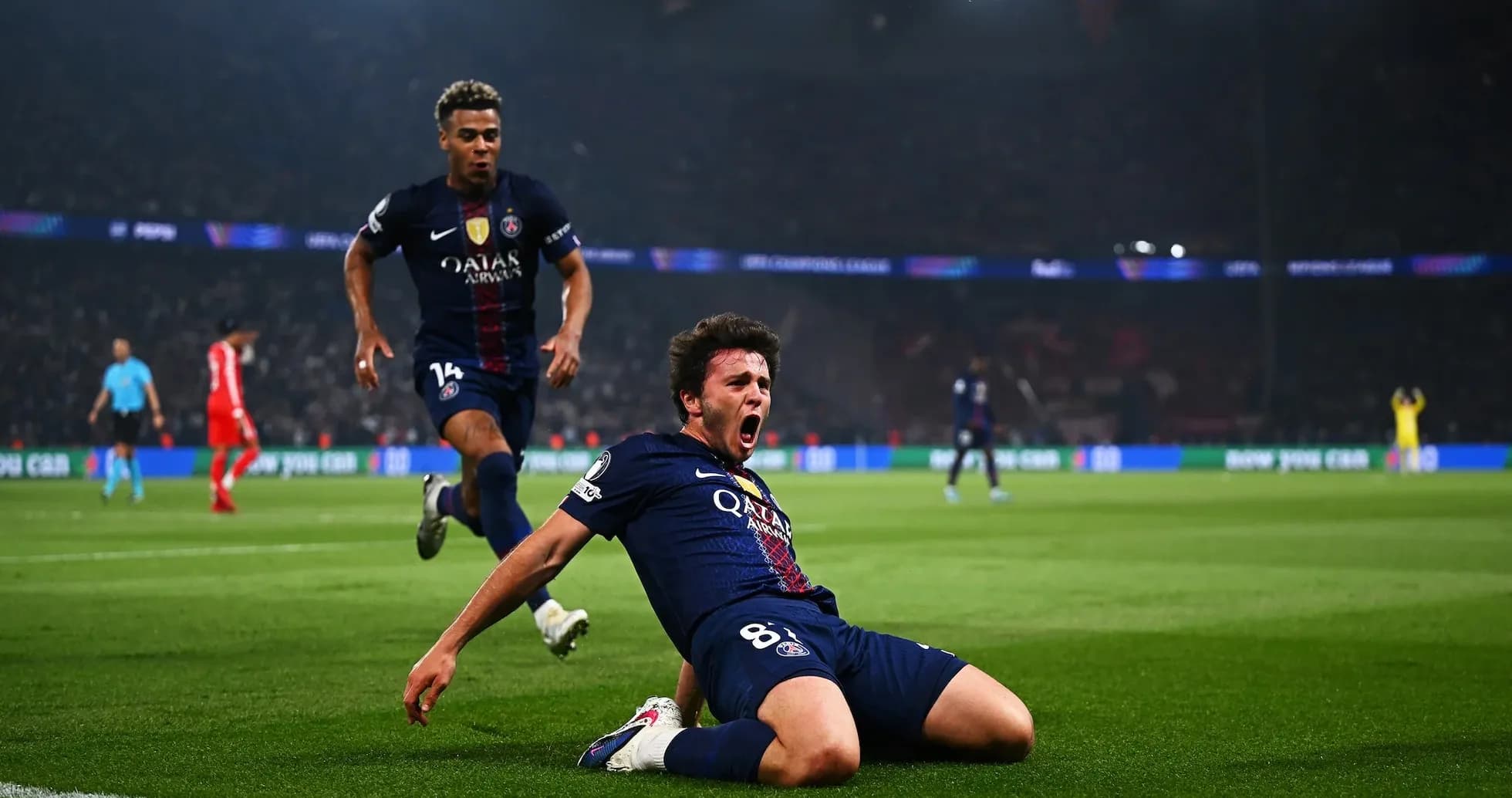
Under the lights of Parc des Princes, a 5–4 Paris Saint Germain win over Bayern München turned a Champions League semi‑final into a fever dream. Following this result, the tie feels less like a chess match and more like a shoot‑out between two attacking ideologies, each with clear strengths and structural fault lines.
I. The Big Picture – Two Superpowers, One Chaotic Canvas
This is not a meeting of underdogs. In the UEFA Champions League standings, Bayern arrive as a machine: 2nd overall with 21 points from 8 matches, 7 wins and just 1 defeat, a goal difference of 14 built on 22 goals for and 8 against. Paris Saint Germain, 11th overall with 14 points, are more volatile: 4 wins, 2 draws, 2 defeats, but an even more explosive goal profile – 21 scored and 11 conceded, a goal difference of 10.
The seasonal DNA confirms it. Overall this campaign, PSG have played 15 Champions League matches, winning 10 and losing only 2. They score an average of 2.9 goals per game overall, rising to 3.1 at home, but concede 1.4 overall and 1.8 at home. Bayern, across 13 matches, are even more ruthless going forward: 3.2 goals scored per game overall, with 3.3 at home and 3.1 on their travels. They concede 1.5 overall, but that jumps to 1.9 away.
The 5–4 scoreline is not an outlier; it is the logical extreme of two teams whose offensive profiles have been threatening to produce a game like this all season.
II. Tactical Voids – Absences and Discipline in a Wild Semi‑Final
Both squads came in bruised. For PSG, Q. Ndjantou was ruled out with a muscle injury, trimming Enrique Luis’s defensive depth. Bayern’s list was longer: T. Bischof (calf), M. Cardozo (thigh), S. Gnabry (muscle), R. Guerreiro (muscle), L. Karl (muscle), C. Kiala (ankle), W. Mike (hip) and B. Ndiaye (inactive) all missed the fixture. In pure numbers, Vincent Kompany’s rotation options, especially in wide and full‑back zones, were significantly compromised.
Disciplinary trends framed the risk. Heading into this game, PSG’s yellow cards had a clear late‑game spike: 45.45% of their yellows arrived between 76–90', and another 18.18% in 91–105'. Bayern mirrored that volatility: 37.50% of their yellows came in the 76–90' window, with consistent bookings from 16–75'. Both teams also carried red‑card threats: PSG’s I. Zabarnyi and L. Hernández each had one red in the competition, while Bayern’s L. Díaz also had a red. In a semi‑final played at maximum intensity, this disciplinary profile made a late sending‑off feel perpetually possible, even if it did not materialise here.
III. Key Matchups – Hunter vs Shield, Engine Room vs Press
Hunter vs Shield: Kane and Kvaratskhelia against fragile back lines
H. Kane arrived as the competition’s purest finisher. For Bayern he had 13 goals and 2 assists in 12 appearances, with 35 shots (24 on target) and an 8.01 average rating. He had already won 2 penalties and, crucially, had missed 1 from the spot – a reminder that even his ruthlessness has a small crack. Supported by L. Díaz (7 goals, 3 assists) and M. Olise (5 goals, 6 assists), Bayern’s front line is built to overwhelm rather than outlast.
Yet PSG’s defensive numbers signposted vulnerability. At home, they concede an average of 1.8 goals, with only 2 clean sheets in 8 home fixtures. Even with Marquinhos and W. Pacho anchoring the line, and N. Mendes and A. Hakimi providing width, this is a unit that bends and sometimes breaks under sustained pressure.
On the other side, K. Kvaratskhelia has been PSG’s talismanic “hunter”: 10 goals and 5 assists in 14 appearances, with 28 shots and 16 on target. His 7.73 rating, 45 dribble attempts (23 successful) and 148 duels (71 won) show a winger who does not just finish moves but initiates and sustains them. O. Dembélé (6 goals, 2 assists) and D. Doué (5 goals, 4 assists) complete a front three that thrives in chaos.
Bayern’s “shield” has been stronger at home than away. On their travels they concede 1.9 goals per game, with 13 conceded in 7 away matches and no away clean sheets at all. Even with J. Tah and D. Upamecano in the XI, and J. Stanisic and A. Davies flanking them, this is a back four that struggles to fully control high‑tempo, wide‑space games like the one at Parc des Princes.
Engine Room: Vitinha and Neves vs Kimmich and Pavlovic
If the scoreline belonged to the forwards, the structure of the match belonged to the midfield.
Vitinha has been PSG’s metronome: 15 appearances, all starts, 1,519 passes at 93% accuracy, 6 goals and 1 assist. He is both a controller and a late‑arrival threat, with 24 tackles, 1 blocked shot and 16 interceptions underpinning his work without the ball. Alongside him, J. Neves and W. Zaire‑Emery form a young, aggressive core that allows Enrique Luis to commit both full‑backs high.
For Bayern, J. Kimmich and A. Pavlovic are the hinge of Kompany’s 4‑2‑3‑1. Their task in this tie is brutal: screen Kane’s supply line while resisting PSG’s central press and the counter‑press led by Vitinha and Doué. M. Olise, operating as the creative fulcrum between the lines, carries the load of progression and final‑third invention – 583 passes, 32 key passes, 66 dribble attempts (42 successful) and 6 assists mark him as the competition’s top provider.
The battle here is not just about who has more of the ball, but who can protect their full‑backs. Hakimi, already with 6 assists from right‑back, loves to surge beyond Dembélé. Davies does the same for Bayern. The midfield that covers those vacated channels more intelligently will tilt the tie.
IV. Statistical Prognosis – xG Tilted, Defences Exposed
Even without explicit xG values, the shot and goal profiles offer a clear prognosis. Heading into this game, PSG’s attack at home (3.1 goals scored on average, 25 home goals in 8 matches) against a Bayern away defence conceding 1.9 per match was always likely to generate a high‑xG environment. Bayern’s own attack – 3.1 goals per away game, 22 away goals in 7 matches – against a PSG home defence conceding 1.8 per match pointed the same way.
Both sides are perfect from the spot as teams this season – PSG have scored 2 of 2 penalties, Bayern 4 of 4 – but their individual takers are not flawless: Kane and Vitinha have each missed one, and Dembélé and B. Barcola have also missed penalties. In a tie decided on fine margins, this matters.
Following this 5–4, the statistical story is stark: these are two of Europe’s most potent attacks, each averaging over 3 goals per game in their strongest phases, protected by defences that concede between 1.4 and 1.9 goals on the relevant home/away splits. The xG balance for any future leg will lean heavily towards another high‑scoring contest, with PSG’s fluid 4‑3‑3 and Bayern’s relentless 4‑2‑3‑1 almost guaranteed to trade big chances.
In narrative terms, this semi‑final has not resolved the question of superiority; it has only clarified the terms of engagement. The hunter will not be stopped. The shield will have to score.