Canada's Landmark 6-0 Victory Over Qatar in World Cup
Canada came for a statement. They left with a landmark.
A 6-0 demolition of Qatar in Vancouver delivered Canada’s first-ever men’s World Cup victory, a scoreline so emphatic it felt like a country crossing a threshold in real time. This was supposed to be a cautious step into the tournament. It turned into a stride.
It was also a night scarred by a single, brutal moment.
A party painted red
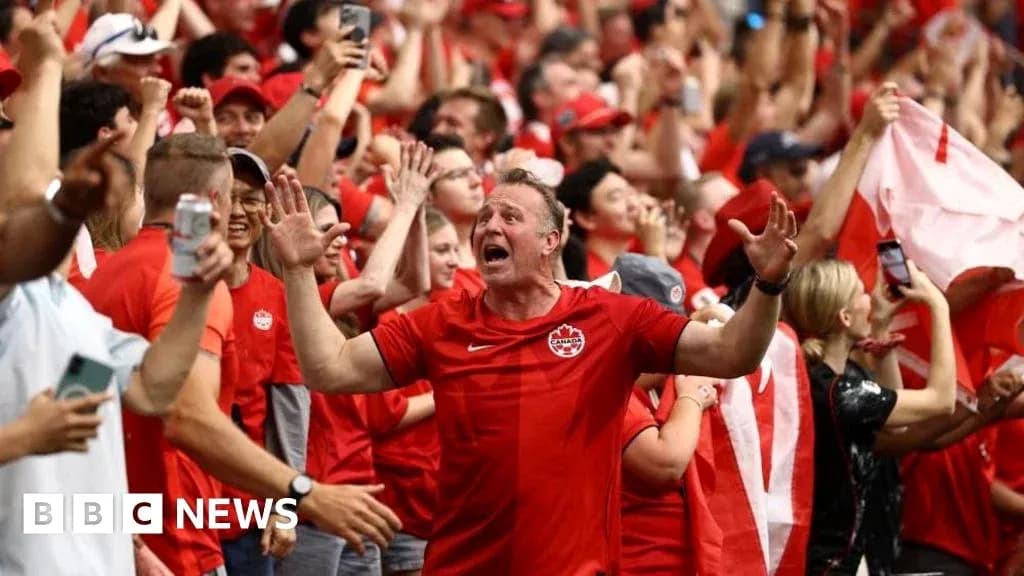
Hours before kick-off, the city looked less like a host and more like a believer. Thousands of supporters marched the “last mile” to the stadium under a haze of red smoke, drums and chants echoing off downtown streets. Inside, 52,000 fans — almost all in red and white — turned the place into a bowl of noise.
From Granville Street watch parties in Vancouver to packed neighbourhood bars in Toronto, the country stopped to watch a team that, for decades, had lived in the shadows of its own hockey rinks.
Dave Di Cola, a longtime follower of Canadian football, settled into one of those bars with what he called “reserved optimism”. This is Canada, after all. In football, the script rarely favours them.
It didn’t take long for that instinctive caution to be blown apart.
Goals, red cards, and a statement
Canada hit their stride early and never let go. Three goals before half-time turned anxiety into disbelief, then into something more powerful: conviction.
Qatar’s collapse, worsened by two red cards, tilted the contest heavily, but the Canadians didn’t ease off. They pressed, harried, and kept scoring, treating the occasion like an opportunity to announce themselves rather than simply survive it.
Jonathan David, the team’s clinical spearhead, walked away with three of the six goals, his hat-trick instantly becoming part of Canadian sporting folklore. On social media, one image captured the mood: a fan in a Connor McDavid hockey jersey, the “Mc” covered by a taped-on “J” to read “Javid” in honour of David. A hockey country, improvising a football identity on the fly.
For Di Cola and fans like him, this was more than a big win. It was a kind of vindication.
“Canada soccer has always been kind of a joke. It’s always secondary,” he said. Watching the scenes in Vancouver and across the country, the emotion caught up with him. The support, he admitted, “nearly brought a tear to my eye.”
On the pitch, Les Rouges looked nothing like an afterthought.
Triumph interrupted
Then came the silence.
Midfielder Ismaël Koné, one of the heartbeat players of Jesse Marsch’s side, went down in a challenge and stayed down. The celebrations, the swagger, the sense of fun — all of it froze as it became clear this was serious.
Teammates rushed to him, forming a protective ring while medics worked. The stadium, so loud minutes earlier, dropped into a hush that felt out of place on such a night.
Koné’s leg break ended his tournament on the spot. For a team that had leaned on the Ottawa native’s energy and intelligence in midfield, it was a gut punch. Marsch has called him “a big part of the heart of our team,” and in that moment you could see why: players’ faces told the story as he was taken off.
The response from those left on the pitch said even more.
Nathan Saliba came on for Koné and, shortly after, drove home Canada’s fourth goal. He didn’t sprint to the corner flag or launch into a rehearsed celebration. He held up Koné’s jersey, a simple tribute that cut through the noise.
The rout continued, but from that point it carried a different weight.
A nation watches, and listens
By Friday morning, Koné had undergone surgery and turned to Instagram to speak to his teammates.
“What you guys did yesterday will stay with me forever,” he wrote, a message that underlined how much the performance — and their reaction to his injury — meant inside the camp.
In the dressing room after the match, the team received an unlikely locker-room voice: Prime Minister Mark Carney. He didn’t talk about tactics or rankings. He talked about character.
He praised the group for showing “a level of character that some people never achieve” in the way they handled the shock of Koné’s injury under the glare of a global audience.
“You showed it when the entire country and a good part of the world is watching,” Carney told them. “And if they didn’t watch they would have watched the highlights tomorrow.”
On a night built for highlight reels, that line landed. Canada weren’t just scoring goals; they were being watched, judged, and, for once, respected.
Where does this night sit in Canadian sport?
Canadian sport has its pantheon: Sidney Crosby’s golden goal in Vancouver in 2010, the Toronto Raptors toppling the Golden State Warriors in 2019, the women’s football team standing atop the podium in Tokyo in 2020.
Di Cola is clear-eyed about where this result fits. Beating Qatar 6-0 in a group match does not yet belong beside those moments. “A long way to go,” he said of this team’s journey.
He’s right. This wasn’t a final, or even a knockout tie. Qatar finished with nine men. The context matters.
But something shifted.
The scale of the crowd. The marches and flares. The jersey taped over for Jonathan David. The way an entire country seemed to lean in, not out, when one of their own lay stricken on the turf. All of it pointed to a nation that no longer treats men’s football as a curiosity.
The win alone doesn’t make Canada a “soccer nation.” The reaction might.
Next comes Switzerland, a far sterner test and a better measure of where this team truly stands. The margin for error will shrink. The stage, though, has been set.
Canada have their first World Cup win. The question now is whether it becomes a footnote, or the opening chapter of something bigger.