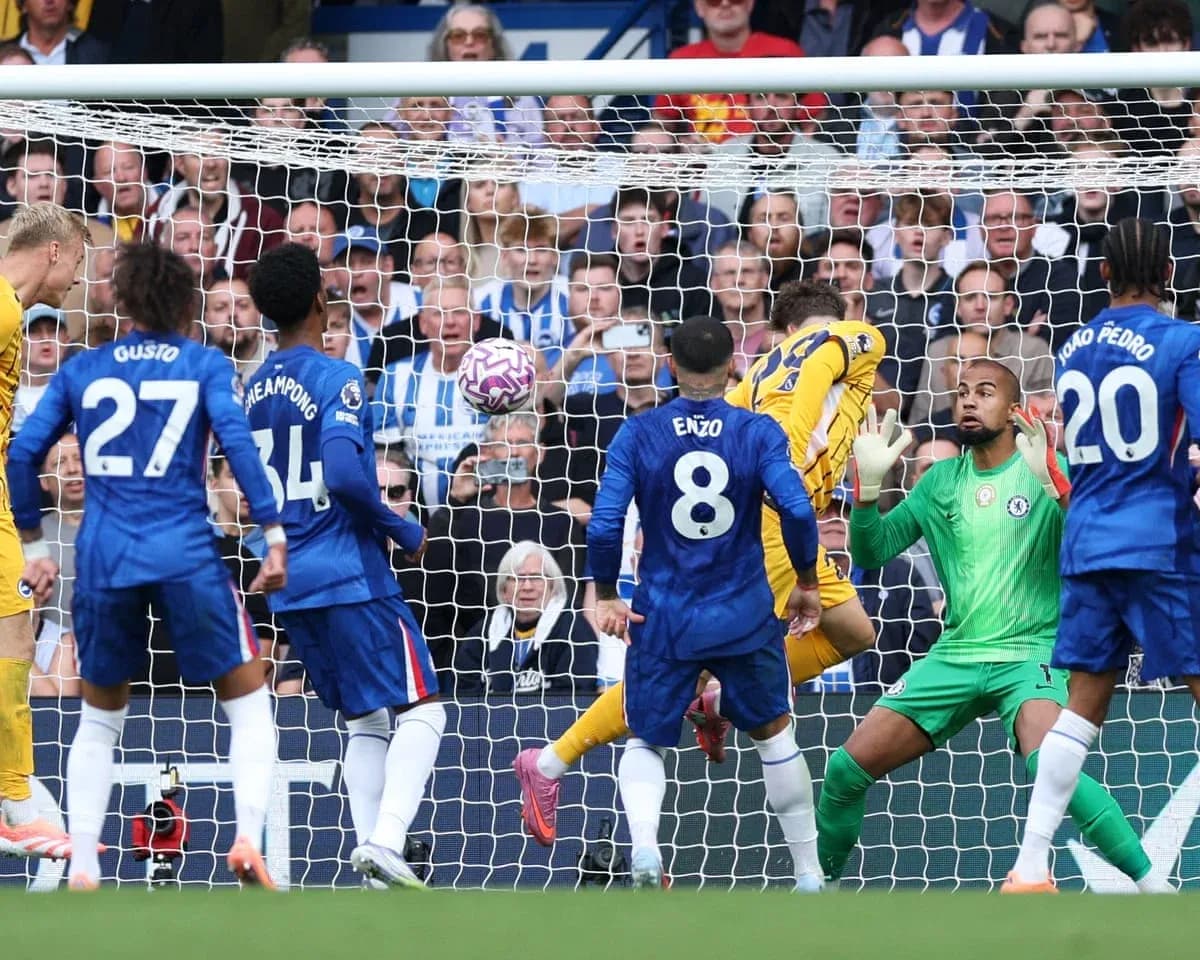
Brighton vs Chelsea: Premier League European Qualification Clash
At the Amex Stadium in a late-April Premier League fixture (Regular Season - 34), Brighton host Chelsea in what is effectively a European qualification six-pointer. In the league phase, Brighton sit 10th with 46 points and a +6 goal difference (43 scored, 37 conceded), while Chelsea are 6th on 48 points with a +12 goal difference (53 scored, 41 conceded). With only a small gap between mid-table and the Europa League places, this game carries significant weight for Chelsea’s push to consolidate a European spot and for Brighton’s outside bid to stay in touch with the upper half and keep late European hopes alive.
Head-to-Head Tactical Summary
The recent head-to-head record tilts towards Brighton, especially at home. On 27 September 2025 at Stamford Bridge, Brighton came from behind to win 3-1 (HT 1-0 to Chelsea), showing strong second-half resilience away. Earlier in 2025, on 14 February at the American Express Stadium, Brighton produced a dominant 3-0 home win over Chelsea (HT 2-0), underlining their ability to control the game on their own pitch. In the FA Cup on 8 February 2025, also at the American Express Stadium, Brighton edged Chelsea 2-1 (HT 1-1), confirming a pattern of narrow but effective home wins in knockout intensity. Going back to 28 September 2024 at Stamford Bridge, Chelsea won 4-2 (HT 4-2), in a wide-open match that exposed both defences. On 15 May 2024 at the American Express Stadium, Chelsea took a 2-1 away win (HT 1-0 to Chelsea), showing they can still be effective on the counter in Brighton’s stadium. Overall, Brighton have recently been strong at home in this matchup, while Chelsea’s successes have come either in high-scoring home games or via efficient away counter-attacks.
Global Season Picture
- League Phase Performance: In the league phase, Brighton’s profile is balanced mid-table: 46 points from 32 matches, with 43 goals for and 37 against, reflecting a solid but not explosive attack and a relatively stable defence. Chelsea, in contrast, have a stronger attacking output with 53 goals for and 41 against in 32 games, collecting 48 points. Their higher goal difference (+12 versus Brighton’s +6) points to a more productive, if occasionally exposed, approach.
- All-Competition Metrics: Across all phases of the competition, Brighton average 1.3 goals scored per match and 1.2 conceded, with their goals for split 24 at home and 19 away. Their use of a 4-2-3-1 in 27 matches suggests a structured, possession-oriented setup, backed by eight clean sheets and only seven matches without scoring. Chelsea, across all phases of the competition, show a more aggressive attacking profile with 1.7 goals scored per match and 1.3 conceded, including 30 away goals at an average of 1.9 per away game. They also favour 4-2-3-1 (28 matches), combining an attacking threat with nine clean sheets and relatively few blanks (five failed to score), but with a defence that still allows 1.3 goals per match.
- Form Trajectory: In the league phase, Brighton’s form string “WWWLW” signals an upward curve: three consecutive wins, a setback, then another win, indicating momentum and confidence heading into this fixture. Chelsea’s league form “LLLWL” points to a downturn: three straight losses, a single win, then another defeat. That sequence reflects a side whose European-chasing position is under pressure, with this match potentially a pivot point between stabilising their campaign or slipping back towards the chasing pack.
Tactical Efficiency
Across all phases of the competition, Brighton’s attacking efficiency is steady rather than explosive (1.3 goals per match) and paired with a defence that concedes 1.2, suggesting a controlled but relatively fine-margin style. Their clean sheets (8) and preference for 4-2-3-1 support a compact, possession-based approach that tries to limit chaos. Chelsea’s all-competition averages (1.7 goals scored, 1.3 conceded) indicate a more expansive, higher-variance model: they create and convert more, especially away (1.9 goals per away game), but accept defensive risk. When mapped onto an implied attack/defence index, Chelsea’s attack rates clearly above Brighton’s season average, while Brighton’s defence is marginally tighter than Chelsea’s on a per-game basis. This sets up a tactical clash where Chelsea’s higher attacking ceiling meets Brighton’s slightly more controlled defensive structure, particularly at home, where Brighton concede only 1.1 goals per game across all phases.
The Verdict: Seasonal Impact
This fixture has clear implications for the European race and the shape of the upper mid-table in 2026. A Brighton win would move them above Chelsea on the night, flipping the positions around the European places and turning a mid-table campaign into a genuine late push for continental qualification. It would also extend their strong recent home dominance over Chelsea, reinforcing the Amex as a difficult venue and adding pressure on Chelsea’s project. A Chelsea victory would stabilise their Europa League trajectory, rebuild confidence after a poor “LLLWL” league run, and create a meaningful points buffer over the teams clustered around mid-table, including Brighton. A draw would marginally favour Chelsea, preserving their lead but leaving the door open for rivals to close in. Strategically, this match is less about the title and more about securing or contesting European access; its outcome will likely define whether Chelsea can consolidate a top-6 finish and whether Brighton can convert good underlying performances and recent form into a late-season surge towards Europe.