Brazil's Early World Cup Exit: What Went Wrong Against Norway?
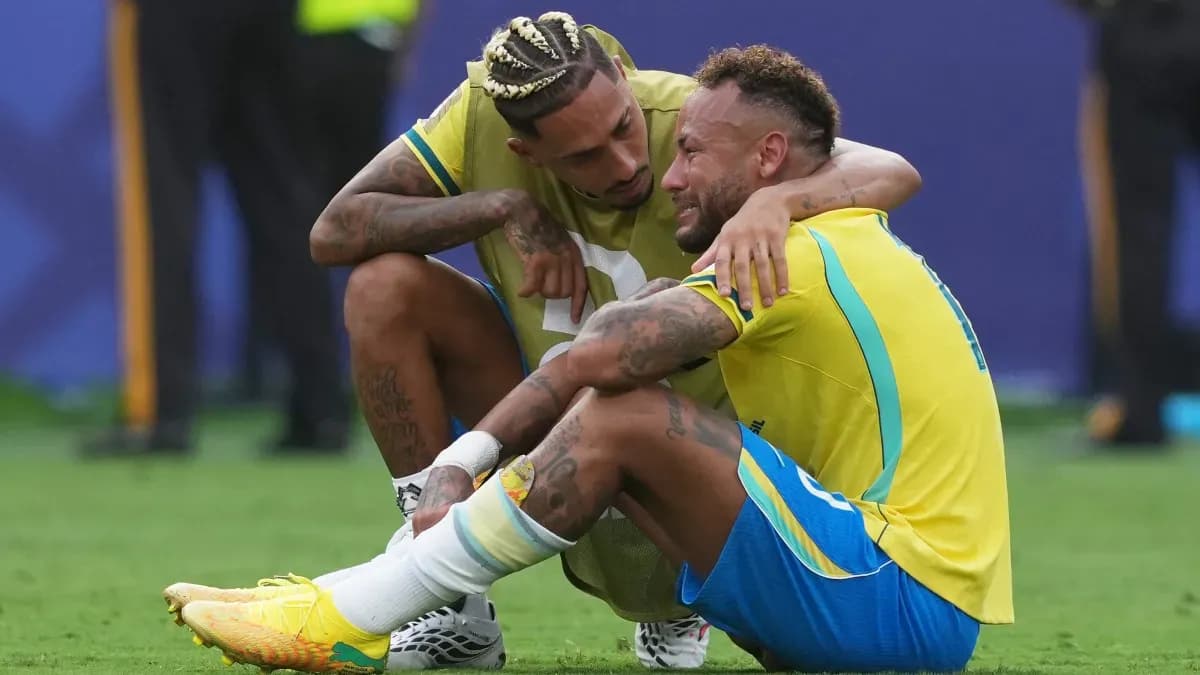
Brazil's early departure from the 2026 FIFA World Cup marked another painful chapter in their recent history. The 2-1 loss to Norway, led by Erling Haaland, at MetLife Stadium ended Carlo Ancelotti's campaign in the Round of 16. This result added to Brazil's pattern of falling short, as it was the fifth time since their last title in 2002 that they failed to reach the semifinals. Their only semifinal appearance during this span ended in a crushing defeat to Germany on home soil.
Missed Opportunities Defined Their Fate
The most glaring issue for Brazil was their inability to convert chances. Across five games, they consistently underperformed against expected goals (xG) metrics. Although they scored 10 goals on an xG of 12.02, much of that came from a single dominant match against Haiti where they netted four goals on 1.75 xG. Excluding that game, Brazil managed just six goals from 10.27 xG. In the knockout match, key moments like Bruno Guimaraes' missed penalty and Endrick's failure to finish a one-on-one chance with the goalkeeper proved decisive. Igor Thiago’s poor performance in the opener against Morocco also cost them early momentum. Vinicius Jr. showed his scoring instincts, but he lacked adequate support.
Midfield Problems Forced Tactical Changes
The midfield struggled heavily, forcing Ancelotti to rethink his approach. Casemiro, despite a strong season at Manchester United, appeared worn down and was a liability in several areas besides aerial duels. Though substituted at halftime twice, he still started most matches. Lucas Paqueta offered little before injury sidelined him, leaving Bruno Guimaraes burdened with too many roles—defending, maintaining possession, resisting pressure, and creating plays. This overwhelming responsibility limited Guimaraes’ impact and stifled Brazil’s rhythm.
Defensive Lapses at Critical Times
The center-back pairing, expected to be a pillar with stars Marquinhos and Gabriel, faltered under pressure. Gabriel especially struggled, highlighted by his failure to contain Haaland on Norway’s opening goal. The defenders often retreated too far when opponents pressed forward and rarely applied enough pressure, evident when Haaland scored his second goal unchallenged inside the box.
Injuries Weakened Key Positions
Injuries to Raphinha and Lucas Paqueta severely thinned Brazil's squad. Raphinha’s absence was especially damaging. The young Bournemouth player Rayan who replaced him could not replicate Raphinha’s world-class off-ball movement and attacking threat. At Barcelona, Raphinha had developed into a vital partner for Vinicius Jr., and without him, Brazil lost much of their offensive balance.
Ancelotti Outmaneuvered by Norway’s Coach
During the knockout match, Stale Solbakken outcoached Carlo Ancelotti. Aware of Brazil’s midfield weaknesses, Norway chose to accept possession dominance from Brazil, betting that Brazil would struggle to break them down and eventually overcommit offensively. Solbakken explained how Norway aimed to slow the game and avoid dangerous counterattacks by staying patient. This tactic frustrated Brazil and played into Norway’s strength, particularly feeding Haaland scoring chances.
"That was our plan, to keep the ball as much as we could and from the beginning we knew we would have the ball," said Solbakken. "We wanted to be slow. Perhaps what we did wrong in the first half was we played two or three balls into the middle where they counter-attacked against us, that's why we made the substitutions."
Ultimately, Brazil fell victim to the strategy they hoped would control the match. Despite Ancelotti’s reputation as a top coach, he was decisively outplayed tactically on this occasion.