Borussia Mönchengladbach Appoint Alexander Blessin to Tackle Crisis
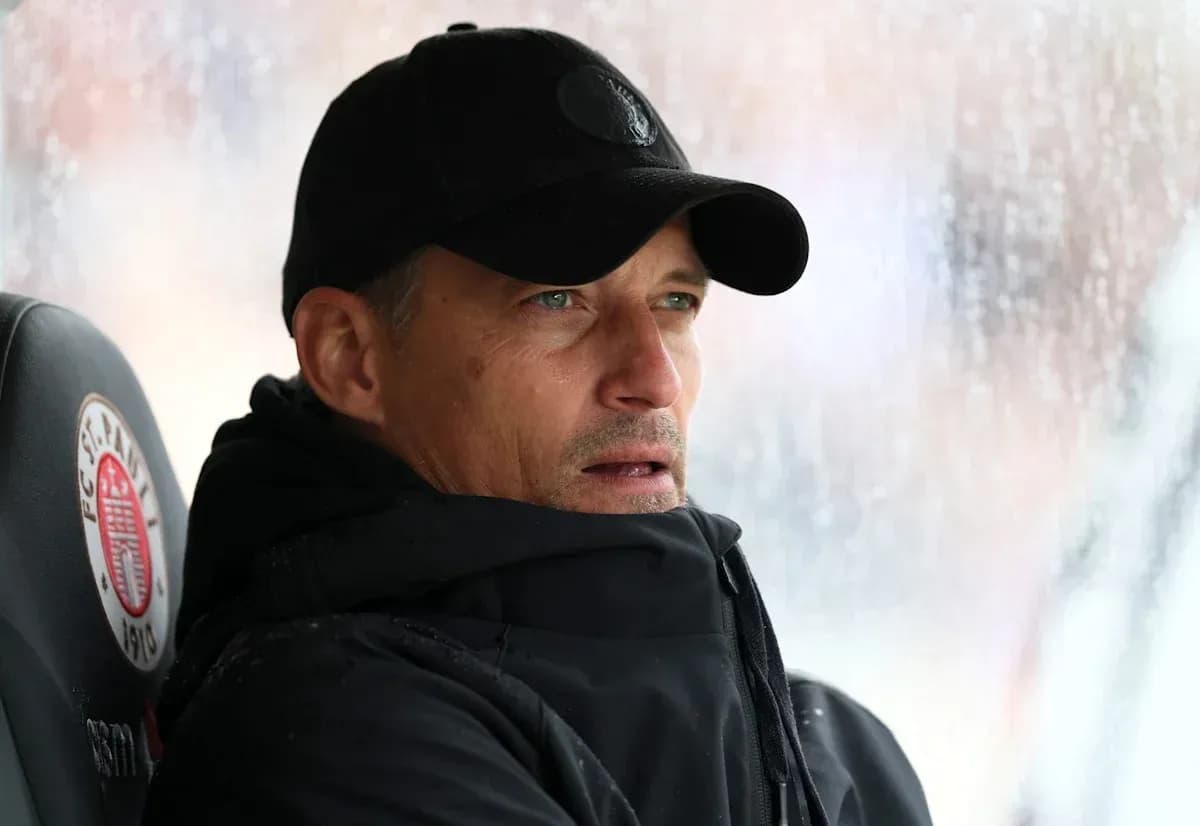
Borussia Mönchengladbach have turned to Alexander Blessin as the man to drag them out of crisis, handing the 53-year-old a contract through 2028 and a rescue job of real weight.
Just four months after going down with FC St. Pauli, Blessin is back in the Bundesliga. He will be unveiled on Wednesday alongside sporting director Rouven Schröder, stepping into a dugout still ringing from a 5-0 humiliation in Freiburg and a chaotic 3-4 home defeat to Mainz.
Gladbach at rock bottom
The situation he inherits is brutal and clear. Gladbach sit bottom of the Bundesliga heading into the international break, with a goal difference of 6:16. Only Union Berlin have conceded more. Those 16 goals against match the Bundesliga’s all-time worst defensive record after four matchdays.
Eugen Polanski paid the price first. Dismissed after the Freiburg collapse on Matchday 3, he gave way to interim coach Jan-Moritz Lichte, who at least injected some attacking life in the narrow loss to Mainz but left the incoming head coach a team leaking goals and confidence.
Blessin’s first competitive act in charge will not allow for a gentle start. His debut comes in one of German football’s most charged fixtures: a Rhine derby away at 1. FC Köln on October 11. Bottom of the table, a defence in pieces, and a rivalry game on hostile territory. There are softer landings.
From defensive rock to relegation
Blessin arrives with a recent past that reads like two different careers compressed into one club.
When he took over at St. Pauli in 2024, succeeding Fabian Hürzeler after promotion, he built a side that became one of the most stubborn in Germany. In his first Bundesliga season at the Millerntor, St. Pauli conceded only 41 league goals — the second-best defensive record in the division behind Bayern Munich — and stayed up with room to spare.
That work did not go unnoticed. By April 2025, reports in Get German Football News had Hoffenheim and Wolfsburg tracking his progress as he steered St. Pauli toward safety. Early in the following campaign, the story looked like it might be about steady growth rather than survival again. A September 2025 GGFN tactical analysis focused on an unbeaten St. Pauli side high in the table, with seven points from their first three games.
Then the floor gave way.
A nine-match losing streak hurled the club straight into another relegation battle. Blessin clung on through repeated pressure and, for a brief spell in late February and early March, appeared to have found another escape route. Wins over Werder Bremen and Hoffenheim, plus a draw against Eintracht Frankfurt, delivered seven points from three games and a flicker of momentum.
When GGFN published its detailed “Relegation Check” on March 14, St. Pauli had just lost 2-0 in Gladbach but still carried reasons for hope. Blessin had squeezed results from a limited squad before, and performances like the 2-1 win over Stuttgart hinted at enough fight to stay up again.
That hope did not last.
Collapse at the worst moment
St. Pauli blew a lead and lost 2-1 to Freiburg in their next league outing. In the emotional aftermath, Blessin insulted referee Florian Badstübner and later apologized. A 1-1 draw at Union Berlin steadied nothing, and Bayern then ripped through the Kiezkicker 5-0 at the Millerntor. A further 1-1 draw against Köln offered only a brief pause in the slide.
The decisive blow came against bottom side Heidenheim. A 2-0 defeat in a match that stood out as one of St. Pauli’s clearest remaining chances to climb out of danger. By then, as GGFN noted, Blessin’s team had collected just two points from five games since that relegation analysis.
The spiral continued. A 2-1 loss to Mainz, another 2-1 defeat at RB Leipzig, and suddenly survival rested on a final-day home showdown with Wolfsburg. St. Pauli lost 3-1 at the Millerntor and finished bottom of the Bundesliga. From the publication of the March relegation check to the end of the season, they managed only two points from eight matches and never won again.
The club chose to start over without Blessin after relegation. His reputation, built on defensive structure and resilience, now carried the stain of a late-season collapse.
Gladbach gamble on experience and structure
Gladbach, though, are looking at the full picture, not just the crash at the end.
Blessin arrives with a substantial coaching journey behind him. He spent eight years in RB Leipzig’s academy system, learning and refining his ideas, before stepping into senior management with KV Oostende. From there came spells at Genoa and Union Saint-Gilloise, where he won the Belgian Cup and twice earned Belgium’s Coach of the Year award.
That track record explains Gladbach’s bet. They need order. They need structure. Above all, they need to stop conceding.
Since Marco Rose left for Borussia Dortmund in 2021, the head coach’s office at Borussia-Park has turned into a revolving door. Adi Hütter lasted one season. Daniel Farke followed for another. Gerardo Seoane held the job from June 2023 until September 2025. Polanski’s reign ended after just over a year. Blessin now becomes the club’s fifth permanent head coach in that short, turbulent span.
He gets an international break to start drilling his ideas into a side still searching for its first point of the season. Then comes Köln, the noise, the rivalry, and a fanbase desperate for a sign that this appointment is the turning point — not just another name on an increasingly crowded list.