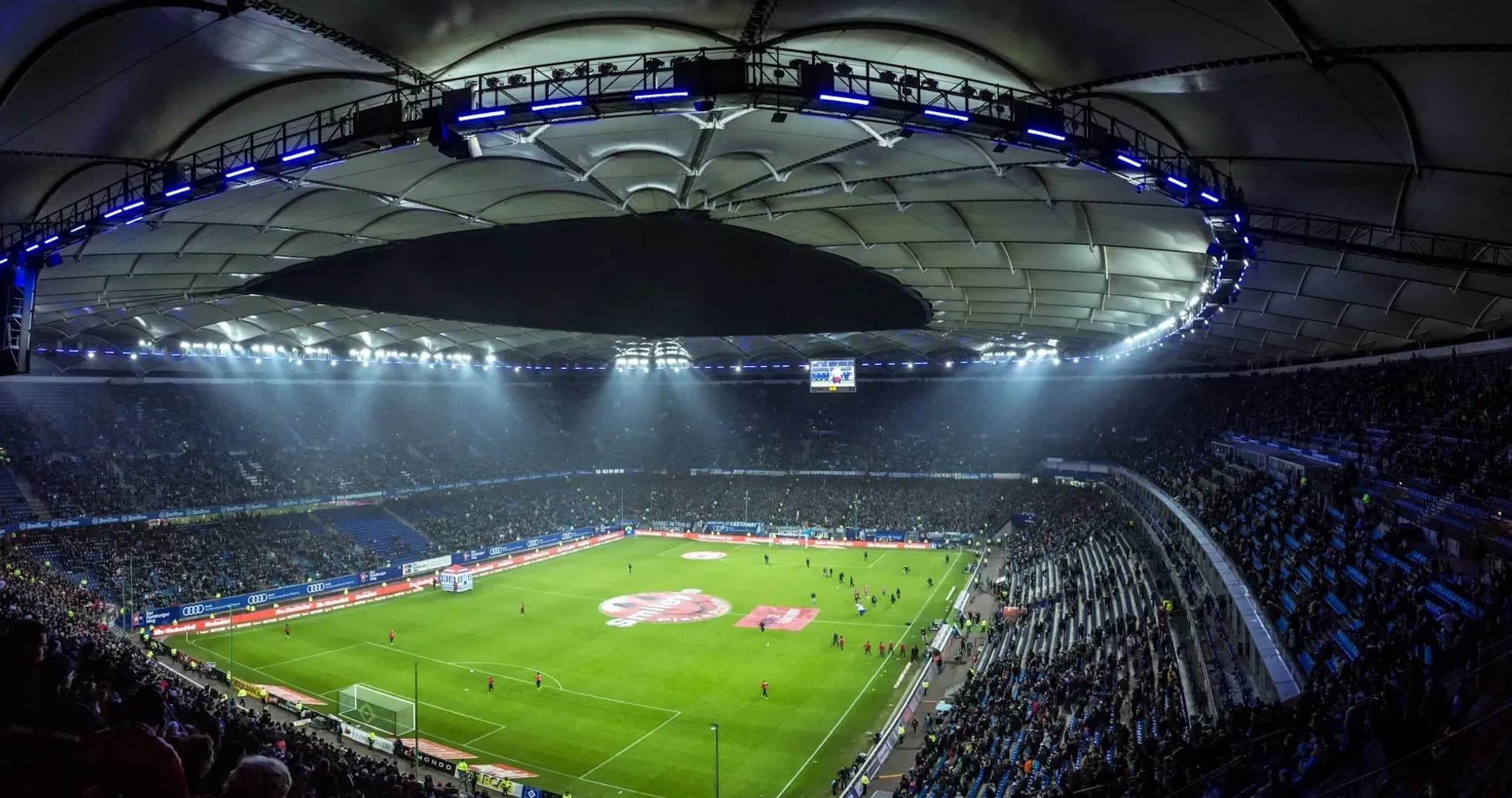
Birmingham Legion vs Las Vegas Lights: A Tactical Breakdown
Under the lights at Protective Stadium, Birmingham Legion slipped 2–1 to Las Vegas Lights, a result that neatly crystallised both clubs’ seasonal identities in the USL Championship group stage. Following this result, Birmingham remain a paradox: compact and disciplined at home, but with a fragile late-game underbelly. Across the campaign they have played 11 league matches in total, taking 11 points with a goal difference of -2, built from 12 goals for and 14 against.
Las Vegas arrive as chaos merchants. Overall they have played 12 matches, also with a goal difference of -2, but via a far more volatile path: 18 goals scored and 20 conceded. At home they are formidable, but on their travels they had previously lost 5 of 7, conceding 18 away goals at an average of 2.6 per game. To walk out of Birmingham with three points is therefore not just an upset of venue logic, but a statement that their attacking risk is beginning to pay off.
The narrative of the night follows the season-long numbers. Birmingham at home average only 0.7 goals for and 0.9 against; they rarely blow teams away, instead leaning on structure, clean sheets (3 in total this campaign) and controlled tempo. Las Vegas, by contrast, live on the edge: in total this campaign they average 1.5 goals for and 1.7 against per match, with offensive spikes between 31-45, 46-60 and 76-90 minutes, each accounting for 21.05% of their goals. Those very windows framed their threat here.
II. Tactical voids and discipline
There were no officially listed absentees, so both coaches – Jay Heaps for Birmingham and Devin Rensing for Las Vegas – had their core groups available and leaned into familiar profiles rather than radical change. Heaps’ selection of J. Koleilat behind a back line featuring L. Duru, K. Hughes and R. Hamouda signalled another attempt to build from a stable defensive base, with creative responsibility falling to S. Shashoua and the width and penetration entrusted to T. Pasher and G. Diarbian. R. Damus led the line as the primary outlet.
Rensing’s Las Vegas side, with M. Stajduhar in goal, were more clearly built for front-foot transitions. The defensive trio of B. Pope, N. Jones and A. Guillen were asked to defend large spaces, with T. Antonoglou offering thrust from wide areas. In midfield, M. Ybarra and K. Scott acted as the hinge between the deeper block and an aggressive front line of C. Pinzon, O. Anderson, M. Arteaga and J. Rodriguez.
Discipline has been a season-long sub-plot for both clubs. Heading into this game, Birmingham’s yellow-card distribution showed a pronounced late spike: 30.00% of their cautions arrived between 76-90 minutes, and their only red card this campaign also came in that same 76-90 window. That pattern hints at a team whose control erodes under scoreboard and time pressure. Las Vegas mirror that volatility: 20.00% of their yellows fall in each of the 16-30, 31-45, 61-75 and 76-90 ranges, with a red card also in the 76-90 band. This shared tendency toward late-game overreach set the stage for a combustible closing quarter of an hour, where the 2–1 scoreline always felt one rash challenge from further tilt.
III. Key matchups
Hunter vs Shield
The attacking “hunter” for Birmingham is less an individual and more a collective pattern. In total this campaign, 33.33% of their goals arrive between 16-30 minutes, followed by 25.00% between 46-60. They are at their sharpest just after settling into the match and immediately after half-time. Against Las Vegas, that meant trying to exploit a defence that concedes 21.05% of its goals in both the 16-30 and 46-60 ranges, and another 21.05% in the 46-60 window. On paper, Birmingham’s peak attacking phases overlapped directly with Las Vegas’ soft spots.
Yet the Lights’ own “hunter” – embodied by the movement and aggression of M. Arteaga, supported by Pinzon and Anderson – posed a different kind of question. Las Vegas score 21.05% of their goals between 31-45 and another 21.05% between 76-90, precisely where Birmingham’s defensive line statistically wobbles. Heading into this game, Legion conceded 28.57% of their goals between 46-60 and a glaring 35.71% between 76-90. That late-game surge from Las Vegas, combined with Birmingham’s late-game vulnerability, was the decisive intersection: the visitors’ willingness to keep committing numbers forward in the final quarter ultimately tilted the match in their favour.
Engine room
The central battle revolved around Birmingham’s technical axis of S. Shashoua and S. Tregarthen against the more combative pairing of M. Ybarra and K. Scott. Birmingham’s season-long scoring pattern – only 1 goal between 31-45 minutes (8.33% of their total) – suggests that when matches become stretched before half-time, they can struggle to dictate. Las Vegas, conversely, have scored 4 goals in that same 31-45 window, 21.05% of their total output, underlining how their midfield thrives in broken phases.
On the night, that meant Shashoua often dropping deeper to connect with D. McCartney and S. Antwi, trying to create calmer, shorter passing sequences to protect Koleilat’s back line from repeated transition waves. For Las Vegas, Ybarra’s task was to break those rhythms early, turning second balls into quick vertical passes toward Arteaga and Rodriguez. The visitors’ success in transforming midfield duels into direct attacks was a key reason they were able to turn pressure into the two goals that ultimately sealed the win.
IV. Statistical prognosis
From a probabilistic lens, this was a match that always had goals in it. Heading into this game, Birmingham’s total average of 1.1 goals for and 1.3 against, combined with Las Vegas’ 1.5 for and 1.7 against, pointed toward a contest hovering around the 2.5-goal mark. Birmingham’s under/over profile showed they had gone over 1.5 total goals in 4 of 11 matches and over 2.5 only once, while Las Vegas had surpassed the 1.5 threshold 7 times in 12.
Defensively, Birmingham’s three clean sheets in total this campaign contrasted sharply with Las Vegas’ away fragility – 18 away goals conceded, with over 2.5 goals against in 5 of their 7 road fixtures implied by that 2.6 average. On paper, the xG balance leaned slightly toward a narrow home edge: a structured side with a modest attack against a porous but dangerous visitor.
Yet the intersection of Birmingham’s late-game defensive collapse zone (35.71% of goals conceded between 76-90) and Las Vegas’ late attacking surge (21.05% of goals scored between 76-90) always carried the potential to swing the outcome. The 2–1 scoreline feels like the natural expression of those trends: Birmingham’s structure kept the match within one goal, but Las Vegas’ higher attacking ceiling, even with their penalty vulnerability this season (2 penalties taken, 1 scored, 1 missed), allowed them to edge the key moments.
Following this result, the tactical lesson is stark. Birmingham’s current blueprint keeps them competitive but leaves too much riding on fragile closing stages. Las Vegas, meanwhile, will feel vindicated: their aggressive, risk-embracing style, anchored by Arteaga’s presence and the direct running of Pinzon and Anderson, has now translated into a valuable away win. If they can tighten their away defensive phases between 16-60 minutes without blunting their late surge, their statistical profile hints at a side capable of climbing well beyond the anonymity of mid-table.