Benfica vs FC ST. Gallen: UEFA Europa League Showdown
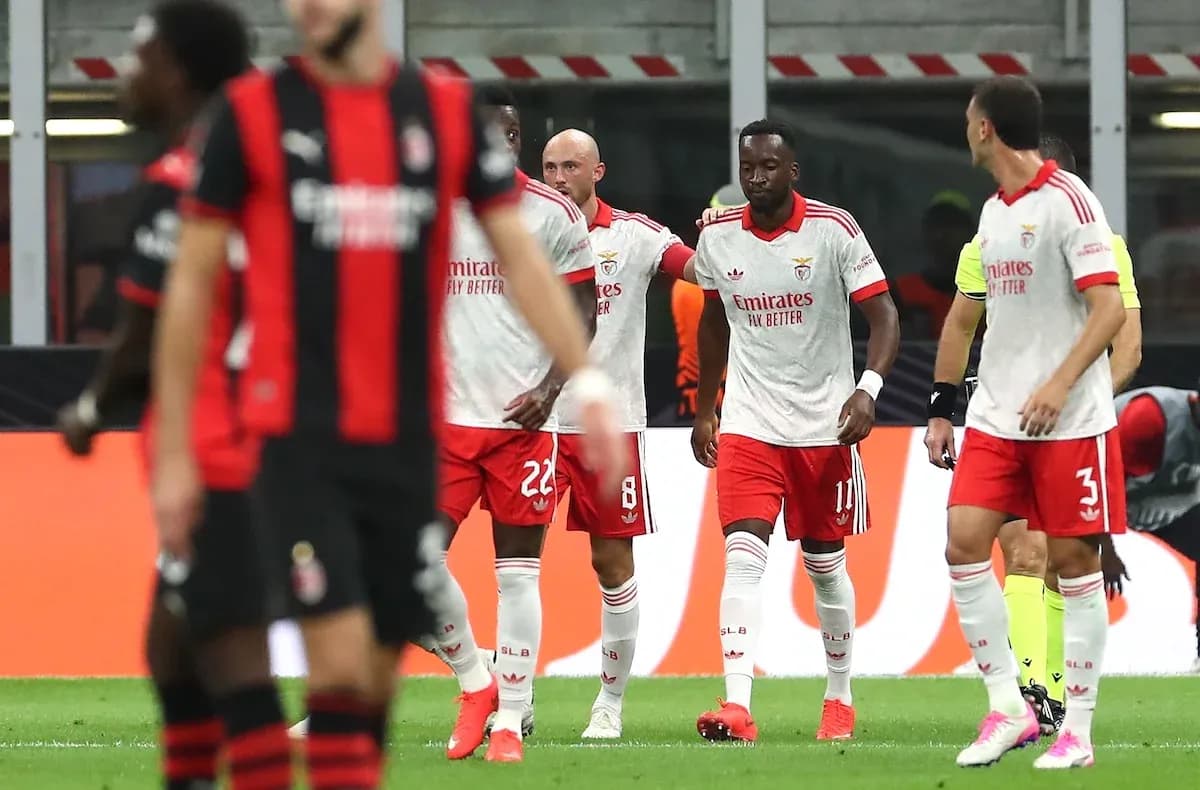
On a warm evening in Lisbon on 30 July 2026, Benfica return home needing a response, with their UEFA Europa League future already under threat after a shock defeat in Switzerland. The setting is a mystery for now — the venue name is not confirmed — but the city backdrop of Lisbon will frame a second leg where the Portuguese giants must overturn a 2-1 loss to FC ST. Gallen, who arrive believing they can finish the job and reach the next step of the 2nd Qualifying Round.
Season Context
For Benfica, this tie is the very start of their European journey, and it has begun with a stumble. One match played in this Europa League campaign has brought no points, with 1 goal scored and 2 conceded away from home. The margin is slim, but the pressure is immense: failure to turn this around in Lisbon would mean an early and deeply embarrassing exit from continental competition.
FC ST. Gallen, by contrast, have seized their opportunity. Their opening match in the Europa League has delivered a precious win, 2 goals scored and just 1 conceded at Kybunpark. That narrow advantage gives them a platform to approach Lisbon with belief: a draw or even a narrow defeat could still be enough to push them through, making this one of the most significant European nights in the club’s recent history.
Form & Momentum
Benfica’s early European form is fragile. The prediction model records a run marked by “L” in their competition form, reflecting 1 defeat from 1 match (0 points, 1 goal for, 2 against). That translates to an average of 1.0 goal scored and 2.0 conceded per game so far, a balance that underlines how vulnerable they looked in Switzerland. Yet with players like Rafa, V. Pavlidis and D. Lukebakio available, the expectation in Lisbon will be for a far more assertive attacking performance.
FC ST. Gallen arrive with momentum and confidence. Their Europa League form shows a clean “W”, built on a 2-1 home win that gives them 3 points from 1 match (2 goals for, 1 against). They are averaging 2.0 goals scored and 1.0 conceded per game in this campaign, suggesting a side that can both threaten in attack and survive under pressure. The model’s last-five snapshot paints them as slightly stronger both offensively and defensively than Benfica so far, reinforcing the sense that they travel to Lisbon with the psychological edge.
Head-to-Head Patterns
The history between these two clubs in this competition is short but already dramatic. Their only recorded meeting came on 23 July 2026, when FC ST. Gallen hosted Benfica at Kybunpark in the UEFA Europa League, season 2026. That night ended 2-1 to FC ST. Gallen (UEFA Europa League, season 2026, July 2026), a result that has flipped the expected hierarchy of the tie and given the Swiss side a real chance of progressing. With no other competitive meetings in the data, that single match looms large as both a warning for Benfica and a blueprint for FC ST. Gallen.
Tactical Preview
Benfica’s statistical profile in Europe so far is built on a 4-2-3-1 shape, used in their only match to date. That system suits their squad: A. Trubin as a modern goalkeeper, a defensive line likely to include António Silva and C. Lenglet, and full-backs such as A. Bah or A. Dedić able to push high. In midfield, the double pivot can be formed from players like F. Aursnes and L. Barreiro, providing balance behind creative figures such as Rafa and H. Sudakov. With attackers like V. Pavlidis, Bruma and D. Lukebakio, Benfica have the tools to chase the deficit, but their numbers so far — 1 goal scored and 2 conceded in 1 European outing — underline the need for better defensive control while committing bodies forward.
FC ST. Gallen have leaned on a 3-5-2 structure in their Europa League campaign, a system that served them well in the first leg. Three centre-backs, including options such as J. Stanić and T. Gaal, give a solid platform, while wing-backs like C. Okoroji can stretch the pitch and offer counter-attacking outlets. The midfield, with players such as L. Görtler, L. Daschner and B. Fazliji, is designed to crowd central areas, disrupt Benfica’s build-up and spring quick transitions. Up front, attackers like A. Balde, K. Csoboth or Malamine Efekele can exploit space behind an aggressive Benfica back line. Their early European record — 2 goals scored and 1 conceded in 1 match — suggests a side comfortable in a balanced, reactive game plan.
The comparison model leans toward FC ST. Gallen overall, rating them higher in form, attack and defense, and giving them a total index of 67 against Benfica’s 33. That reflects not only the first-leg result but also the sense that the Swiss side’s structure currently looks more coherent over the small sample of matches played.
Statistical Snapshot
- Competition: UEFA Europa League, season 2026 — 30 July 2026.
- Venue: Unknown, Lisbon.
- Prediction: Win or draw — Double chance : draw or FC ST. Gallen.
- Win Probabilities: Home 0% / Draw 50% / Away 50%.
- Model: Benfica 33 — FC ST. Gallen 67.
Betting Verdict
The prediction model is surprisingly cold on Benfica, giving them effectively no win probability and favouring a “double chance: draw or FC ST. Gallen”, even though the bookmakers see the Portuguese side as heavy favourites. The market prices Benfica’s home win between roughly 77% and 83% implied probability (home odds from around 1.20 to 1.24), while a draw sits near 17% to 18% and an away win around 7% to 9%. That disconnect creates an intriguing tension: FC ST. Gallen lead the tie 2-1 on aggregate and are rated stronger by the comparison model, yet Benfica are still expected by the odds to overpower them in Lisbon. The most coherent angle is that Benfica should win on the night but may not do so by a huge margin, making the model’s preferred safety play — FC ST. Gallen on the double chance — a value-driven, contrarian position against a market that still trusts the home side’s pedigree. Broadcast rights vary by region; check local listings or the official tournament website for details.