Belgium vs Egypt: Tactical Clash in Seattle's World Cup Opener
On a warm Monday night in Washington, the World Cup finally starts to feel real for Belgium and Egypt. At Seattle Stadium, under the lights and a 8pm BST kick-off, two nations with very different footballing identities will collide – one built on the ball, the other built to spring when it’s lost.
Belgium’s defensive riddle, attacking riches
Rudi Garcia’s first team-sheet of the tournament comes with a problem at its heart. Zeno Debast, pencilled in as a key figure in central defence, is out with a leg injury. He stays with the squad, but not with the starting XI – not yet. Belgium will have to live without him until later in the competition.
That absence forces a reshuffle. Brandon Mechele and Joel Ngoy are expected to form a makeshift pairing at centre-back, a duo asked to provide calm in a game where one slip against Mohamed Salah or Omar Marmoush could be fatal. It is not the back line Garcia would have dreamt of, but it is the one he must trust.
Everywhere else, the picture looks far brighter. The Red Devils arrive fully fit and brimming with confidence after a ruthless build-up. They brushed aside Croatia 2-0, then tore Tunisia apart in a 5-0 demolition that felt like a statement. The patterns were sharp, the pressing aggressive, the finishing cold.
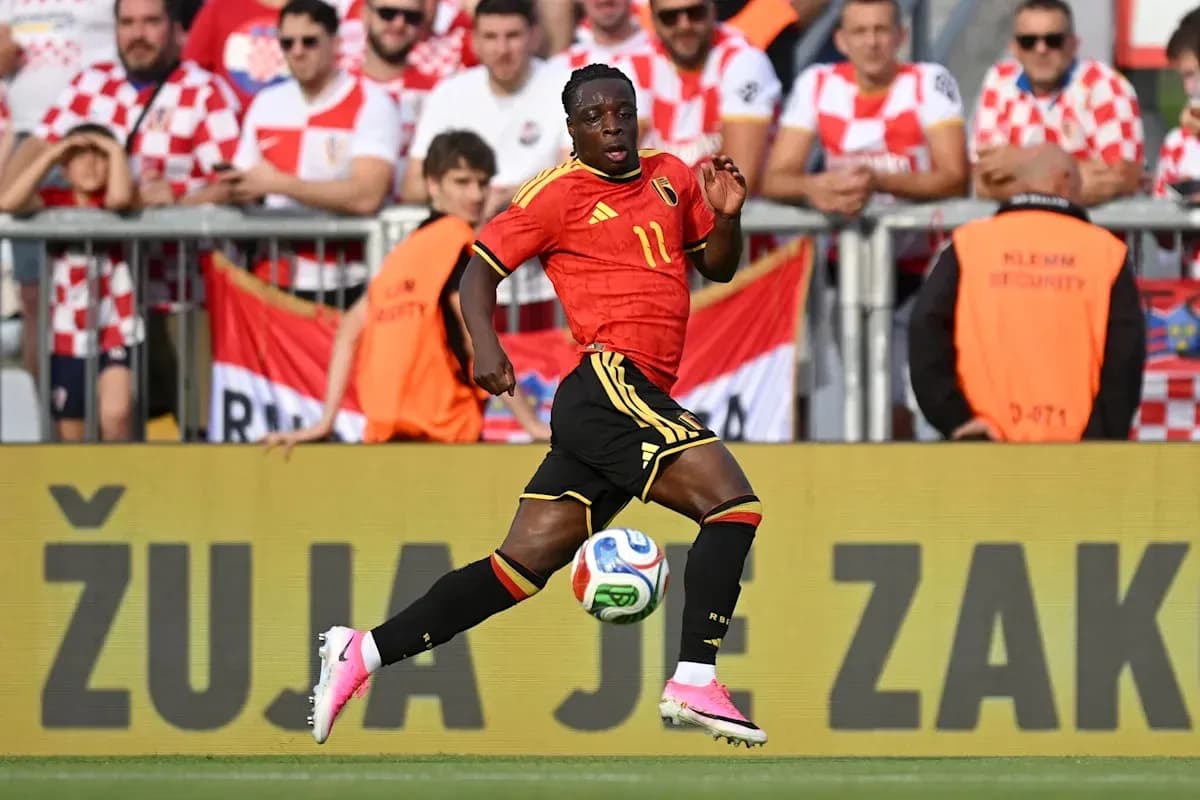
Garcia is set on an assertive 4-2-3-1. Amadou Onana and Youri Tielemans should patrol midfield, but the real theatre lies ahead of them. Kevin De Bruyne, still the conductor of this generation, will float between the lines, searching for gaps, angles, and runners. On the flanks, Jeremy Doku’s raw acceleration and Leandro Trossard’s guile give Belgium width and chaos in equal measure.
The big call sits up front. Romelu Lukaku, the veteran No 9, or Charles De Ketelaere as a false nine? It is a choice between the classic reference point and a more fluid, rotating front four. De Ketelaere is tipped to get the nod, which would turn Belgium’s attack into a carousel of movement around De Bruyne’s passing lanes. If it works, Egypt’s centre-backs could be dragged into places they do not want to go.
Belgium, unbeaten in qualifying and ruthless in their friendlies, walk into Seattle looking every inch like early contenders. But the first game of a World Cup rarely reads the script.
Egypt’s discipline, Salah’s spark
Egypt arrive with something every coach craves before a major tournament: a clean bill of health and a clear identity.
Salah is back, fully recovered from the hamstring injury that stalled his club season in late April. He eased his way through 45 minutes in a recent friendly against Brazil, enough to shake off the rust and remind everyone that, when the ball is rolled to his left foot, he can tilt any match on its axis. He will captain the Pharaohs from his familiar station on the right wing.
Hossam Hassan has shaped a side that knows exactly what it is. Egypt will not chase Belgium high up the pitch. They will absorb, compress, and wait. The plan is simple and brutally effective when executed well: frustrate, then strike.
In Mohamed Abdelmonem and Yasser Ibrahim, Egypt boast a central defensive pairing drilled in suffering without the ball. They will need to track De Ketelaere’s drifting runs, step out to De Bruyne, and still be ready to turn and race back towards their own goal when Doku or Trossard burst in behind.
Once Egypt win possession, the game changes. Tarek Hamed’s successors in midfield, Hamdi Fathi’s role now shared by the likes of Hamdi Ateya and Emam Ashour, will look to release the front line quickly. Salah on the right. Trezeguet from the left. Marmoush through the middle, in form and brimming with confidence. One vertical pass, one slip from Belgium’s patched-up defence, and the whole match can flip.
Their preparation results tell you exactly who they are. A stubborn 0-0 against Spain. A 1-0 win over Russia. A narrow 2-1 defeat to Brazil that still underlined their resilience. Egypt do not crumble. They hang in games, then pounce.
Form, structure and the battle lines
Belgium’s form screams optimism. Unbeaten in qualifying, free-scoring in friendlies, they arrive with rhythm and swagger. De Bruyne looks sharp, Doku electric, and the collective understanding of this group – old and new faces blended together – appears strong.
Egypt’s form speaks of steel. They topped their qualifying group with authority, then took on heavyweight opposition without blinking. Spain could not break them. Russia fell to them. Brazil needed to work to edge past them.
All of that feeds into a clear tactical clash in Seattle.
Belgium will have the ball. Courtois behind a back four of Thomas Meunier, Mechele, Ngoy and Timothy Castagne. Onana and Tielemans to recycle and probe. A line of three in Trossard, De Bruyne and Doku buzzing around De Ketelaere.
Egypt will set their trap. Shobeir in goal. Mohamed Hany, Abdelmonem, Ibrahim and Ahmed El Fotouh across the back. Aliou Dieng’s role now mirrored by the disciplined pairing of Mahdi Lasheen and Ateya in midfield, tasked with closing spaces and funnelling Belgium wide. Ahead of them, Salah, Ashour and Trezeguet working between the lines and on the break, with Marmoush ready to dart into the channels.
One side wants control. The other wants chaos at precisely the right moment.
Where this opener could be won
So much hinges on Belgium’s makeshift central defence. If Mechele and Ngoy settle early, Belgium can push their full-backs high and suffocate Egypt in their own half. If they hesitate, if the line drops five yards too deep, Salah and Marmoush will sense blood.
De Bruyne’s freedom will be another fault line. Give him time and he will pick Egypt apart, feeding Doku into one‑v‑one situations and sliding passes between centre-back and full-back. Deny him that space, crowd him with Lasheen and Ateya snapping at his heels, and Belgium may be forced into hopeful crosses rather than crafted chances.
At the other end, Egypt’s entire plan narrows to a few sharp moments. A loose Belgian pass in midfield. A turnover near halfway. Salah driving at a backpedalling defence, Marmoush peeling off a shoulder, Trezeguet arriving late. They may only get two or three of those sequences all night. They have to make one count.
For Belgium, it is a chance to plant a flag and prove that their new cycle, built around familiar stars and fresh legs, can handle both expectation and jeopardy. For Egypt, it is an opportunity to upset the bracket before it has even settled, to remind the world that a disciplined underdog with an elite match-winner is never truly outgunned.
At 8pm in Seattle, we find out which story this World Cup wants to tell first.