Australia’s Tactical Masterclass in 2-0 Victory Over Türkiye
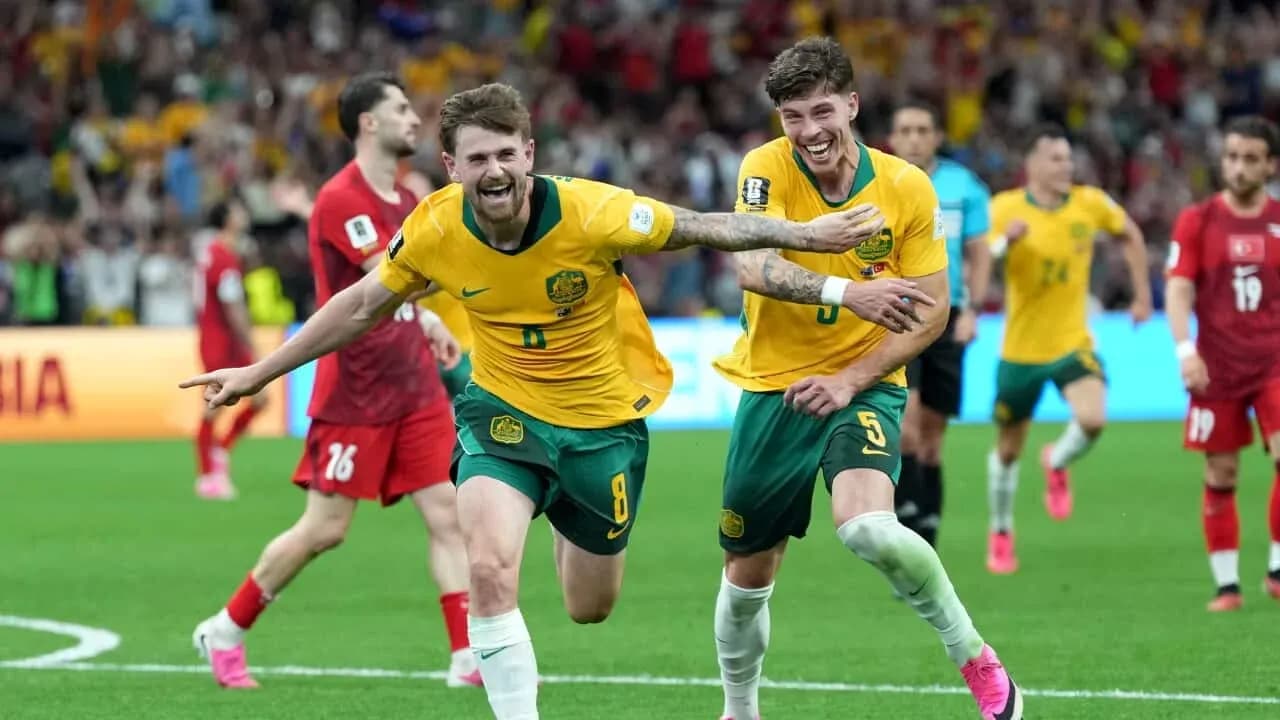
Under the closed roof of BC Place in Vancouver, Australia’s 2-0 victory over Türkiye felt less like an opening group game and more like a tactical manifesto. Following this result in Group D of the 2026 World Cup, Australia sit 2nd with 3 points, a goal difference of +2 (2 goals for, 0 against), and the air of a side whose identity is already sharply defined. Türkiye, 3rd with 0 points and a goal difference of -2 (0 for, 2 against), leave the pitch with questions about balance, risk management, and how to unlock a compact block at this level.
I. The Big Picture: Structure and Seasonal DNA
Heading into this game, the numbers painted a simple contrast that the 90 minutes only reinforced. Australia’s entire World Cup story so far is this one match: 1 game played, 1 win, 2-0 at home, and a clean sheet. Their averages are blunt and emphatic: 2.0 goals scored at home and 0.0 conceded, with a 100% clean-sheet record and no failures to score. Every minute of their tournament has come in a 5-4-1, a system Tony Popovic leaned into with conviction.
Türkiye’s snapshot is the mirror image. They have played 1 match on their travels, lost it 2-0, and failed to score. Overall, their goals against average away is 2.0, goals for 0.0, with no clean sheets and 1 total failure to score. Vincenzo Montella has also been consistent in shape, deploying his preferred 4-2-3-1, but the structure that usually offers attacking fluency instead ran into a wall of gold and green.
On the day, the scoreboard matched the season profile: Australia as a low-event, high-control unit; Türkiye as a side still searching for equilibrium between their talented front line and a back four that can be exposed when space opens up behind the full-backs.
II. Tactical Voids and Disciplinary Undercurrents
There were no officially listed absentees for either side, meaning both coaches effectively had their full squads. That made the selection calls all the more revealing.
Popovic doubled down on defensive density: Patrick Beach in goal behind a back five of Jacob Italiano, Alessandro Circati, Harry Souttar, Cameron Burgess, and Jordan Bos. Ahead of them, a hard-running, physically robust midfield line of Connor Metcalfe, Aiden O’Neill, Paul Okon-Engstler, and Nestory Irankunda supported lone forward Mohamed Touré. It was a clear bet that Australia could control space without sacrificing their ability to spring forward.
Montella, by contrast, trusted his technical core: Uğurcan Çakır in goal; a back four of Zeki Çelik, Merih Demiral, Abdülkerim Bardakcı, and Ferdi Kadıoğlu; a double pivot of İsmail Yüksek and Hakan Çalhanoğlu; and an advanced line of Arda Güler, Orkun Kökçü, Barış Alper Yılmaz behind central forward Kerem Aktürkoğlu. On paper, it promised possession and creativity between the lines. In practice, it ran into an Australian side that refused to be stretched.
Discipline became a subtle subplot. Australia’s season card profile is blank so far: no recorded yellows or reds in any time window. Türkiye, however, already show a pattern: their only yellow card of the campaign has arrived in the 76-90’ window, a late-game surge of 100.00% of their cautions. That late caution came through Yunus Akgün, who, despite only 35 minutes on the pitch, combined 21 passes at 90% accuracy, 2 key passes, and 1 successful dribble with 1 committed foul and 1 yellow card. It hints at a side that grows more frantic, and more stretched, as they chase games in the final quarter-hour.
III. Key Matchups: Hunter vs Shield, Engine Room vs Enforcer
The defining duel of this fixture lay between Australia’s emerging “hunter” and Türkiye’s defensive “shield” line.
Nestory Irankunda, already on the World Cup top-scorers chart with 1 goal from 1 appearance, was the sharp edge of Australia’s counter-attacking threat. In 61 minutes he produced 2 shots, both on target, and converted 1 of them. His 7 duels contested, with 2 won, and a perfect 1/1 dribble underline his willingness to engage defenders 1v1 rather than simply recycle possession.
Up against a Turkish back four that has now conceded 2 goals on their travels and kept 0 clean sheets, Irankunda’s directness was decisive. Merih Demiral and Abdülkerim Bardakcı are built for aerial and physical battles; Irankunda dragged them into lateral and backward running, forcing them to defend the spaces behind their full-backs rather than simply their box.
Yet the true fulcrum was in the “engine room”. Paul Okon-Engstler, already the competition’s leading assist provider for Australia with 1 assist, offered a complete two-way performance. In 84 minutes he completed 32 passes at 81% accuracy, produced 2 key passes, and crucially, delivered the assist that unlocked Türkiye. Out of possession he was relentless: 3 tackles, 2 successful blocks, and 3 interceptions. Every one of those blocks is a successful intervention, and they tell the story of a midfielder constantly stepping into passing lanes and shooting channels to shield his back five.
On the other side, Hakan Çalhanoğlu and İsmail Yüksek never quite imposed their rhythm. With Australia’s 5-4-1 compressing the central corridor, Türkiye’s 4-2-3-1 became increasingly dependent on their full-backs and wide players to progress the ball, a dynamic that suited Australia’s compact, counter-punching design.
IV. Statistical Prognosis: What This Game Predicts
Even without explicit xG values, the shot and goal profiles suggest a match that unfolded broadly along expected lines. Australia, heading into this game, were a side whose season numbers screamed control: 2.0 goals scored at home, 0.0 conceded, 1 clean sheet from 1, and 0 failures to score. They played like a team comfortable creating fewer, higher-quality chances and then locking the game down with structure and discipline.
Türkiye’s early tournament identity is more fragile. On their travels they have 0 goals for and 2.0 goals against on average, with no clean sheets and 1 failure to score in 1 away match. The late-game yellow card profile — 100.00% of their cautions coming in the 76-90’ range — aligns with a side that chases, rather than controls, the closing stages.
Following this result, the tactical prognosis is clear. Australia’s 5-4-1, anchored by the defensive triangle of Souttar, Burgess, and Circati and energised by Okon-Engstler and Irankunda, looks built for knockout football: low-risk, high-discipline, ruthless when the moments come. Their current goal difference of +2 is a neat, numerical reflection of a side that does not waste its chances or its shape.
Türkiye, with a goal difference of -2, must now recalibrate. The technical quality is undeniable — from Arda Güler between the lines to the overlapping potential of Ferdi Kadıoğlu — but the structure around them needs tightening. Until they can reduce that away average of 2.0 goals conceded and add a first goal of their own, every match will tilt toward the kind of controlled, suffocating performance Australia just delivered in Vancouver.