
Australia Unites for Socceroos: A Nation on Pause
They used to say Australia stopped for a horse race. On Friday, it stopped for a stalemate.
Across the country, screens froze on the same image: the Socceroos grimly holding Paraguay at bay, a 0-0 that felt, in the end, like a victory parade in slow motion. No goals, no chaos, no last‑minute catastrophe. Just enough. A draw that pushed Australia into the World Cup knockout phase for the second tournament running – and turned a working Friday into a national half‑day.
A nation on pause
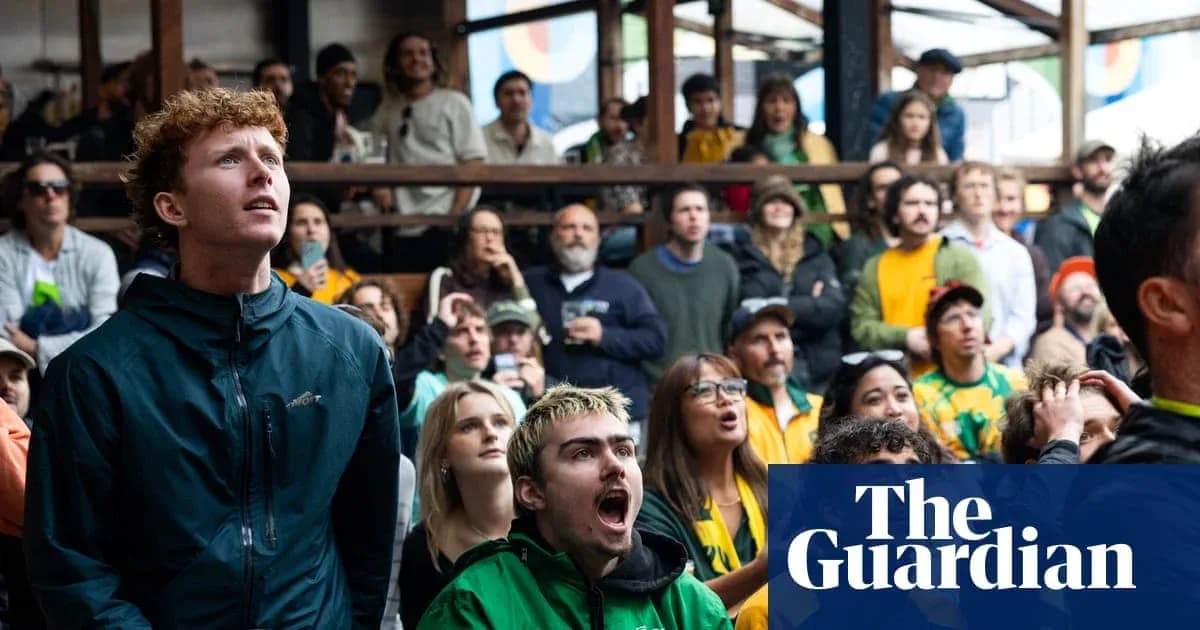
By late morning, pubs in the big cities were already heaving. Gold and green shirts, office lanyards, hi-vis vests, school uniforms. Some fans clutched pints in one hand and work laptops in the other, spreadsheets sharing table space with schooners.
It was a first: a Socceroos World Cup match played entirely inside Australian working hours. No 3am alarms. No bleary-eyed commutes. Just an entire country trying to pretend this was still a normal day at the office.
At the Golden Barley in Sydney’s inner west, brothers Jamie and Rick Hayman had made their decision early. Work could wait. Football could not.
Rick, who runs a local construction company, sat over his admin with staff nearby, but his attention was clearly fixed on the big screen. He said he’d followed the Socceroos “forever”, but something about this felt different.
“It unites the community,” he said. “That’s what you notice. Pubs get filled up, there’s all the talk around town, it’s really good to see.”
Around him, that unity looked like a cross-section of the city. Office workers on “extended lunch”, tradies in steel-capped boots, retirees with stories from World Cups long gone.
Old shirts, new rituals
Down the front, in the prime seats beneath the television, sat a small group of old friends. One of them, Nick, had been there since doors opened, a Guinness in hand and history on his back.
His jersey was a relic: an authentic 1974 Socceroos shirt, a nod to the first time Australia ever made it to a World Cup. The faded fabric, the old crest – it was a reminder that this modern, polished tournament still rests on decades of stubborn belief.
Nick and his partner Robyn have lived through the old ritual: the 2am alarms, the blankets on the couch, the whispered cheers so as not to wake the neighbours.
“We were just saying this morning, we used to wake up in the middle of the night, it used to be really good,” he said with a laugh. “It’s a unique experience. A family experience.”
Today was different. Daylight, full pubs, no need to whisper. The family experience had moved from the lounge room to the public bar.
Sardines in Sydney rain
A short drive away, at the Vic on the Park, the scene was even more intense. Hundreds crammed into the courtyard and front bar, bodies pressed shoulder to shoulder, the kind of crowd where you feel every collective inhale.
The mood swung between jubilation and dread. Every half-chance drew a roar, every misplaced pass a groan. When the rain rolled in during the first half, jackets and Socceroos scarves flew over heads. Ponchos appeared from bags like emergency flares.
After 80 goalless minutes, the tension finally needed an outlet. A few “Aussie, Aussie, Aussie” chants broke out, answered by an unlikely voice – a dog in the front bar howling along, as if it understood what was at stake.
As the final minutes ticked away, the noise climbed. A bald man with a stick-on Australian flag tattooed to his head grabbed his friends in a bear hug. The result on the screen said 0-0. His celebration said something very different.
Some fans had taken no chances. They booked leave the moment the fixture list dropped. Others improvised. Sophie and her son Orson, in year 11, were at the Vic too, having already ridden the emotional rollercoaster when Australia lost 2-0 to the USA the previous Saturday morning.
This time, Orson had ditched the last day of term. Sophie was quietly working from her phone, eyes flicking between emails and the action.
“This is of national importance,” she said. “I really want Oscar to hear a goal in the pub, just to hear us lift.”
Her son, dreaming of becoming a football coach, watched a different kind of lesson unfold: a country starting to believe it belongs on this stage.
“Football’s growing,” he said. “It’s been brilliant, so cool to see so many people supposed to be working coming to support their country.”
Federation Square turns into a cauldron
In Melbourne, the heartbeat of the day thumped out of Federation Square. Victoria Police put the crowd at 7,500, a sea of yellow that had flooded in hours before kick-off. By 10am, the square was at capacity. Anyone late was out of luck.
With so much nervous energy and nowhere for it to go, the crowd invented its own sideshows. High-stakes games of flip bottle erupted, each successful landing greeted with wild, almost tearful cheers. Teenagers bragged loudly about wagging school or securing parental permission to miss class “for the Socceroos”.
When the national anthem played, seven flares cracked the sky in a burst of orange smoke. The moment felt cinematic; the consequences did not. A 16-year-old was arrested. Later, three teenagers were issued penalty notices for riotous behaviour and moved on.
At times, an unseen shove rippled through the mass of bodies, sending people stumbling. Each time the crowd righted itself, heads snapped around as one, searching for the culprit. A single word rang out in unison: “Wanker.” It was raw, crude, and very Australian.
Watching it all was former Socceroo Craig Foster, who saw in the 0-0 exactly what the occasion demanded.
“It was a near perfect game,” he said. “The squad depth has been demonstrated. They’ve done exactly what was required … Australia is managing well, learning very quickly, and it’s a beautiful day anytime the Socceroos get through to knockout rounds.
“We are here. We’re still in this tournament, and we’re fighting all the way. There’s nothing better in life.”
For teenager Ali Abolhasani and his friend, the day blurred into something even wilder. They were swept along the barricades, hit the ground, lost their shoes, and never stopped celebrating.
Asked how he felt afterwards, Ali didn’t hesitate. “Amazing,” he said. “I can’t wait to come back next week. We did an all-nighter, we couldn’t sleep because we knew we’d make it … We’ll do it again.”
Capital fever
Even in Canberra, where big crowds for football are less common, World Cup fever had taken hold. More than 500 fans gathered at Garema Place, huddled around a modest two-screen setup that felt too small for the size of the moment.
Among them was ACT senator David Pocock, watching the same tense 90 minutes as everyone else, but also something broader.
He said it was striking to see such a diverse crowd rally behind the same team.
“The Socceroos, as it’s been talked about this week in parliament, represents what is so great about Australia,” he said. “We do have so many people from diverse backgrounds coming together, and you see the way that that resonates across the country.”
On the pitch, it was a scrap, a tactical job done, a point ground out. Off it, it was something far bigger: a working day bent out of shape, school timetables ignored, city squares turned into makeshift terraces.
No one scored. Australia still went through. And somewhere between the rain-soaked courtyards, the flares at Fed Square and the laptops abandoned in favour of lager, a familiar question returned with new force: if this is what a goalless draw can do, what happens when the Socceroos dare to dream even bigger?



