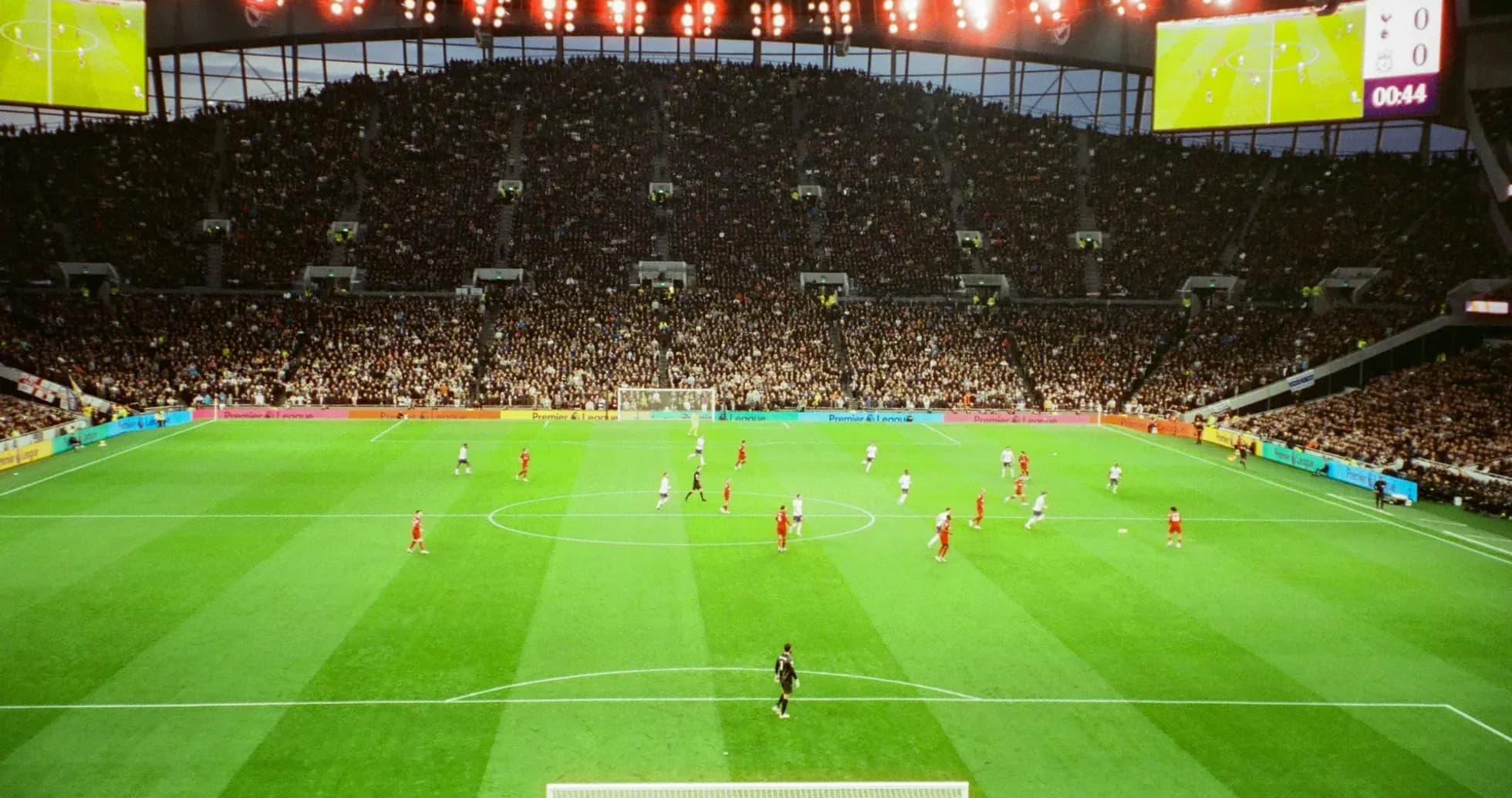
Aston Villa's Tactical Mastery Against Manchester City
Manchester City’s 1-2 defeat to Aston Villa at Etihad Stadium unfolded as a tactical arm-wrestle in which Unai Emery’s 4-2-3-1 adapted better over 90 minutes than Pep Guardiola’s 4-2-2-2. City controlled slightly more of the ball (52% to 48%), generated more total shots (16 to 12) and more blocked efforts (6 to 2), but Villa’s structure produced the higher xG (1.58 to 1.25) and, crucially, more shots on goal (5 to 3). The visitors’ plan to compress central spaces, then break quickly into the channels for O. Watkins, tilted the game away from City after half-time.
Guardiola’s 4-2-2-2
Guardiola’s 4-2-2-2 had a clear logic: J. Trafford (Manchester City) behind a back four of R. Lewis, J. Stones, R. Dias and N. Ake, with Nico and B. Silva forming a double pivot and a very narrow band of A. Semenyo and Savinho supporting twin forwards P. Foden and T. Reijnders. In possession, this gave City strong central connections and allowed both “tens” to drift between the lines. The structure delivered territorial control and a 9-4 advantage in corners, but it also left City vulnerable in defensive transition, particularly when both advanced midfielders vacated the flanks simultaneously.
Aston Villa’s 4-2-3-1
Aston Villa’s 4-2-3-1, by contrast, was built around vertical clarity. M. Bizot (Aston Villa) anchored a back four of A. Garcia, V. Lindelof, T. Mings and I. Maatsen, screened by L. Bogarde and Douglas Luiz. Ahead of them, L. Bailey, R. Barkley and E. Buendia supported O. Watkins as the lone striker. Villa’s double pivot stayed compact, rarely jumping high onto City’s pivots, preferring to hold a mid-block that invited City into central congestion. Once the ball was forced wide or into traffic, Villa sprang forward through Bailey and Buendia, with Watkins constantly threatening the space behind Dias and Stones.
First Half
The first half largely validated City’s design. Their 458 total passes to Villa’s 436, combined with 405 accurate passes at 88%, showed a side circulating possession with patience. The narrow attacking midfielders allowed City to overload the half-spaces, drawing Villa’s wide midfielders inside. A. Semenyo’s 23rd-minute goal, assisted by no teammate, encapsulated this: he found a pocket between Villa’s midfield and defence, turned and finished, exploiting the brief disorganisation as Villa’s line shifted laterally. With only 4 fouls committed by Villa in the entire game, Emery’s side defended more by positioning than by aggression, but in that phase they struggled to track City’s interior runs.
Yet even in the first half, some warning signs were present. City’s 10 shots inside the box versus only 3 shots outside suggested they were reaching good zones, but the 3 shots on goal from 16 total attempts pointed to shot quality and decision-making issues. Villa’s back line, especially Mings and Lindelof, allowed efforts from pressured positions, trusting Bizot to handle anything clean. M. Bizot (Aston Villa) made 2 saves, and with goals prevented at 0.28, he slightly outperformed the xG he faced, underlining that the few clean looks City created were not converted.
Tactical Adjustments
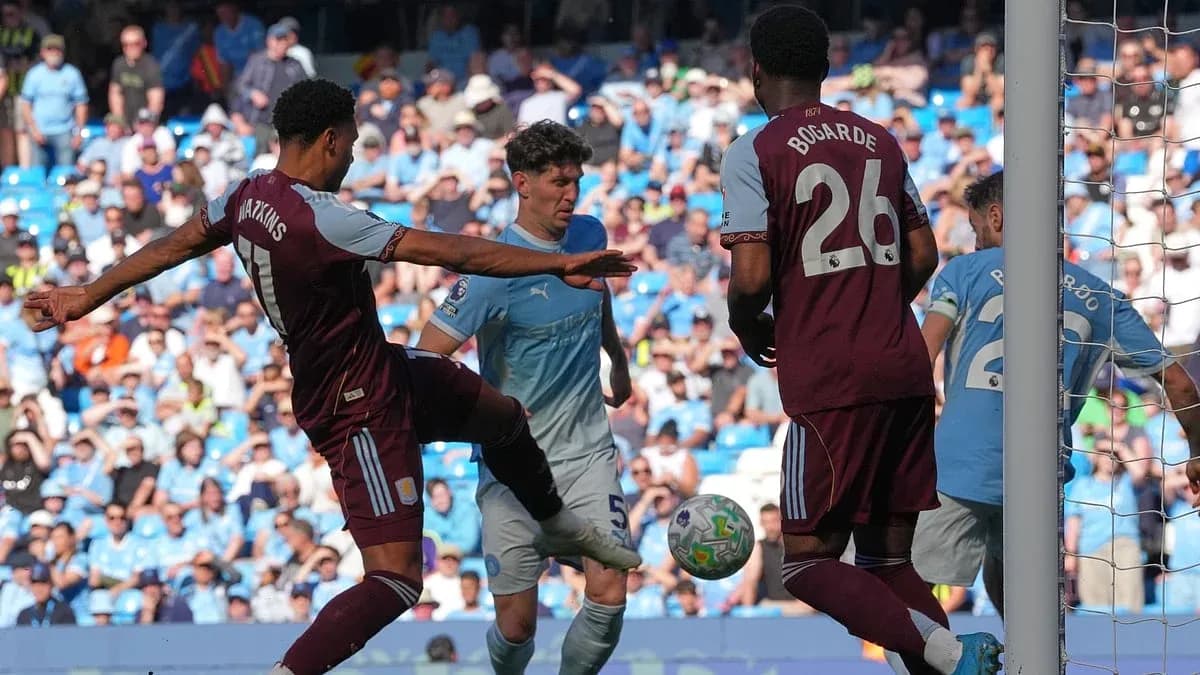
The game’s tactical hinge came immediately after the break. Emery’s first adjustment was personnel and profile: at 46', Matty Cash (IN) came on for A. Garcia (OUT), adding more athleticism and forward thrust on the right. Almost instantly, Villa’s transition threat sharpened. At 47', O. Watkins struck to level, punishing City as their 4-2-2-2 momentarily lost its rest-defence shape while pushing up. The pattern repeated at 61', when Watkins scored again, this time assisted by R. Barkley. That move was emblematic of Villa’s plan: City’s narrow midfield line was drawn towards the ball, Barkley found a seam between lines, and Watkins attacked the channel behind the centre-backs. VAR at 63' confirmed the second goal, but tactically it had already confirmed Villa’s superiority in exploiting the space behind City’s advanced structure.
Guardiola’s response was to reconfigure his attacking zones through substitutions. On 58', R. Cherki (IN) came on for A. Semenyo (OUT), adding more ball-carrying and creativity between lines. One minute later, at 59', M. Kovacic (IN) replaced B. Silva (OUT), altering the profile of the double pivot towards more progressive running and less metronomic circulation. Later, at 77', J. Doku (IN) came on for T. Reijnders (OUT), and R. Ait-Nouri (IN) for N. Ake (OUT), with J. Gvardiol (IN) replacing J. Stones (OUT) at 78'. Collectively, these changes pushed City into a more aggressive, wing-oriented posture, with Doku providing genuine width and 1v1 threat that the starting 4-2-2-2 had lacked.
However, these attacking tweaks further exposed City’s defensive transitions. With full-backs higher and the structure more stretched, Villa’s counter-attacks remained dangerous even as they ceded more possession. Emery’s triple change at 73' — Y. Tielemans (IN) for Douglas Luiz (OUT), P. Torres (IN) for V. Lindelof (OUT), and A. Onana (IN) for L. Bogarde (OUT) — was aimed at stabilising central control and adding fresh legs in both the back line and midfield. Later, J. McGinn (IN) replaced R. Barkley (OUT) at 86', reinforcing Villa’s work rate and defensive discipline in the closing stages.
Discipline and Statistics
Discipline underlined the contrasting defensive approaches. City received the only card: at 82', Rico Lewis (Manchester City) was booked — “Foul” — a direct consequence of being forced into recovery defending against Villa’s transitions. Villa, with 0 yellow cards and only 4 fouls, maintained structural compactness rather than relying on tactical fouling to stop counters.
From a statistical perspective, the outcome aligns more closely with Villa’s chance quality than with raw volume. Villa’s 5 shots on goal from 12 attempts, and an xG of 1.58, indicate they created clearer opportunities, primarily through Watkins’ movements and the timing of runs from Barkley and Bailey. City, despite 16 shots and 10 inside the box, produced only 3 shots on goal and an xG of 1.25, suggesting many of their efforts were from suboptimal angles or under pressure.
Goalkeeping numbers reinforce this story. J. Trafford (Manchester City) made 3 saves but conceded twice, with goals prevented at 0.28, indicating he performed roughly to expectation given the quality of Villa’s chances. M. Bizot (Aston Villa), with 2 saves and the same goals prevented figure, benefitted from a defensive block that forced City into less efficient shooting positions. The narrow 52%-48% possession split and near-par passing volumes (458 vs 436) show that this was not a game of dominance but of tactical precision in key moments — and in that regard, Villa’s 4-2-3-1, built around verticality and transition, outmanoeuvred City’s possession-heavy 4-2-2-2.