Arsenal's Historic Champions League Journey
The season that has dragged Arsenal through doubt and strain is suddenly staring at something far more intoxicating: the chance to touch everything that matters.
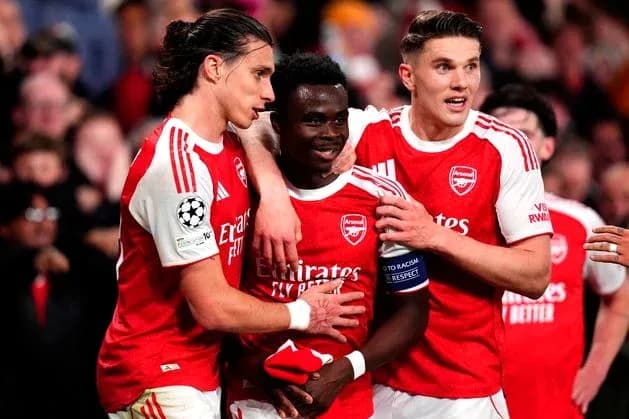
At the final whistle, it all spilled out. Players thumped the air, roared at the stands, clung to each other. This wasn’t just another big European night; it was the moment they realised the Premier League trophy and the European Cup are both now close enough to feel.
A return to a Champions League final – only the second in the club’s history and the first since 2006 – is, on its own, a towering achievement. No one was talking like this when Mikel Arteta walked into the chaos of December 2019. Back then, Arsenal were a basketcase, a club drifting without seriousness or direction. Now, they are back among the elite.
This is what they imagined when they trusted him. This is what he promised them with all those hard lines and harder choices.
Arteta’s night, Arsenal’s history
Budapest now holds the stage for Arteta to attempt something no Arsenal manager has done: bring the Champions League back to north London. For a few hours, the title race could wait. All that mattered was the semi-final in front of them, the brutal, narrow win over Atletico Madrid that felt like a distillation of their entire season.
They had to suffer. Of course they did.
The tie was tight, the lead fragile, the tension almost physical. Arsenal lived with it, worked through it, and – crucially – refused to fold when the familiar doubts crept in. They had fortune with them, particularly with two penalty calls that went their way, but after the grievances of the first leg, Arteta would argue this was simply the balance being restored.
The cast list for the decisive night felt almost poetic. The players who have been doubted, sidelined or criticised this season were the ones who dragged Arsenal over the line.
Bukayo Saka, the winger whose long injury lay-off dulled Arsenal’s attack and raised murmurs about his ceiling at the very top level, scored the goal that changed everything. Viktor Gyokeres, questioned as a signing and scrutinised for every heavy touch, created it. Myles Lewis-Skelly, the teenage prodigy who has spent long stretches on the fringes, injected the energy they had been missing.
They needed all of it against Diego Simeone’s Atletico, a team that turns every inch of grass into a fight.
The match was ugly at times, scrappy and snarled, but it pulsed with emotion. On the other side of it, Simeone will not get his Champions League moment this year. Antoine Griezmann, one of the competition’s great performers, has likely played his last game in it. This defeat will sit there at the end of his European story.
The harsh reality? For all his brilliance in flashes, he couldn’t sustain it. Nor could Atletico.
Once Griezmann went off, their threat evaporated. One snatched chance for Alexander Sorloth was about as close as they came to breaking Arsenal’s grip. It wasn’t enough.
Gyokeres turns nuisance into weapon
The game demanded muscle and nerve. Gyokeres supplied both.
So often criticised for his hold-up play, he relished the fight here. He chased, he barged, he harried Atletico’s defenders, turning himself into a constant irritation. Arsenal’s breakthrough came from that refusal to give up on what looked like a lost cause.
Gyokeres powered down the right, stretching the pitch and suddenly exposing a huge pocket of space inside the Atletico area. The problem was the angle. He was almost on the byline, with little to aim at.
He found the answer.
He clipped a clever ball across to Leandro Trossard, whose angled effort was smartly beaten away by Jan Oblak. But Saka had already read it. Already moved. Already alive to the rebound.
Since returning from injury, Saka has been praised for the extra dimension he adds by cutting in from the right, yet Atletico somehow allowed him to ghost between two defenders. He arrived exactly where he needed to be and tapped in.
Gyokeres should have had his own moment later.
It wouldn’t be Gyokeres in 2025-26 without a caveat. On 65 minutes, Piero Hincapie swept over a perfect cross on the counter. No defender near him, only Oblak to beat. This was the chance to end the suffering.
He misjudged the bounce and lashed it over.
Too simple, perhaps, for a night like this. This semi-final was always going to be decided in the margins, in the collisions, in the arguments over contact and intent.
A semi-final in the margins
This was not Paris Saint-Germain versus Bayern Munich, all open spaces and flourishes. This was tight, clenched football, played right up against the edges of what the referee would allow.
One moment summed it up: Griezmann and Robin Le Normand wildly celebrating the award of a goal-kick, as if they had scored, simply because it wasn’t a corner. Every small victory mattered.
Inevitably, key moments turned on decisions. Arsenal had cause to add to their complaints from the first leg when Trossard appeared to be bundled over by Griezmann in the box. This one looked softer than some of Atletico’s claims, but the frustration remained.
Atletico’s biggest shout came when Giuliano Simeone pounced on a rare Declan Rice mistake, only to be stopped by Gabriel. Or was he stopped legally? Replays didn’t clearly show the defender touching the ball as he wrestled with Simeone. Both went down. The referee pointed for a corner.
It felt like a penalty.
Minutes later, with Atletico building their best spell of pressure, Griezmann tumbled under a challenge from Riccardo Calafiori. The referee instead whistled for a foul the other way, spotting an infringement by Marc Pubill. Simeone erupted on the touchline, incandescent at what he saw as a second major decision going against his side.
Arsenal didn’t shrink from the storm. They met it. Matched the fury. Then turned it back.
They won the duels. They won the arguments. Most importantly, they won the game.
Now they stand on the brink of something that once felt distant, almost fanciful: the chance to lift the Premier League and the European Cup in the same season. The suffering has brought them here.
The question is no longer whether Arsenal belong at this level.
It’s whether they can finish the job.