Argentina vs Egypt: World Cup Quarterfinal Showdown
Two left-footed geniuses. Two exhausted squads. One ticket to the World Cup quarterfinals.
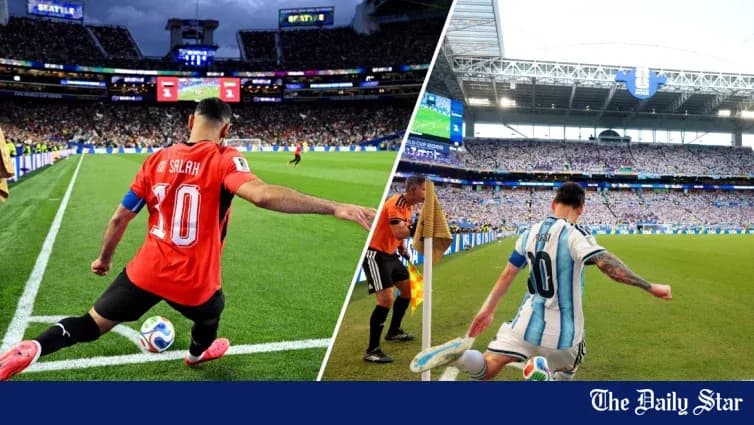
On Tuesday in Atlanta, Lionel Messi and Mohamed Salah step into the glare at Mercedes-Benz Stadium as defending champions Argentina meet an Egypt side tasting the knockout stage for the first time in almost a century. Both arrive drained, bruised and still catching their breath after being dragged to the edge in the Round of 32.
Argentina’s first real wobble
Argentina’s title defence finally shook on Friday night. Cape Verde, on their World Cup debut, did what few expected: they went toe-to-toe with the holders, fired 16 shots, and forced extra time. Only a cruel 111th-minute own goal from Diony Borges separated them from a seismic upset in a 3-2 thriller.
For Lionel Scaloni, it was the first real crack in a campaign that had, until then, felt almost serene. The group stage had been a procession. Control, composure, a familiar rhythm. Cape Verde ripped that script up, harrying Argentina, forcing them deep, and asking questions that had not yet been posed this tournament.
Messi did not hide from it. He admitted he was tired, frustrated by Argentina’s failure to press high and suffocate the game the way they usually do. That admission matters because this team leans on him more heavily than ever. At 38, he has still supplied seven of Argentina’s 11 goals so far — a staggering share that even includes an own goal in the team tally. When he fades, the whole structure feels it.
The physical toll runs deeper than the captain’s heavy legs. Facundo Medina limped off with severe cramp. Enzo Fernández also cramped badly. Nicolás González stayed on despite an ankle problem, with Argentina out of substitutions and forced to ride it out. The following day’s recovery session told its own story: Nahuel Molina, Fernández and Medina could not complete it. Medina’s issue has been downplayed as cramp, but González is a genuine doubt with a reported ankle sprain.
Scaloni does have options. Nicolás Tagliafico can step in at left-back if Medina is not risked. The bigger question lies further forward: how many half-fit players can Argentina afford to carry when their captain has already admitted he is running low?
Egypt’s moment, 92 years in the making
Across the bracket, Egypt finally broke their own World Cup barrier. Ninety-two years after their last appearance in the last 16, the Pharaohs are back in the knockout rounds and refusing to leave quietly.
Their route here was even more draining than Argentina’s. A full 120 minutes against Australia. A 1-1 draw that turned into a 4-2 win on penalties. Emotion, tension, and a physical slog that will still be in their legs when they walk out in Atlanta.
Yet Egypt will not be intimidated by what they saw on Friday. Cape Verde’s bravery will have been replayed and dissected in the Egyptian camp. The blueprint is clear: stay compact, defend with discipline, and then spring forward with Mohamed Salah and Omar Marmoush on the counter when space appears.
Salah remains the axis around which everything turns. A fully fit Salah in transition is a nightmare for any defence, and Argentina know it. The concern is his hamstring. He went into the Australia match with a problem and, at times, seemed reluctant to hit full speed during that draining 120-minute contest. Egypt need his explosiveness, not just his presence.
They will not open up and trade blows. They will wait, they will frustrate, and they will look to punish any Argentine fatigue or lapse in concentration. For a side that has waited nearly a century to return to this stage, patience will not be an issue.
Masters of the long game
If this tie stretches, history leans Argentina’s way. When World Cup matches go beyond 90 minutes, they become specialists. Across all tournaments, Argentina have won 10 of their 12 games that entered extra time, with four victories sealed before penalties and six more completed in shootouts.
That record is not an accident. It speaks to a team comfortable living with tension, familiar with the dark arts of managing minutes, tempo and nerves when the clock ticks into the red. It is a habit built across generations and now inherited by Messi’s group.
Yet even masters of survival have limits. Back-to-back energy-sapping games, key players nursing cramps and knocks, and a 38-year-old talisman carrying the bulk of the scoring load — it is a dangerous mix.
Egypt arrive with their own fatigue but also with something Argentina cannot manufacture: the raw surge of a team breaking new ground. Ninety-two years of waiting has turned into a single night with Salah on one side, Messi on the other, and a place in the quarterfinals at stake.
The winner will head to Kansas City on July 11 to meet Switzerland or Colombia. The question is simple: whose legs, and whose genius, will last longest when it matters most?