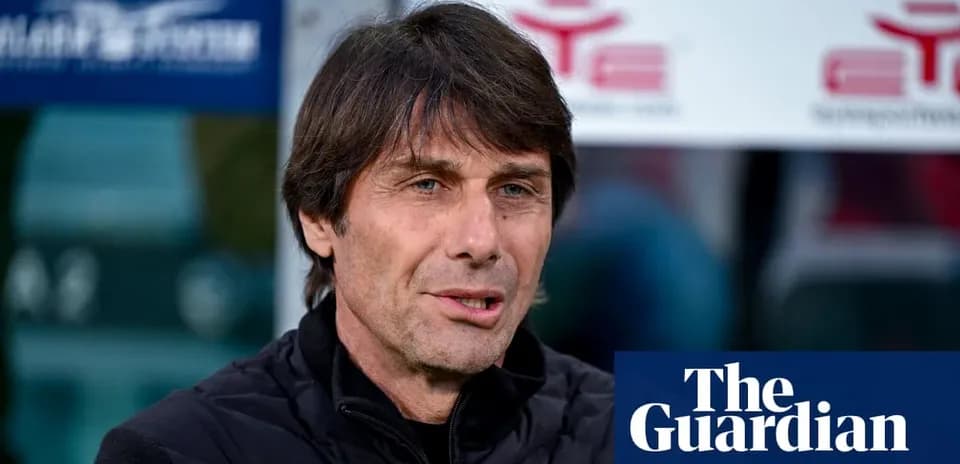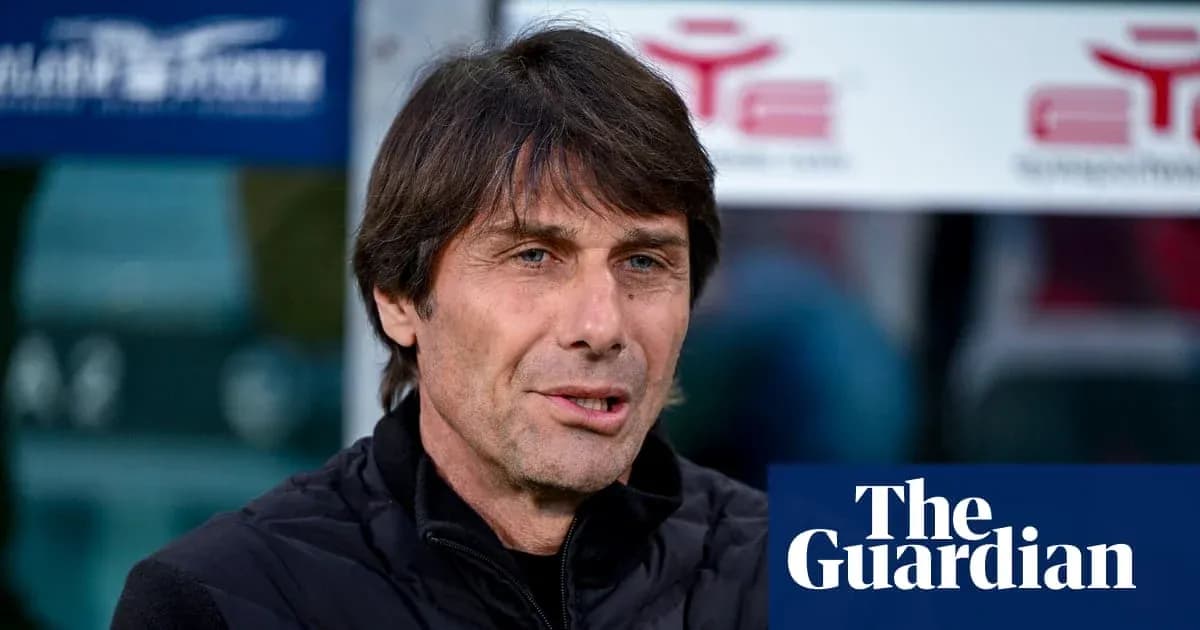
Antonio Conte has never been shy about his own ambitions. This week, he didn’t bother to pretend otherwise.
Fresh from Napoli’s 1-0 win over Milan on Monday night, the coach was asked about the vacancy with the Azzurri after Gennaro Gattuso’s resignation. He stepped straight into the conversation.
“It’s expected that my name appears on the list of candidates for the national team,” Conte said. “If I was the federation’s president, I would consider my name. But, you know my contractual situation, I’ll meet with my president at the end of the season and we will see.”
The remark landed in a country still reeling. Italy have missed the World Cup for a third consecutive time, a failure that cost Gattuso his job on Friday and prompted Gabriele Gravina to step down as president of the Italian football federation 24 hours later. The four-time world champions are drifting. The most obvious firefighter is already on a Serie A bench.
Conte’s situation is complicated, but not immovable. His contract at Napoli runs until 2027. He is the reigning Scudetto winner with the club and, despite an uneven defence of the title, Napoli remain in the mix: seven points behind leaders Inter with seven games to play. It is not a position from which presidents usually volunteer to lose their coach.
Yet Aurelio De Laurentiis is not a usual president.
Speaking to Calcionapoli24, the Napoli owner opened the door with a bluntness that will not have gone unnoticed at Coverciano. “If Conte asked me to allow him to become the national team coach again, I would say yes,” De Laurentiis said.
No conditions. No posturing. Just a clear signal that, if Conte wants the Azzurri, the club will not chain him to the dugout.
The stance is all the more striking given their recent history. Conte delivered last season’s title but came close to walking away in the summer after a serious fallout with De Laurentiis. They patched things up, enough to go again, but theirs has always been a combustible alliance rather than a serene partnership. The prospect of a dignified, mutually agreed parting at the end of the campaign suddenly feels plausible.
There is a catch. Italian football, at federation level, is in limbo.
De Laurentiis underlined that uncertainty with a pointed jab at the chaos in Rome. “As he’s very intelligent, as long as there’s no [federation] president, and up to now there hasn’t been, I don’t think he sees himself in charge of something so disorganised.”
It was more than a throwaway line. For Conte, structure and control are non‑negotiable. He walked away from Juventus, from Chelsea, from Inter, when he felt the project no longer matched his demands. The idea of stepping into a federation without a clear leader or coherent plan runs against everything that has defined his career.
Yet the lure of the national team is different. Conte knows that better than most. He has already sat in that chair.
Between 2014 and 2016, he rebuilt a bruised Italy and dragged them to Euro 2016, where they went out on penalties to Germany in the quarter-finals. That side, limited on paper, played with a ferocity and tactical clarity that bore his fingerprints on every blade of grass. His touchline intensity, his obsession with detail, his ability to create a siege mentality – all of it translated seamlessly to tournament football.
Those memories have not faded. Nor has the sense that, when Italian football needs a jolt, it turns to Conte.
Right now, the Azzurri need more than a jolt. They need a reset. A missed World Cup once was a national trauma. Three in a row is a structural crisis. Gattuso’s resignation, swift and dignified, has left a vacuum at the very moment the federation itself is without a head.
Conte, true to form, has positioned himself without fully committing. He reminded everyone of his pedigree and made clear he considers himself a natural candidate, but he also pointed to his deal with Napoli and deferred any real decision until the end of the season. It was both a statement and a negotiation marker.
Napoli, for their part, are trapped in a delicate balance. They owe Conte for last season’s Scudetto and still need every ounce of his intensity for the run‑in. Seven points is a gap, not a chasm. A late surge is not out of the question. At the same time, De Laurentiis has sent a public message that he will not stand in Conte’s way if the federation comes calling and the coach pushes for the move.
The power, as so often with Conte, sits squarely with him.
Italy’s bench is empty. Napoli’s season hangs in the balance. The federation is leaderless. Somewhere in the middle of all that, a coach who thrives in the eye of the storm is weighing his next step.
If the FIGC can get its house in order quickly, the real question will not be whether Conte is on the list. It will be whether anyone else truly is.