The Italy job is vacant again, but this time the backdrop is darker than ever.
Gennaro Gattuso walked away after the World Cup play-off final defeat to Bosnia-Herzegovina, a result that didn’t just end a campaign – it detonated what little credibility remained around the Italian Football Federation. Into that rubble steps a familiar name: Antonio Conte.
His profile fits the moment. His temperament, too.
Conte, the old flame
Conte knows this seat. He took over the national team in 2014 after leaving Juventus, and for two years dragged a flawed squad into a competitive force through sheer intensity and structure.
Across 25 matches with the Azzurri, he won 14 and lost five. His Italy went out at Euro 2016 in the quarter-finals, only after taking Germany to penalties. It felt like a ceiling hit not by ideas, but by resources.
He left with his reputation enhanced and immediately proved his methods translate anywhere. At Chelsea, he stormed to a Premier League title. At Inter, he ripped the Scudetto away from Juventus. At Tottenham, he wrestled with a club in constant flux. Then came Napoli, and another Serie A title, another demonstration that if you give Conte a dressing room and a platform, he delivers.
Now that platform might be the Azzurri again – if the federation can convince him they are worthy of his time.
De Laurentiis opens the door – with conditions
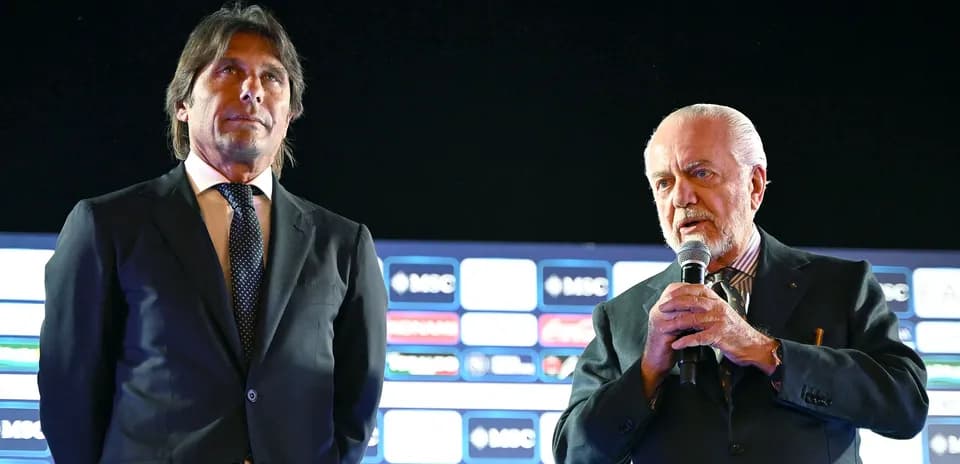
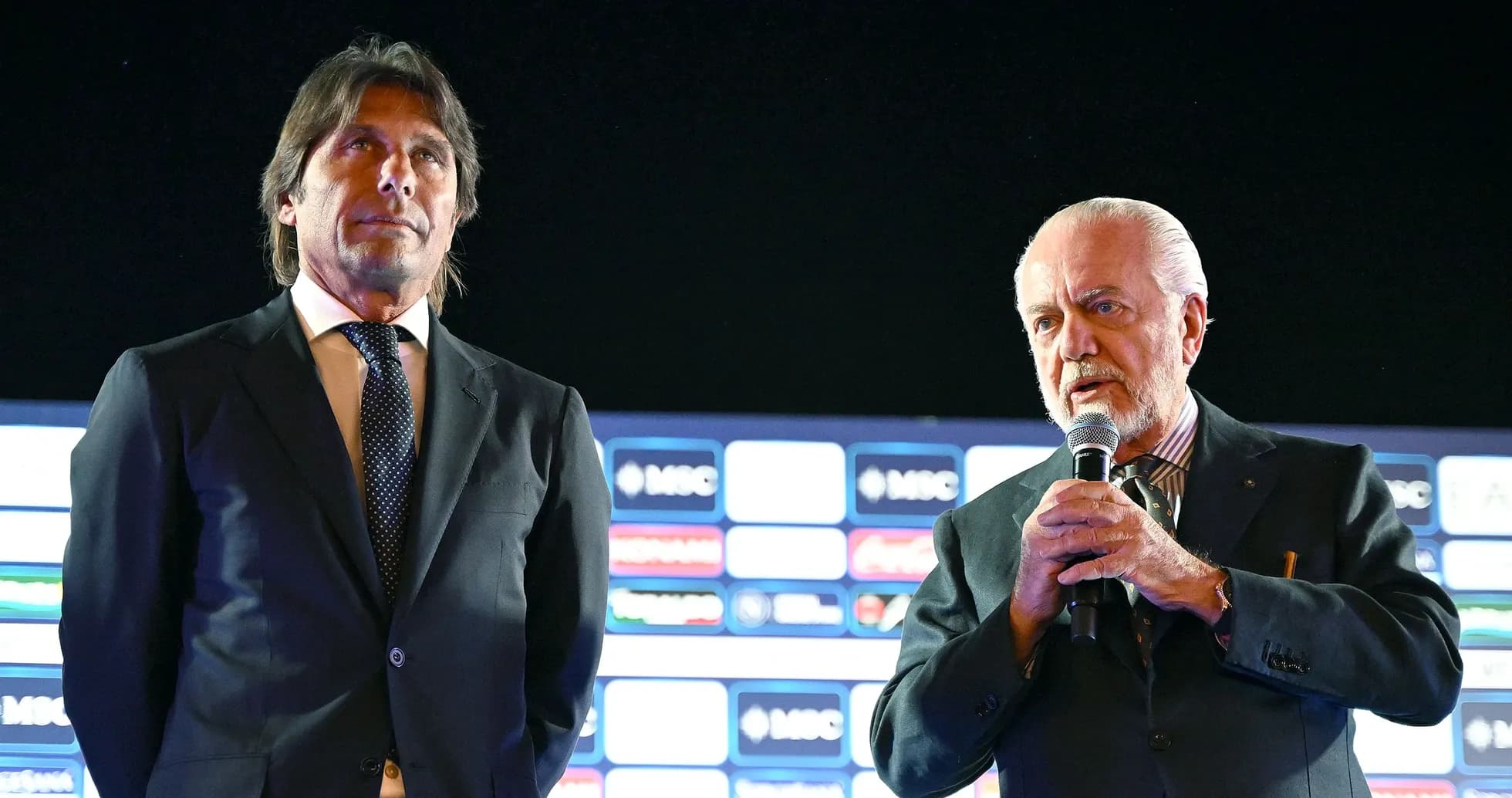
Napoli president Aurelio De Laurentiis did not dodge the question. Speaking to CalcioNapoli24, he made it clear he would not stand in Conte’s way if the call from Coverciano comes.
“Conte new coach of the national team? If Antonio asked me, I think I would say yes,” De Laurentiis said, making it plain that Napoli would not block a move to the Azzurri bench.
Then came the sting.
Because for De Laurentiis, the real issue is not whether Conte wants the job. It is whether there is a federation capable of attracting a coach of his calibre.
He described Conte as “very intelligent” and then tore into the state of Italian football’s leadership, arguing that “as long as there is no serious interlocutor, and up to now there have been none,” Conte would pull back from the idea of leading “something completely disorganised.”
In other words: the job is prestigious; the structure behind it is not.
A federation at breaking point
The pressure on the FIGC did not build slowly this time. It exploded.
Italy’s latest failure – missing out on the 2026 World Cup after already sitting out 2018 and 2022 – is not just a sporting embarrassment. It is a damning indictment of a system that has lurched from one patch-up solution to another.
The campaign started under Luciano Spalletti, a coach fresh from a title with Napoli, drafted as the man to modernise the Azzurri. Results faltered. Gattuso arrived late, asked to rescue a qualifying path that was already slipping away.
He managed eight games, won six, and still his spell will be remembered for the two defeats that mattered most. Norway in the final group game. Bosnia-Herzegovina in the play-off final. Two punches that left Italian football on its knees.
The fallout was immediate. FIGC president Gabriele Gravina stepped down. Delegation chief Gianluigi Buffon followed him out. The sense was not of a project failing, but of a structure collapsing.
Power, money and a “Cinderella” Serie A
De Laurentiis has never hidden his contempt for what he sees as a warped power balance inside Italian football, and the latest crisis has only sharpened his tone.
He wants sweeping change. Not tweaks, not cosmetic reforms. He has openly backed Giovanni Malagò, the current CONI president, as the man to come in as commissioner and ultimately lead the federation.
For De Laurentiis, Malagò is the “perfect person” to take control of a system that no longer works.
His argument cuts to the core of Italian football’s politics: who really runs the game, and who really pays for it.
“Italian football is Serie A which is considered like a Cinderella, it only has 18% in terms of the federation, while the amateurs and the players have the majority,” he said, labelling the current setup “an absurdity” given the financial reality.
Without Serie A, he argued, the federation “would not exist,” pointing out that top-flight clubs collectively finance it with around €130 million a year. The money flows up, the influence does not.
For club presidents like De Laurentiis, that imbalance is no longer tolerable in the wake of a third consecutive World Cup absence.
Can Conte fix chaos he does not control?
All of this circles back to Conte.
On the pitch, he is exactly what Italy crave: demanding, tactically sharp, ruthless in his standards. His previous stint with the Azzurri proved he can extract every last drop from a squad that is short of superstars.
But this is no longer just about tactics and line-ups. Any coach stepping into this role walks into a federation in flux, with leadership positions vacated and governance under open attack from within its own ecosystem.
De Laurentiis has effectively told the FIGC: you can have Conte, but you must convince him you are serious, organised, and worthy of his trust.
The question is no longer whether Conte can lift Italy. It is whether Italian football can first lift itself.