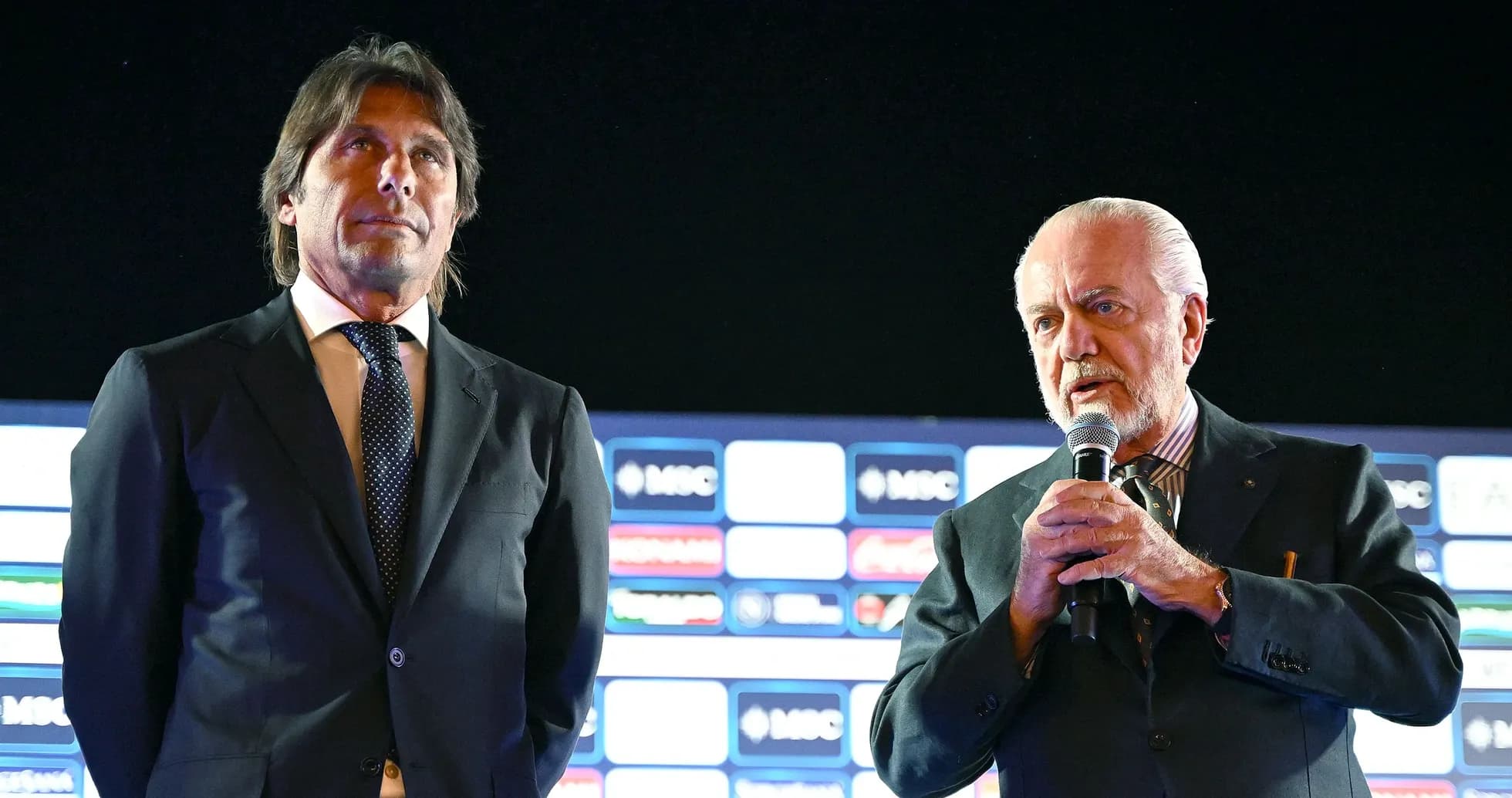
Antonio Conte and the Azzurri: A New Challenge Amidst Chaos
Antonio Conte stands once again at the edge of the Azzurri dugout, but this time the decision may rest less on tactics and more on politics.
The Italy job is vacant after Gennaro Gattuso walked away in the aftermath of the World Cup play-off final defeat to Bosnia-Herzegovina, a loss that detonated an already fragile system. The fallout has been brutal. The calls for a total reset of Italian football’s ruling class have grown louder by the day, and with them, the demand for a commanding figure to restore order. Conte’s name, inevitably, sits at the top of that list.
Conte, the unfinished chapter
Conte knows the national team better than most of his contemporaries. He stepped in back in 2014 after leaving Juventus, inheriting a side short on confidence and clarity. Across 25 matches in charge of Italy, he delivered 14 wins and suffered just five defeats, building a fiercely competitive unit that punched above its weight at Euro 2016 before bowing out to Germany on penalties in the quarter-finals.
That shootout in Bordeaux felt less like an ending and more like an interruption.
Since then, Conte has only strengthened his reputation. He went to Chelsea and won the Premier League. He returned to Italy and took Inter to the Serie A title. He then crossed to Tottenham and, most recently, guided Napoli to the Scudetto last season. His CV now carries the kind of authority that can silence dressing rooms and boardrooms alike.
So when the Azzurri bench opened up again, it was only a matter of time before the conversation turned back to him.
De Laurentiis opens the door – with a warning
Napoli president Aurelio De Laurentiis did not dodge the subject. Speaking to CalcioNapoli24, he made it clear that, from the club’s side, there would be no obstruction if Conte received a formal approach from the federation.
“Conte new coach of the national team? If Antonio asked me, I think I would say yes,” De Laurentiis said, framing the decision as one that would ultimately belong to his coach.
Then came the sting. He questioned why Conte would even want to step into the current chaos.
Because for De Laurentiis, the problem is not the bench. It’s the building around it.
“As long as there is no serious interlocutor, and up to now there have been none, I believe he would desist in imagining himself at the head of something completely disorganised,” he argued, laying bare his distrust of the Italian Football Federation’s current state.
It was less an endorsement and more a diagnosis.
A federation at breaking point
The pressure on the FIGC has been simmering for years. Bosnia-Herzegovina merely turned up the heat and blew the lid off.
Italy’s qualifying campaign for the 2026 World Cup was a mess from the outset. It started under Luciano Spalletti, a coach fresh off a title-winning campaign at Napoli, and still it drifted. Gattuso arrived late, drafted in as a firefighter to salvage what he could. On paper, six wins from eight matches suggests a partial recovery.
The reality was much darker.
Defeats to Norway in the final group game and then to Bosnia-Herzegovina in the play-off final left a scar that will not fade quickly. Those two matches defined Gattuso’s short reign and pushed him towards the exit, but they also exposed deeper fractures in Italian football’s structure and planning.
The numbers are damning. Italy have now missed the World Cup in 2018, 2022 and 2026. Three consecutive absences from the sport’s biggest stage for a four-time world champion. That is not a blip. That is a collapse.
The repercussions were immediate. FIGC president Gabriele Gravina stepped down. Delegation chief Gianluigi Buffon followed him out. Power, already questioned, now looks completely hollowed out.
Who really runs Italian football?
Into that vacuum stepped De Laurentiis with more than just criticism. He has a plan, or at least a name.
He has publicly backed Giovanni Malagò, the current president of CONI, to take charge of the federation, first as commissioner and then as president. In De Laurentiis’ view, Malagò is the kind of figure who can impose order, credibility and direction on a body that has drifted too far.
But De Laurentiis did not stop at personalities. He went straight for the structure of Italian football’s power map, and in particular the role of Serie A.
“Italian football is Serie A which is considered like a Cinderella, it only has 18% in terms of the federation, while the amateurs and the players have the majority. This is an absurdity considering that without Serie A the federation would not exist and considering that we finance it with a good €130 million a year,” he said.
The message was blunt: the clubs that fund the system do not control it. The professional game, he argues, is treated as a poor relation despite carrying the financial burden.
In that context, Conte’s potential return becomes more than a coaching decision. It becomes a symbol of whether Italy can convince one of its most demanding and detail-obsessed managers that the environment is worthy of his methods.
Conte’s dilemma
Conte is not a romantic. He is a builder, a controller, a man who thrives in structures that bend to his will. At Juventus, Chelsea, Inter and Napoli, he imposed an identity and extracted titles. The national team, with its political currents and institutional inertia, is a different beast.
De Laurentiis clearly believes that, right now, the federation cannot offer the guarantees Conte would seek. No “serious interlocutor,” no coherent project, no clear hierarchy. Just a great shirt, a great anthem, and a great deal of confusion.
And yet, the lure of the Azzurri is unique. Few Italian coaches can resist the thought of leading the national team back from the brink, of turning three World Cup failures into the starting point of a renaissance.
The job is there. The nation is waiting. The question is whether Antonio Conte sees a team to be rebuilt, or a federation too broken to fix.