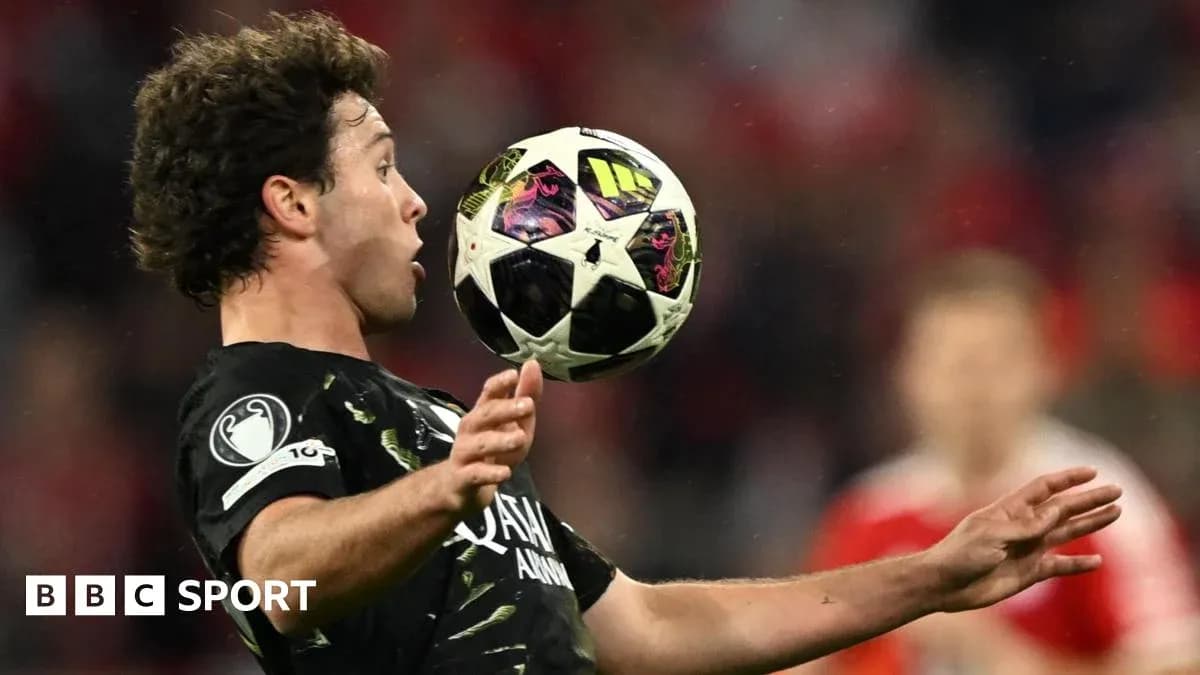
Allianz Arena Incident: Bayern Munich vs Paris St-Germain
The Allianz Arena froze.
Bayern Munich were chasing a lifeline, Paris St-Germain clinging to control of a Champions League semi-final that had already lurched into chaos over two legs. Then, on the half-hour, came the flashpoint that left players, coaches and fans staring in disbelief at referee Joao Pedro Silva Pinheiro.
Vitinha, under pressure in his own box, thrashed a clearance from close range. The ball cannoned straight into the arm of his team-mate Joao Neves inside the area. Red shirts stopped. Arms shot up. Bayern players swarmed the referee, demanding the penalty that might have dragged them back from 1-0 down on the night and 6-4 behind on aggregate.
Pinheiro stood firm. No whistle. No trip to the monitor. VAR stayed silent. Inside the stadium, the noise turned instantly from roar to rage. Outside it, social media lit up with the same question: how is that not a penalty?
The answer lay not in the referee’s nerve, but in a rarely discussed corner of the handball law.
As explained by BBC Sport’s football issues correspondent Dale Johnson, the laws of the game contain a specific exemption for this exact type of incident. It is not considered handball when a player is struck on the hand or arm by the ball played by a team-mate, unless that touch directly results in a goal for the attacking side or the player scores immediately afterwards. In such scoring cases, the restart is a direct free-kick to the opposition, not a penalty to the attacking team.
In other words: a defender cannot normally be punished with a penalty for being hit by his own colleague’s clearance, even if his arm is away from his body and even if the contact happens in the box.
"It covers when the ball is unexpectedly hit at you by a team-mate, even if your arm is away from your body – the law says you should not give away a penalty," Johnson explained, cutting through the confusion that followed.
That word “unexpectedly” sits at the heart of the argument. When Vitinha blasted the ball clear, could Neves realistically anticipate that it would be driven straight at him from such short distance? The law assumes he cannot. The defender is treated as a victim of circumstance rather than a culprit, protected from the kind of harsh punishment that has fuelled so many handball controversies in recent seasons.
Only one caveat could have changed the outcome: deliberate handball. If Neves had clearly moved his arm towards the ball, if there had been an obvious attempt to block the shot with his hand, the exemption would not apply. In that scenario, a penalty would be expected.
But in this case, within the framework of the current law, officials judged there was no such intent. No deliberate act. No spot-kick.
The decision did nothing to ease Bayern’s fury or the sense of injustice that rolled around the Allianz Arena. Yet on a night when emotion raged, the law stayed cold, precise – and, for the Germans, brutally unforgiving.