Achraf Hakimi Faces Trial for Rape Allegations Impacting World Cup
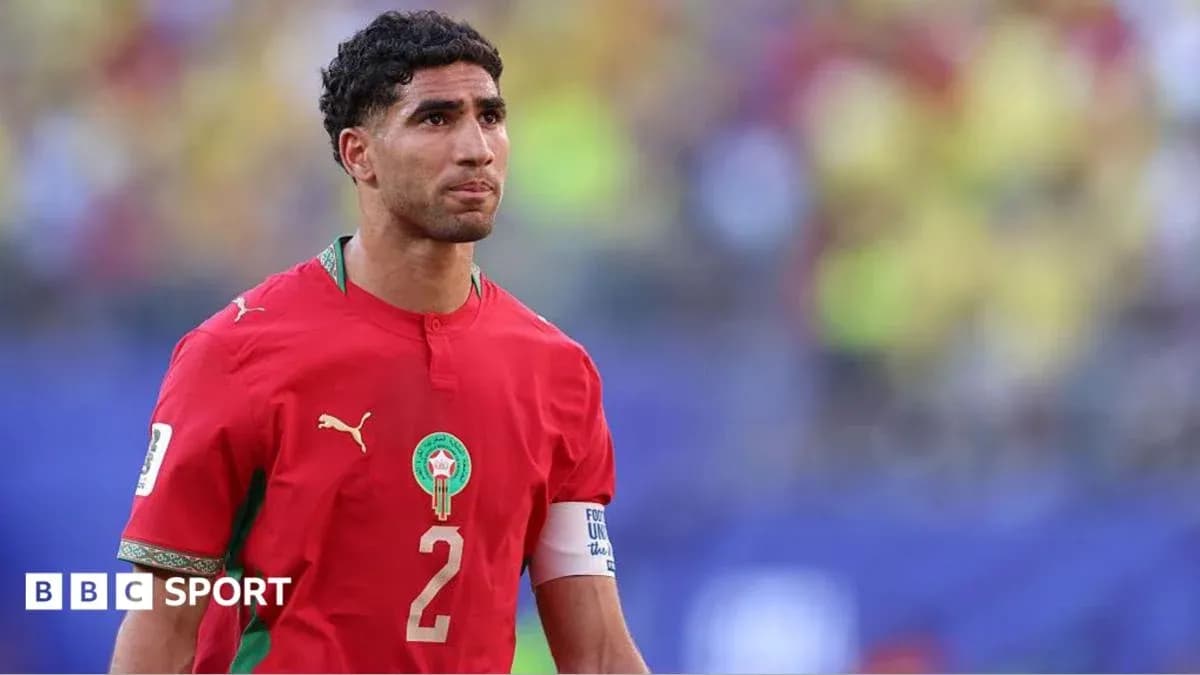
Achraf Hakimi, captain of Morocco and star defender for Paris St-Germain, has been ordered to stand trial for rape in France, a decision that now hangs heavily over both his career and his country’s World Cup campaign.
French prosecutors in Nanterre, on the western edge of Paris, confirmed that a trial will go ahead over an allegation dating back to 2023, when a 24-year-old woman accused Hakimi of raping her at his home in the capital. A preliminary investigation was opened in March of that year; an investigating judge ruled in February 2026 that the case should proceed to trial.
French media report that Hakimi, 27, has recently failed in an appeal to have the case dismissed.
A captain under scrutiny
Hakimi is preparing to lead Morocco into their second World Cup group match, against Scotland on Friday (23:00 BST) in the United States, yet the spotlight on him this week has been as much about the courtroom as the pitch.
He has consistently denied the accusations. In a pointed and emotional message on social media on Friday, Hakimi claimed the case would never have existed were he not a high-profile footballer.
"The justice system looked me in the eye and said, 'If you weren't famous, there would never have been a case,'" he wrote.
"I chose to remain silent for years. I believed that maintaining my dignity, being patient, and trusting in the justice system would allow the right decisions to be made.
"Today, a story that isn't mine is being told at the expense of my family, my life, and above all, the truth. I sometimes feel like I've become an easy target.
"I've been waiting for this trial since day one. And now I'm eagerly awaiting it. Finally, I'll be able to speak."
No date has yet been set for the start of proceedings, but the decision to send the case to trial marks a significant escalation in a saga that has followed Hakimi through some of the most successful years of his club and international career.
Relief and resolve from the complainant
From the other side of the case, the reaction was starkly different.
Rachel-Flore Pardo, lawyer for the complainant, welcomed the ruling in a statement, saying that after more than three years of legal wrangling, her client finally feels heard.
"After more than three years of legal proceedings, and after my client was, in her view, defamed and dragged through the mud by Achraf Hakimi's defence, this decision brings her relief and hope.
"Relief that she has been heard by the justice system and will have the right to a trial.
"Hope that this trial will help other women and further weaken the wall of denial and impunity surrounding sexual violence, including in the world of men's football."
The case now moves into a new phase, one that will test not only the legal arguments on both sides but also football’s ongoing struggle with allegations of sexual violence involving high-profile male players.
World Cup complications on the horizon
For now, Hakimi remains with Morocco, whose entire group-stage schedule is based in the United States. That offers a degree of short-term clarity: he is free to play, and the team can focus on the immediate task.
The picture becomes far more tangled if Morocco progress.
The World Cup is being staged across the US, Canada and Mexico until the quarter-finals, when the tournament moves exclusively to American soil. Should Morocco reach the knockouts and be drawn to play in Canada or Mexico, Hakimi may face serious obstacles at the border.
Canada’s government website states that authorities can deny entry to any person who has "committed or been convicted of a crime". While Hakimi has not been convicted of any offence, the existence of a rape trial order could complicate any application to enter the country, depending on how the authorities interpret their rules.
The issue is not theoretical. Ghana midfielder Thomas Partey, 32, missed his nation’s World Cup opener against Panama last week after being denied entry to co-hosts Canada. Partey has pleaded not guilty to seven charges of rape and one count of sexual assault relating to allegations by four different women between 2020 and 2022 and is due to stand trial next year.
Hakimi and Morocco will be acutely aware of that precedent as they plot a route through the tournament.
A glittering career under a dark cloud
On the field, Hakimi’s record is beyond dispute. Since making his international debut as a 17-year-old in 2016, he has collected 97 caps and become the beating heart of a Moroccan side that changed the shape of football history in 2022, when they became the first African nation to reach a World Cup semi-final.
At club level, his rise has been just as sharp. After emerging at Real Madrid and blossoming at Inter Milan, he joined Paris St-Germain in 2021. In Paris he has stacked up 13 trophies, including back-to-back Champions League titles over the past two seasons, and cemented his reputation as one of the most dynamic full-backs in the game.
Now, that glittering career runs alongside a looming court date that could define how he is remembered far beyond the touchline.
Morocco’s immediate concern is Scotland on Friday night. Beyond that, qualification, knockout brackets, and the logistics of a three-nation World Cup will all come into play.
Hovering over it all is a question that no coach, no federation, and no player can easily control: how do you chase football’s biggest prize when the next whistle you’re waiting for might be from a judge, not a referee?