Neymar and Pulisic Injuries Impact World Cup Plans
The World Cup is barely up to speed, and already two of its marquee attackers are limping through the storyline.
Brazil’s Neymar and the United States’ Christian Pulisic are both wrestling with calf problems that threaten to reshape their countries’ group-stage plans – and possibly their entire tournaments.
Brazil Weighs Risk And Reward With Neymar
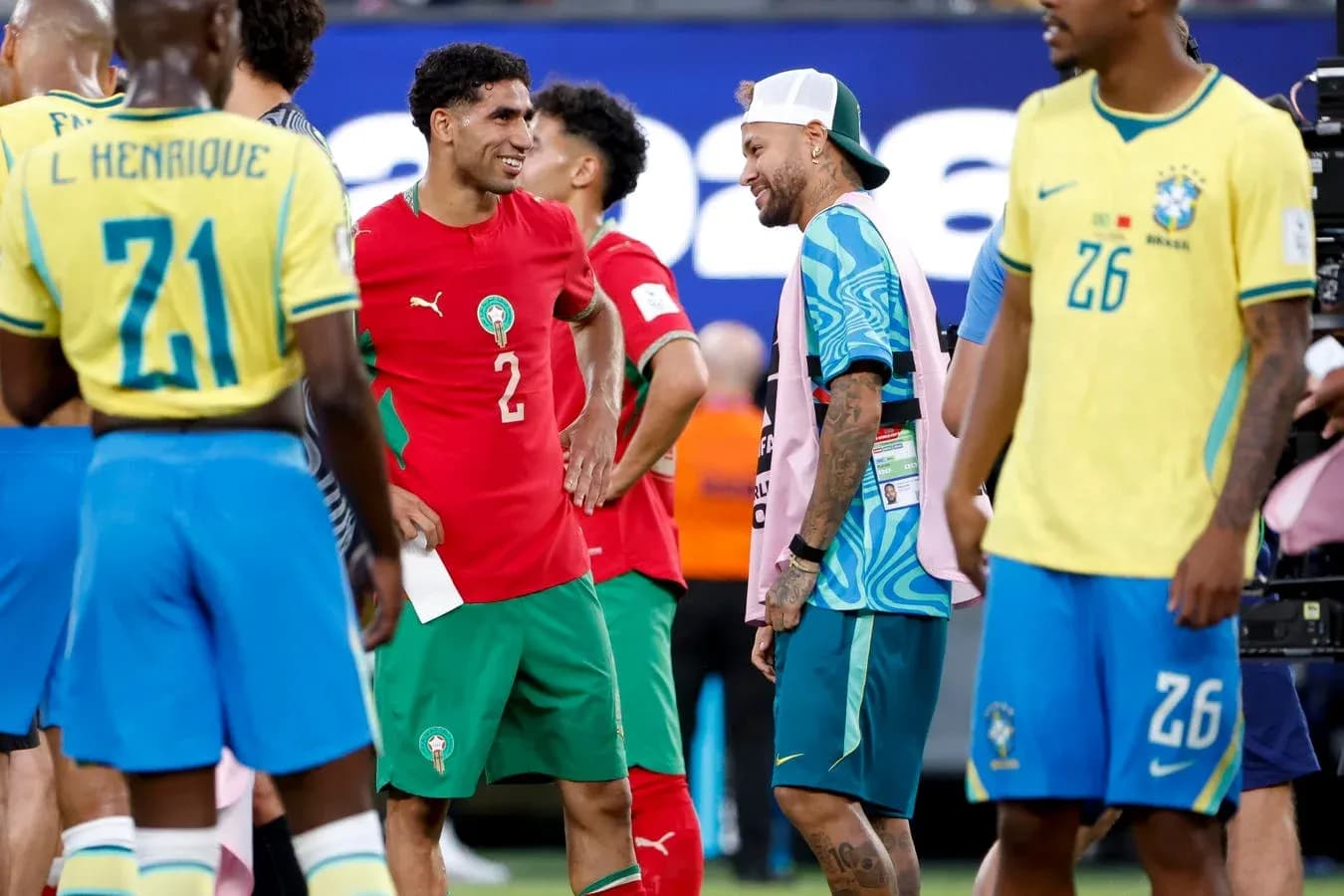
Neymar, now 34 and still the face of Brazilian football, has not played a single minute at this World Cup. The right calf injury that struck on May 17 while he was playing for Santos continues to dictate his schedule, not the other way around.
He has been edging back, but only at the margins. On Tuesday he worked alone on the sideline. On Wednesday he joined teammates briefly in training. That is as close as he has come to the pitch.
It won’t be close enough for Brazil’s next Group C match. He has already been ruled out against Haiti, extending an absence that stretches back a full month and counting.
Inside the Brazilian camp, the calculation is brutal but simple: push now, or protect the player for when the stakes rise. There is serious consideration of leaving Neymar out for the entire group stage to give him the best chance of being ready for the knockout rounds.
That is, of course, if Brazil gets there.
A 1-1 draw with Morocco in their opener has left little margin for error. Haiti on Friday and Scotland on June 24 now carry extra weight for a side that expects to glide, not grind, through the first phase. Brazil, five-time world champions, suddenly have to think like survivors rather than favorites.
Neymar’s long layoff only deepens the tension. He has not appeared for the senior national team since October 17, 2023, when he tore the anterior cruciate ligament and meniscus in his left knee during a World Cup qualifier against Uruguay. The comeback has already been a long road. The calf has turned it into a maze.
Pulisic’s Tournament Put On Pause
On the other side of the bracket, the United States face a more sudden, but equally awkward, problem.
Christian Pulisic, 27 and the USMNT’s attacking talisman, initially injured his left calf in training just last week. He then aggravated the problem during the Americans’ World Cup opener, a statement 4-1 win over Paraguay.
The scoreline was emphatic. The sight of Pulisic leaving the field by halftime was not.
That early exit has left his status in doubt for the Group D clash with Australia on Friday. The U.S. have momentum, depth, and three points in the bank. What they don’t have is clarity on whether their most dangerous forward will be fit enough to start, or even to feature at all.
What The Injuries Actually Mean
Strip away the drama, and both stories likely come down to the same diagnosis: calf strains, the classic curse of explosive players.
A calf strain – a pulled calf muscle – happens when one or more of the calf muscles, or the tendons attaching them to bone, are overstretched or torn. In a sport built on sudden sprints, sharp changes of direction and repeated accelerations, the risk is constant. One mistimed push-off, one surge from standing start to full speed, and the muscle goes.
The severity matters. Muscle strains are typically graded in three degrees:
- First-degree (mild) – Less than five percent of the muscle mass is affected. Recovery can be as quick as one to three weeks, sometimes faster for elite athletes with everything on the line.
- Second-degree (moderate) – A more substantial portion of the muscle is involved, but it is not a complete tear. This is what Neymar is reported to be dealing with. Returning to full activity from a second-degree strain usually takes roughly three to six weeks, two to three times longer than a mild strain.
- Third-degree (severe) – A complete tear of the muscle or the muscle-tendon unit. That is the nightmare scenario, often measured in months, not weeks, and can require surgery.
Pulisic’s strain has not been publicly classified. The range runs from a short, nervy absence to a multi-week problem. For a tournament played at breakneck pace, even the low end of that spectrum can feel like an eternity.
Managing The Damage
The treatment is conservative unless the muscle is completely torn. No scalpels. Just discipline.
Rest. Ice. Compression. Elevation.
The classic RICE approach rules the early days: stop the activity, cool the area with 20-minute ice sessions every couple of hours, wrap the calf to limit swelling, and keep the leg raised above heart level to prevent fluid build-up.
For Neymar and Pulisic, that process is layered on top of elite medical care, tailored rehab, and constant monitoring. Every step, every change of pace in training, becomes a data point.
And that is where the uncertainty bites. Brazil do not yet know when Neymar can sprint without thinking. The United States do not yet know when Pulisic can drive at a defender without feeling for that left calf.
Both nations have enough talent to cope in the short term. But World Cups are decided by the players who tilt tight matches, who turn half-chances into headlines.
Right now, two of those players are stuck on treatment tables, and the tournament is waiting to see when – or if – they can truly rejoin it.