Achraf Hakimi to Stand Trial for Rape in France
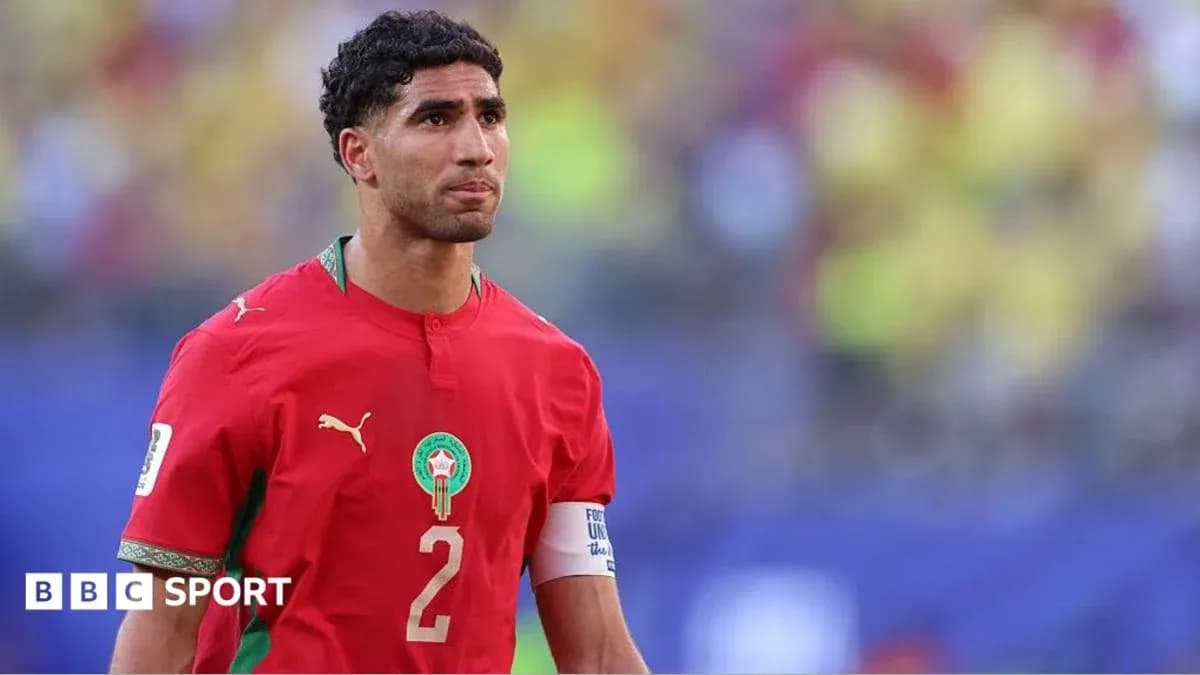
Achraf Hakimi, the captain of Morocco and one of the defining full-backs of his generation, will stand trial for rape in France, prosecutors in Nanterre have confirmed.
The decision, taken by an investigating judge in February 2026 and upheld after a recent appeal failed, casts a stark shadow over one of the World Cup’s most high-profile figures just as he prepares to lead his country into their second group game against Scotland on Friday night (23:00 BST).
A Case Heading to Court
The case dates back to 2023. A 24-year-old woman accused the Paris St-Germain defender of raping her at his home in the French capital. The public prosecutor’s office in Nanterre, in the western suburbs of Paris, opened a preliminary investigation in March that year.
From there, the legal process has moved slowly but decisively. An investigating judge ordered that Hakimi, now 27, stand trial. French media report that his recent attempt to have the case thrown out has been rejected.
No trial date has yet been set, but the direction of travel is clear: this will go before a court.
Hakimi has consistently and firmly denied the allegations.
Hakimi Breaks His Silence
On Friday, with the World Cup already underway and Morocco based in the United States for the group stage, Hakimi chose to speak at length on social media.
“The justice system looked me in the eye and said, ‘If you weren’t famous, there would never have been a case,’” he wrote.
“I chose to remain silent for years. I believed that maintaining my dignity, being patient, and trusting in the justice system would allow the right decisions to be made.
“Today, a story that isn’t mine is being told at the expense of my family, my life, and above all, the truth. I sometimes feel like I’ve become an easy target.
“I’ve been waiting for this trial since day one. And now I’m eagerly awaiting it. Finally, I’ll be able to speak.”
It is the clearest and most emotional public stance he has taken since the accusations emerged, a message delivered on the eve of a World Cup fixture he is expected to captain.
The Plaintiff’s Camp: “Relief and Hope”
From the other side of the case, the response was equally pointed.
Rachel-Flore Pardo, lawyer for the plaintiff, welcomed the decision to send the matter to trial. In a statement, she said that after more than three years of legal proceedings, her client felt she had been “defamed and dragged through the mud” by Hakimi’s defence.
She described the ruling as bringing “relief and hope”.
Relief, she said, that her client had been heard by the justice system and would have the right to a trial. Hope that the case might help other women and “further weaken the wall of denial and impunity surrounding sexual violence, including in the world of men’s football.”
The words underline what this case now represents: not only a contest of legal arguments around one of the sport’s biggest names, but part of a wider, bruising reckoning around power, celebrity and accountability in elite men’s football.
World Cup on the Line – And Borders in Play
On the pitch, Hakimi remains central to Morocco’s ambitions. A veteran of 97 caps, he debuted for his country at 17 and became a symbol of their stunning run to the semi-finals at the 2022 World Cup, the first African nation ever to reach that stage.
Off the pitch, the legal cloud over him could yet affect this tournament in a very practical way.
All of Morocco’s group matches are being staged in the United States, where the squad is currently based. For now, that shields Hakimi from any immediate travel complications. But the World Cup is spread across three co-hosts — the US, Canada and Mexico — until the quarter-finals, after which it moves exclusively to American soil.
If Morocco advance to the knockout rounds and are scheduled to play in Canada or Mexico, Hakimi could face difficulties entering those countries because of the ongoing case.
Canada’s government website states it can deny entry to any person who has “committed or been convicted of a crime”. Even without a conviction, the existence of charges and a forthcoming trial can prompt scrutiny at the border. The rules are clear; the interpretation in each case is not always so straightforward.
The issue is no longer theoretical. Only last week, Ghana midfielder Thomas Partey missed his country’s World Cup opener against Panama after being denied entry to co-hosts Canada. Partey, 32, has pleaded not guilty to seven charges of rape and one count of sexual assault relating to allegations from four women between 2020 and 2022. He is due to stand trial next year.
The message to players under serious criminal accusation is unmistakable: legal battles do not pause for a World Cup.
A Star Under Siege
Hakimi’s footballing rise has been relentless. From his breakthrough to the national team in 2016, to a move from Inter Milan to Paris St-Germain in 2021, he has become one of the most decorated defenders in the modern game. He has collected 13 major trophies at club level, including back-to-back Champions League titles with PSG over the past two seasons.
That success now collides with the most serious allegation any player can face.
For Morocco, the calculation is brutal. On one side, their captain and talisman, a player whose pace and courage from right-back helped carry them into history in Qatar. On the other, a looming trial in France and the possibility that international borders may shut on him at the very moment his country needs him most.
Hakimi insists he is ready for his day in court. His accuser believes the decision to hold a trial finally gives her a chance to be heard. The legal process will move at its own pace, far slower than the World Cup’s frantic rhythm.
In the coming weeks, as Morocco chase another deep run, every step their captain takes will be shadowed by a case that will not be decided on grass, under floodlights, but in a courtroom in Nanterre.