
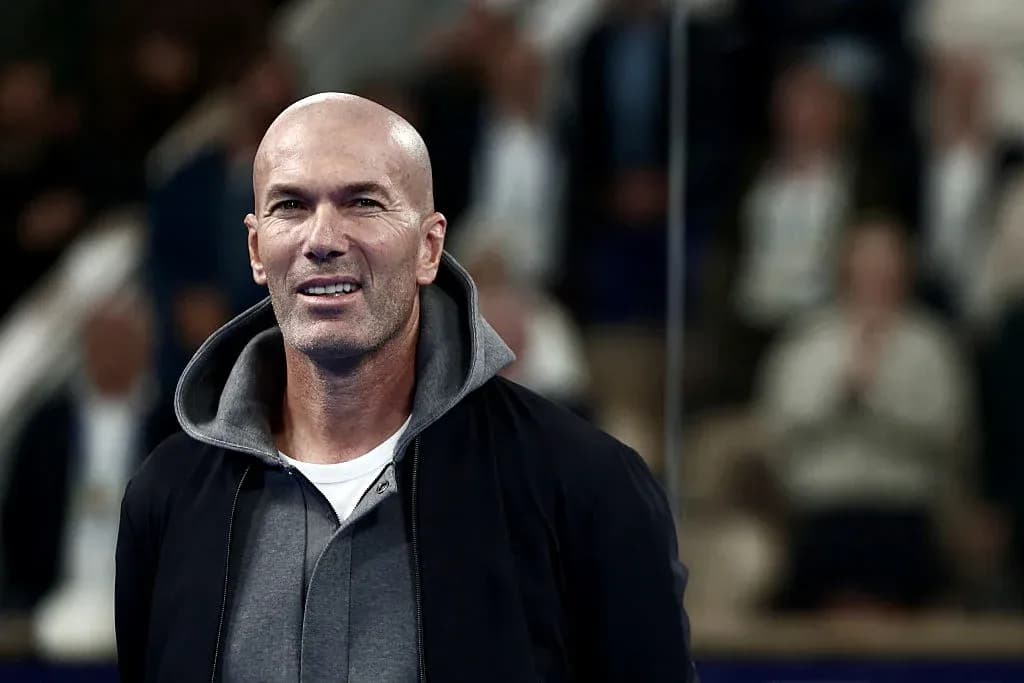
Zinedine Zidane Takes Charge of French National Team
Zinedine Zidane is finally coming home.
After years of speculation, the legendary playmaker will officially take over as head coach of the French national team, with sources close to the deal confirming that the decision has in fact been locked in since last November. There was no late twist, no last-minute doubt. The French federation identified its man months ago and never looked away.
A long-awaited union
For France, this is more than a managerial appointment. It is the reunion of a generation’s icon with the team he once carried to the summit of world football. The federation has handed "Zizou" the keys to a long-term project, a clear signal that this is not a stopgap solution or a short, ceremonial stint on the bench.
The framework is already in place. Zidane has assembled his new backroom staff, shaping the technical and analytical team that will accompany him into the next cycle. The administrative side is now catching up with the footballing reality: the formal signing of contracts and paperwork is expected to be wrapped up before the end of the month, turning an open secret into an official era.
A project built on time and trust
The message from the French federation is unmistakable: Zidane will be given room to build.
He is not being asked to simply ride the wave of an already talented generation. He is being entrusted with a process that stretches across several years and several major tournaments, with a clear roadmap laid out from the start.
At the heart of that roadmap sit three major challenges: the UEFA Nations League, Euro 2028, and the 2030 World Cup. Three competitions, three different stages on which Zidane will be expected to stamp his identity on Les Bleus.
Three stages, one ambition
The Nations League will come first. It offers Zidane an immediate testing ground, a chance to install his ideas against top-level opposition in a competitive setting without the do-or-die stakes of a World Cup or European Championship. It will reveal his choices: tactical structure, hierarchy in the dressing room, and how he blends established stars with emerging talent.
Then comes Euro 2028, the first major tournament that will truly measure the depth of his work. By then, the squad will be his in every sense – selected, shaped, and hardened under his watch. Expectations will be enormous. France does not hand long-term trust to a coach so that he can merely compete; the target will be to contend for the title.
Beyond that lies the 2030 World Cup, the ultimate destination of this project. It is there that the federation’s faith in Zidane’s leadership will be judged on the grandest stage. A full cycle, a full generation, and the chance for the man who lifted the trophy as a player in 1998 to chase it again from the touchline.
France has made its choice early and decisively. Now the country waits to see what Zidane can build with time, authority, and a team that already knows the weight of a World Cup on its shoulders.



