
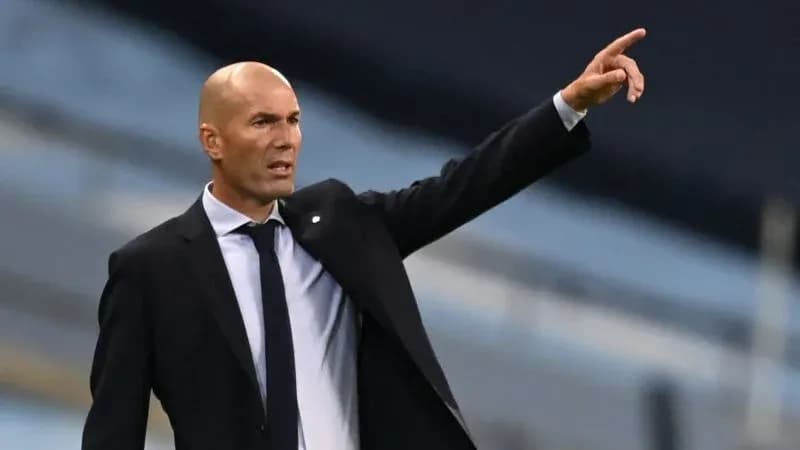
Zidane Returns to Lead France: A New Era Begins
Zinedine Zidane is finally where so many in France always felt he was destined to be: on the bench of Les Bleus, in charge, with the tricolore on his chest and four years ahead of him to reshape a wounded giant.
On Tuesday, the French Football Federation confirmed the 54-year-old as head coach of the national team, handing him a contract through the next World Cup cycle. He succeeds Didier Deschamps, who stepped down after the 2026 World Cup – a tournament that began with expectation and ended with a dull ache.
France arrived in North America as one of the heavy favourites. They left with nothing. Knocked out in the semifinals by eventual champions Spain, then beaten by England in the third-place match, a squad built to lift the trophy trudged home empty-handed and emotionally flat. The mood needed changing. The federation has turned to the most magnetic figure French football has ever produced.
Zidane, out of management since leaving Real Madrid in 2021, did not pretend to play it cool.
“I have often said there is nothing greater than the French national team. It is therefore a joy and obviously a great honor to become the coach of France. It is also a responsibility,” he said at his unveiling, before thanking FFF president Philippe Diallo, the Executive Committee and paying tribute to Deschamps’ 14-year reign. He spoke, too, of “a lot of ambition for the French Team” – a simple line that sounded less like a slogan and more like a warning to the rest of the world.
A legend comes home
If any appointment guarantees a hero’s welcome, it is this one. Zidane is not just a former France player; he is the defining face of the country’s golden era.
He gave France its first World Cup, and did it with the sort of theatrical flourish that rewrites a nation’s sporting history. In 1998, under the floodlights at the Stade de France, Zidane rose twice to meet corners and powered two headers past Brazil, the favourites, the standard-bearers, the team everyone feared. France won 3-0. A first star appeared above the badge. A new identity was born.
Two years later, he was again the conductor as France won Euro 2000. No World Cup winner had ever followed up with a European Championship title. France did, riding the same blend of technique, steel and Zidane’s calm in the storm.
Yet his story in blue has always carried a scar. His last act as a France player remains one of the most replayed moments in World Cup history: the headbutt on Marco Materazzi in the 2006 final in Berlin. Sent off in extra time, he walked past the trophy he had once lifted, down the tunnel, leaving his teammates to lose on penalties to Italy.
That image has lingered for 18 years. His return does not erase it. It reframes it. France fans will hope that the man who once left the stage in anger can now, from the touchline, write a calmer ending.
From Madrid maestro to international novice
This is Zidane’s first job in international football, but he does not arrive as a novice. He arrives as the manager who built one of the most ruthless Champions League machines the modern game has seen.
At Real Madrid, he collected trophies at a rate that made history feel routine: three consecutive Champions League titles, two La Liga crowns, two Club World Cups. He walked into a dressing room loaded with ego and expectation and made it functional, hungry and, when it mattered most, utterly cold-blooded.
He convinced stars to sacrifice, rotated without losing the room, and repeatedly guided Madrid through the kind of high-pressure knockout nights that mirror the rhythm of international tournaments. His Champions League record is not a line on a CV; it is a blueprint for how to navigate short, brutal campaigns where one bad 20-minute spell can end a dream.
For years, after his second departure from Madrid in 2021, it felt like he was waiting. Deschamps stayed, earned that right with a World Cup win in 2018 and a World Cup final in 2022, and continued to command the dressing room. Zidane watched, waited, and turned down other opportunities. The France job always hovered in the background. Now it is his.
A new France to shape
The brief is simple and unforgiving: restore France to the top and do it quickly. The next World Cup in 2030 already looms over everything.
He inherits a squad overflowing with attacking talent and expectation. Kylian Mbappé remains the axis around which everything spins, a global superstar entering his peak years. Around him, Ousmane Dembélé, Michael Olise, Désiré Doué and Bradley Barcola offer pace, flair and unpredictability. On paper, it is an arsenal. On the pitch, in recent years, it has too often been a puzzle.
Since the 2018 World Cup triumph, France have wrestled with balance. How to unleash their forwards without leaving the back door wide open? How to maintain the defensive rigidity that underpinned Deschamps’ best teams while still allowing their brightest attackers to shine?
This is where Zidane’s Madrid experience becomes more than a line of praise. He has already shown he can stitch together teams that blend individual brilliance with collective discipline. He has managed dressing rooms where almost every player is a star at their club. He has made big calls, benched big names, and done it without losing control.
International football will test different skills: less time on the training ground, fewer games, more waiting, more pressure condensed into short bursts. The calendar is unforgiving, the scrutiny relentless. But the knockout logic is familiar to him, and he knows better than most how to prepare a group for a single night that can define a generation.
Chasing an exclusive club
There is also a piece of history in play. Zidane already owns a World Cup winner’s medal as a player. Deschamps has one as a player and one as a coach. Only a handful of men in football’s long story belong to that club of double World Cup winners. Zidane now has the chance to step inside it as a manager.
He did not hide from that ambition. His words were measured, but the intent was clear. This is not a sentimental appointment designed to soothe a nation after a painful tournament. It is a hard-edged, high-stakes bet that the greatest French player of all can become the man who leads them back to the summit.
France wanted a jolt. They chose Zidane. The questions now are not about his past, but about what comes next – and how quickly he can turn a bruised contender back into a fearsome champion.



