York United Stuns Cavalry FC 3–1 in Canadian Premier League Clash
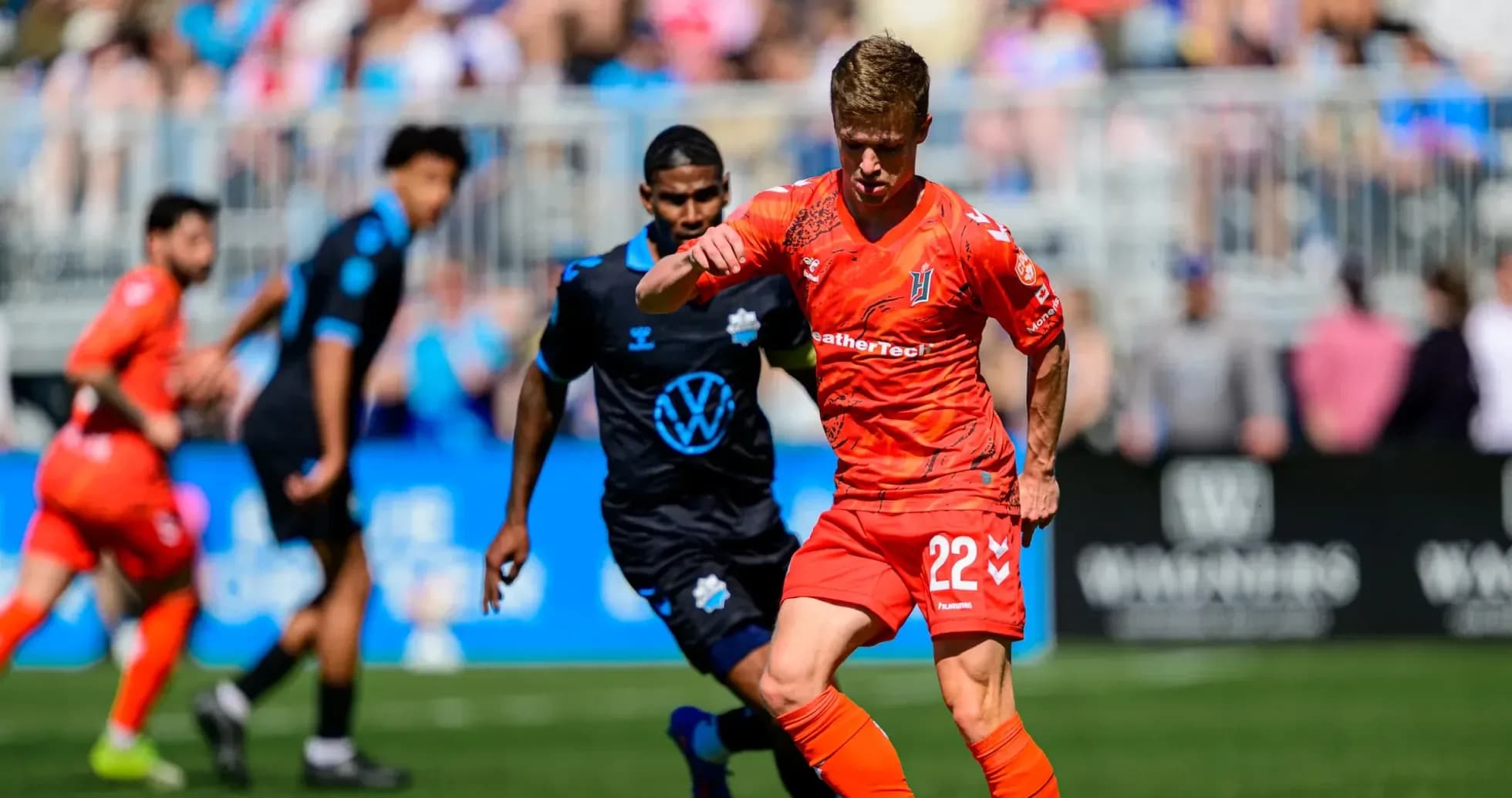
York Lions Stadium had barely settled into its late-afternoon rhythm when this Group Stage meeting in the Canadian Premier League tilted on its axis. York United, seventh in the table with 27 points and a goal difference of -15 heading into this game, were supposed to be the vulnerable hosts. Cavalry FC arrived as league leaders on 53 points, boasting a towering goal difference of 32 and the most complete statistical profile in the division. Yet over 90 minutes, York bent the script, winning 3–1 after a 2–0 half-time lead that exposed both Cavalry’s rare vulnerabilities and York’s latent attacking punch.
The clash of structures was clear from the first whistle. Mauro Eustaquio doubled down on York’s season-long identity, rolling out a 3-4-3 that the numbers say is his preferred platform: they had used it 8 times already this campaign. A back three of R. Lopez, F. Sturing and L. Singh sat in front of goalkeeper A. Campos, with a hard-running midfield band of four – M. Ferrari and C. Guzman as the wide shuttlers, J. Cordova and O. Bassett inside – and a mobile front line of S. Yeates, S. Gonzales and A. Almagro.
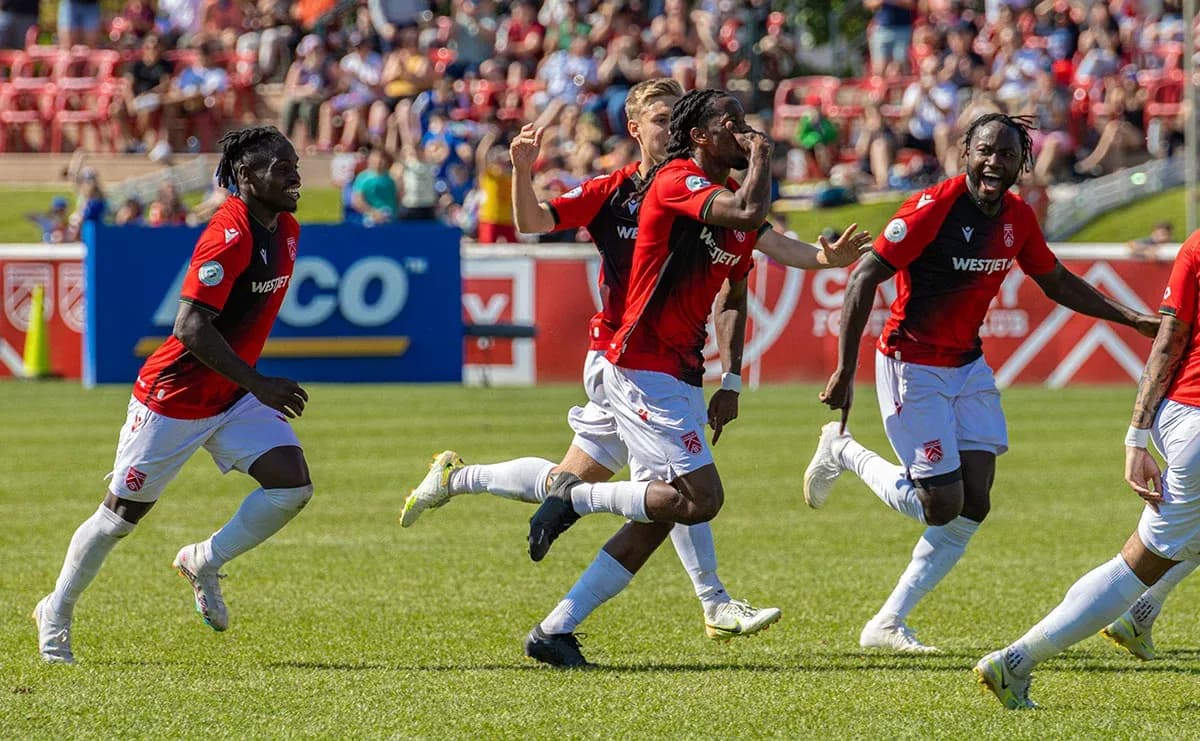
Across from them, Tommy Wheeldon stayed loyal to Cavalry’s power structure: a 4-2-3-1 that has underpinned 11 league outings. N. Ingham guarded the posts, shielded by a back four of Fewo, A. Didic, D. Klomp and J. McGlinchey. In front, the double pivot of E. Kobza and N. Myroniuk was tasked with controlling transitions, while the attacking band – A. Musse wide, N. Edwards and T. Warschewski between the lines – supported lone forward O. Graham-Roache.
On paper, the visitors arrived with overwhelming statistical authority. Overall this season, Cavalry had scored 51 goals and conceded just 19; that goal difference of 32 is the product of a ruthless attack and an elite defence. On their travels, they had 21 goals for and 12 against, averaging 1.6 goals scored and 0.9 conceded per away match. They had also kept 10 clean sheets in total, 5 of them away, and failed to score in only 3 matches overall. York, by contrast, had the profile of a chaotic underdog: 39 goals for and 54 against overall (a goal difference of -15, exactly 39 minus 54), with their home form a wild mix of threat and fragility – 27 scored and 28 conceded at York Lions Stadium, averaging 2.3 both for and against.
That volatility defined the tactical voids on the York side. They came into this fixture with only 2 clean sheets in total all season and a disciplinary profile that hinted at emotional games. Their yellow cards peaked between 61-75 minutes with 23.29% of their cautions, and they had already taken 2 red cards overall. The penalty record underlined their inconsistency: 2 penalties won in total, 1 scored and 1 missed, a 50.00% conversion rate that demanded mention in any pre-match risk assessment.
Cavalry’s own disciplinary edge was sharper but more controlled. They spread their yellows more evenly, with a notable surge between 46-60 minutes (23.73%). The red-card record was more striking: 3 reds overall, split between the 31-45, 76-90 and 91-105 minute windows. Players like E. Kobza and A. Pearlman, both high in the yellow-card charts, embody that combative streak. Kobza, with 8 yellows and a yellow-red on his record, is a classic enforcer in front of the defence; Pearlman, with 7 yellows, patrols the back line with a physical edge.
Within that landscape, the “Hunter vs Shield” matchups were compelling. For Cavalry, the primary hunter was Tobias Warschewski. With 7 goals and 3 assists this season, 44 shots (21 on target) and 40 key passes, he arrived as one of the league’s most complete forwards. His duel numbers – 201 contested, 89 won – and 2 penalties scored underline a striker who can both finish and construct. He was targeting a York defence that, overall, had been conceding 2.3 goals per match and had suffered heavy defeats such as 5-0 away and 5-1 at home.
Yet York’s own attacking hunters were not to be underestimated. T. Skublak, even though not in this particular starting XI, is central to their season story: 6 goals, 2 assists, 27 shots and 9 successful dribbles. S. Yeates, starting here on the right of the front three, has contributed 5 goals and 2 assists from midfield this campaign, with 705 completed passes at 88% accuracy and 17 key passes. He is both creator and finisher, but also a disciplinary risk with 6 yellows and a conceded penalty on his record. A. Almagro, another starter, leads York in assists with 5, supported by 20 key passes and a work rate that includes 12 tackles and 17 interceptions.
Against that, Cavalry’s “Shield” was supposed to be near-impenetrable. Centre-backs D. Klomp and A. Didic have been among the league’s standout defenders. Klomp, with 4 goals, 1 assist, 957 passes at 88% accuracy and 8 blocked shots, offers both build-up quality and penalty-box resilience. Didic adds 3 goals and 3 assists, 936 passes at 89% accuracy and 6 blocked shots, giving Cavalry a rare blend of aerial dominance and distribution from the back. Behind them, Ingham had been protected by a structure that conceded only 0.8 goals per match overall.
In this match, though, York’s 3-4-3 created overloads in precisely the zones Cavalry’s 4-2-3-1 can be stretched. With Guzman and Ferrari pushing high from the flanks and Bassett and Cordova stepping into half-spaces, York repeatedly asked Kobza and Myroniuk to defend wide and deep simultaneously. That dislocation opened channels for Yeates and Almagro to attack the inside shoulders of Klomp and Didic. The 2-0 half-time scoreline reflected York’s ability to turn their high home scoring rate – 2.3 goals per match at York Lions Stadium – into real, repeatable pressure.
In the “Engine Room” duel, Cavalry’s creators were expected to dictate. A. Musse, with 5 assists, 27 key passes and 27 dribble attempts (12 successful), is one of the league’s premier chance-makers. N. Edwards, with 4 goals and 8 key passes, brings vertical running from midfield. Yet York’s central pair of Bassett and Cordova, supported by Yeates dropping in, succeeded in disrupting Cavalry’s rhythm. York’s season-long card pattern – a high proportion of yellows between 46-75 minutes – suggests they often turn the middle third into a scrap, and this match followed that script: they were willing to foul, press and fragment the game to deny Cavalry’s fluid combinations.
The final 3-1 scoreline sits slightly against the season-long statistical current but not entirely outside it. Overall, York average 1.6 goals scored and 2.3 conceded per match, while Cavalry average 2.0 scored and 0.8 conceded. A neutral xG-based prognosis before kick-off would have leaned toward a narrow Cavalry win or a controlled draw, driven by their defensive solidity and superior goal difference. Yet York’s home attacking numbers, combined with Cavalry’s occasional away slips – 4 away defeats, including a 3-1 loss on their travels earlier in the campaign – always left room for a high-variance outcome.
Following this result, the story is of a York side whose chaotic, high-event profile finally broke decisively in their favour against the league’s most complete squad. The hunters in green and blue outfoxed the shield in red, and in doing so, York United reminded the Canadian Premier League that raw numbers only ever tell part of the tale.