World Cup on edge: storms, history, and bold performances
The World Cup’s North American chapter woke up to a strange mix of jeopardy and jubilation: a France fixture under threat from “apocalyptic” weather, England fans falling foul of FIFA’s flag rules, and Egypt finally stepping out of the shadows with a first-ever win on the biggest stage.
Storm clouds over France v Iraq
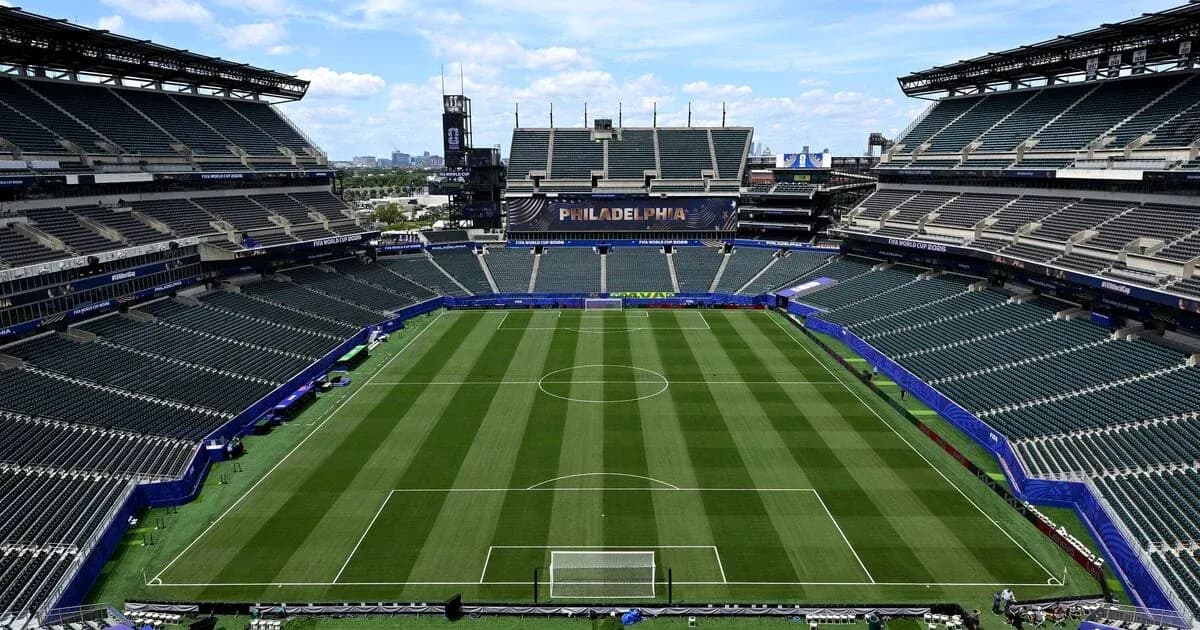
France’s group clash with Iraq in Philadelphia, scheduled for a 10pm kick-off, sits under a darkening sky and an even darker forecast.
Local predictions warn of severe thunderstorms rolling across the city for extended spells. Organisers are braced for the worst. Under FIFA regulations, any lightning strike within eight miles of the stadium triggers an immediate halt: players sent off the pitch, supporters ushered into concourses and emergency shelters.
“They'll start to evacuate the stadium to the main concourse and seek emergency shelter,” explained Lauren Lambrugo, chief operating officer of Philadelphia Soccer 2026. “And then it has to wait 30 minutes prior to them bringing everybody back on the field.”
One flash in the wrong place and the whole night changes. With reports in France describing the outlook as “apocalyptic”, with damaging winds, intense lightning and even a risk of isolated tornadoes, the match is not just in danger of interruption. It could be pushed back altogether if conditions become unplayable.
Salah leads Egypt into history
While Philadelphia scans the skies, Vancouver is still echoing to the sound of Egyptian celebration.
Egypt, a nation steeped in continental pedigree but long cursed on the global stage, finally claimed their first World Cup victory with a 3-1 comeback win over New Zealand. It did not come easily.
Finn Surman’s towering first-half header, the kind you could bottle and use in coaching manuals for years, put New Zealand ahead and left Mohamed Salah and his teammates staring at another night of regret. At the break, Egypt were 45 minutes from extending their winless World Cup record.
They refused to accept it.
Egypt tore into the second half. Ziko dragged them level as the pressure mounted, a deserved equaliser after relentless one-way traffic. The mood flipped. The anxiety that has followed Egypt at this tournament for decades began to seep into New Zealand instead.
Then came the moment everyone in the stadium seemed to sense was coming. Salah, inevitable as ever, exchanged a neat one-two on the edge of the area and drilled low into the corner for his first goal of this World Cup. The goal that pushed Egypt to the brink of history.
Trezeguet finished the job, sweeping home a third as New Zealand unravelled. By the final whistle it was joyous, cathartic. Egypt had turned a deficit into a landmark win and, in scenes captured afterwards, Salah was later seen singing and dancing in the streets of Vancouver, the face of a country finally with a World Cup victory to celebrate.
New Zealand, still without a win after eight previous matches at the finals, will head into a ninth attempt still chasing their own historic moment.
Cape Verde refuse to blink against Uruguay
In Miami, Cape Verde’s debut campaign continued to defy expectation and reputation.
They had already rattled Spain with a draw. Against Uruguay, they went toe-to-toe again and came away with a 2-2 result that might yet reshape the group.
Kevin Pina lit up the night first, thundering a free-kick from around 30 yards that flew like a laser into the net. Uruguay, jolted into life, responded with a familiar show of power. Ronald Araujo levelled with a diving header after a header against the post fell kindly back to him, despite Cape Verde protests over a player down with cramp. Moments later, Araujo rose again to nod a deep cross back across goal, where Agustín Canobbio tapped home to flip the game on its head.
Most sides would have folded. Cape Verde did the opposite.
Helio Varela stepped off the bench and pounced on a defensive calamity, beating Fernando Muslera to a loose ball and rolling into an empty net for another historic goal. Uruguay, already under scrutiny at home after a faltering start, had shot themselves in the foot. Cape Verde, once again, walked off with a point and the feeling they might have taken all three.
Marcelo Bielsa’s problems run deeper than the scoreline. Uruguay have drawn both matches so far and now face Spain without key men Giorgian de Arrascaeta and Ronald Araujo, both ruled out of the final group game and at least any potential round-of-32 tie. Lose to the European champions, and if Cape Verde or Saudi Arabia win their meeting, Uruguay are likely out with just two points and serious questions to answer.
Spain reset, Yamal delivers
Spain, stung by a goalless draw with Cape Verde in their opener, responded in Atlanta with the kind of ruthless efficiency that has defined their recent era.
Lamine Yamal, restored to the starting XI, changed the temperature of the entire performance. The teenager tapped home the opener after Mikel Oyarzabal slid a tempting ball across the box, a simple finish that carried the weight of a first World Cup goal and a sense of inevitability about his impact.
From there, Spain accelerated. Oyarzabal, criticised for his display in the opener, rewrote his own narrative in a blistering spell. He set up the first, then struck twice himself before the first drinks break, a tidy close-range finish and another composed effort turning 1-0 into 3-0 before Saudi Arabia could catch breath.
By half-time, the contest felt done. Spain eased down without ever relinquishing control. A fourth arrived when Marc Cucurella’s shot was diverted into his own net by Hassan Al Tambakti, the eighth own goal of these finals. A late Ferran Torres strike was scrubbed off by VAR for offside, but the damage had long been done.
Spain never needed to get out of third gear in the second half. The win leaves the European champions with one foot in the knockouts and, crucially, their swagger restored.
Belgium and Iran serve up a stalemate
Los Angeles hosted a very different spectacle. Belgium and Iran played out a 0-0 draw that tested patience more than defences.
There were flashes. Mehdi Taremi thought he had given Iran the lead in the first half, only for VAR to intervene and rule the goal out for offside. Belgium later saw a chaotic scramble in the six-yard box somehow kept out by a wall of Iranian bodies, and Maxim De Cuyper squandered a golden chance when he shot straight at Alireza Beiranvand.
The game’s major turning point came when Nathan Ngoy hauled down Taremi near the halfway line, denying a clear goalscoring opportunity. The referee showed red, VAR backed him, and Belgium were left to hang on with ten men.
Roy Keane, never one to sugar-coat, did not bother dressing it up on ITV. He called the quality “rubbish”, criticising the passing, movement and decision-making from both sides, and suggested Iran looked more comfortable defending than using their man advantage.
By the final whistle, neither side could complain about the result. Two games, two points each, and a final round that now carries real jeopardy: Belgium face New Zealand, Iran meet Egypt.
Anthem boos and political fault lines
Iran’s matches continue to carry a weight that extends far beyond the pitch. The national anthem was booed again, the second consecutive World Cup game in which dissenting voices have made themselves heard.
Alireza Jahanbakhsh chose unity over confrontation in his response, stressing that the team plays “for all the Iranians in Iran, outside Iran, with whatever ideology, whatever preferences they have” and that their job is to “put our heart on the pitch” and make people happy, regardless of political divisions.
Outside the stadium, some Iranian fans made clear they see the World Cup as a stage for protest. One supporter, speaking to the Daily Mirror, described the situation as “very political”, insisting the team “support the regime” and that protesters are there to send a message to the world, calling for the fall of the Islamic Republic and rejecting the national side as their representatives.
The team plays on. The noise around them only grows louder.
England: flags, fitness and firm rules
Back in England’s camp, the storylines feel more familiar: injuries, discipline and the ever-watchful gaze of FIFA.
An England flag featuring a submarine was refused entry to the Three Lions’ opener against Croatia. The reason was clear and uncompromising: FIFA bans military imagery on flags inside stadiums. Barrow FC, whose identity is closely linked to the submarine motif, responded online with a tongue-in-cheek post blurring out the image, but the message from organisers was firm.
On the pitch, Thomas Tuchel’s squad management has come into sharper focus. Bukayo Saka, nursing an Achilles issue that Arsenal have had to manage during their title run-in, skipped Saturday’s main group session and worked alone. He then trained fully behind closed doors in Kansas City on Sunday, handing England a significant boost ahead of Tuesday’s meeting with Ghana in Boston.
Tuchel had previously floated the idea of holding Saka back until the final group game against Panama, but the winger insists the problem has not deteriorated and that he is fit. With Declan Rice still a doubt after hobbling off in the win over Croatia, Saka’s availability could reshape Tuchel’s selection.
The England manager has also stamped his authority off the pitch. Defender Dan Burn revealed the squad is operating under a curfew strict enough that some players had to leave a concert early to make it back in time. Burn, who spent a friends-and-family day with his wife and later attended a country music show in full cowboy attire alongside Jason Steele and captain Harry Kane, admitted he was relieved a previous gig on West Palm Beach was avoided because it would have clashed with the curfew.
Discipline, it seems, applies as much to evenings out as it does to defensive shape.
Doku at the centre of a World Cup storm
No player has sat more squarely at the intersection of football and personal life this week than Jeremy Doku.
The Manchester City winger missed Belgium’s draw with Iran due to a chest infection, according to Belgian outlet RTBF. His absence came amid a growing storm around his stated desire to leave the World Cup camp early for the birth of his first child, expected in the second week of July.
Doku has been open about his priorities. “It's my first child, so I definitely want to be there,” he said. “If you ask me what I want, my answer is that nobody wants to miss the birth of their first child. But I also know that football involves many other considerations. I know the federation supports its players and understands their situations. We'll see what we can do.”
His stance drew a fierce and widely condemned reaction from L’Equipe presenter France Pierron, who described leaving a World Cup for the birth as walking away from a “childhood dream” and crudely dismissed the father’s role at the delivery. The backlash was swift. Pierron has since apologised and, according to reports in France, been suspended.
Inside the game, Doku has found support. England striker Ollie Watkins, a father of two, defended him unequivocally, calling the birth of a first child “a blessing” and insisting “you don't get that opportunity again”. Watkins stressed the strain players already face being away from families during the season and said Doku’s decision was “no one else's business”.
The debate may rage on, but one thing is clear: for Doku, the line between professional duty and personal life has never been more sharply drawn.
Brazil wary of Scotland’s bite
In Group C, Brazil know a draw against Scotland will be enough to reach the last 32. Lucas Paqueta wants nothing to do with that kind of thinking.
“All the teams at the World Cup deserve respect,” he said, stressing that Brazil have “great respect” for Scotland and will prepare thoroughly. The message was blunt: regardless of permutations, Brazil’s goal “in every match is to win”.
With both sides aware a point likely suits them, the real test will be whether Brazil’s players follow Paqueta’s words or the table’s logic.
Saka, Salah, storms: a tournament on a knife edge
From Cape Verde’s fearlessness to Egypt’s long-awaited breakthrough, from Spain’s reset to Uruguay’s mounting anxiety, this World Cup day has swung wildly between joy and jeopardy.
Now all eyes turn to Philadelphia, where thunderheads are gathering above France and Iraq. Lightning within eight miles, and the stadium empties. Thirty minutes of clear skies, and they try again.
On a day when Egypt finally broke their World Cup curse and Doku’s personal choice sparked a global argument, it seems fitting that one of the tournament’s marquee fixtures might depend not on tactics or talent, but on the next flash of light in a storm-heavy sky.