World Cup Knockouts: Canada Advance, Brazil and Germany Prepare
The 2026 World Cup has hit the sharp end. The group-stage chaos has given way to the cold clarity of knockout football, and the numbers are already drawing their own battle lines.
Opta’s latest model has updated its projections for the eventual winner now that the last 16 is taking shape. One nation stands out as the clear frontrunner, sitting ahead of a tightly packed chasing group, but the margins at this stage are thin. One bad half, one red card, one slip, and the algorithm tears itself up.
What is certain: the tournament has a spine now. The bracket is set, the giants know their route, and every game from here on carries the weight of a season.
Canada Strike First in the Last 16
Canada have wasted no time announcing themselves in the knockouts. They are the first team to book a place in the round of 16, a statement of both timing and intent.
For a side still carving out its place in world football’s hierarchy, being first through the door matters. It sets a tone. It puts pressure on the established powers who are still working through their final group matches, still calculating permutations while Canada can already look ahead, rest legs, and quietly study the bracket.
This is no longer a novelty story. Canada are in the serious end of the competition, and the numbers will start to treat them that way.
Deschamps Returns as France Face Questions
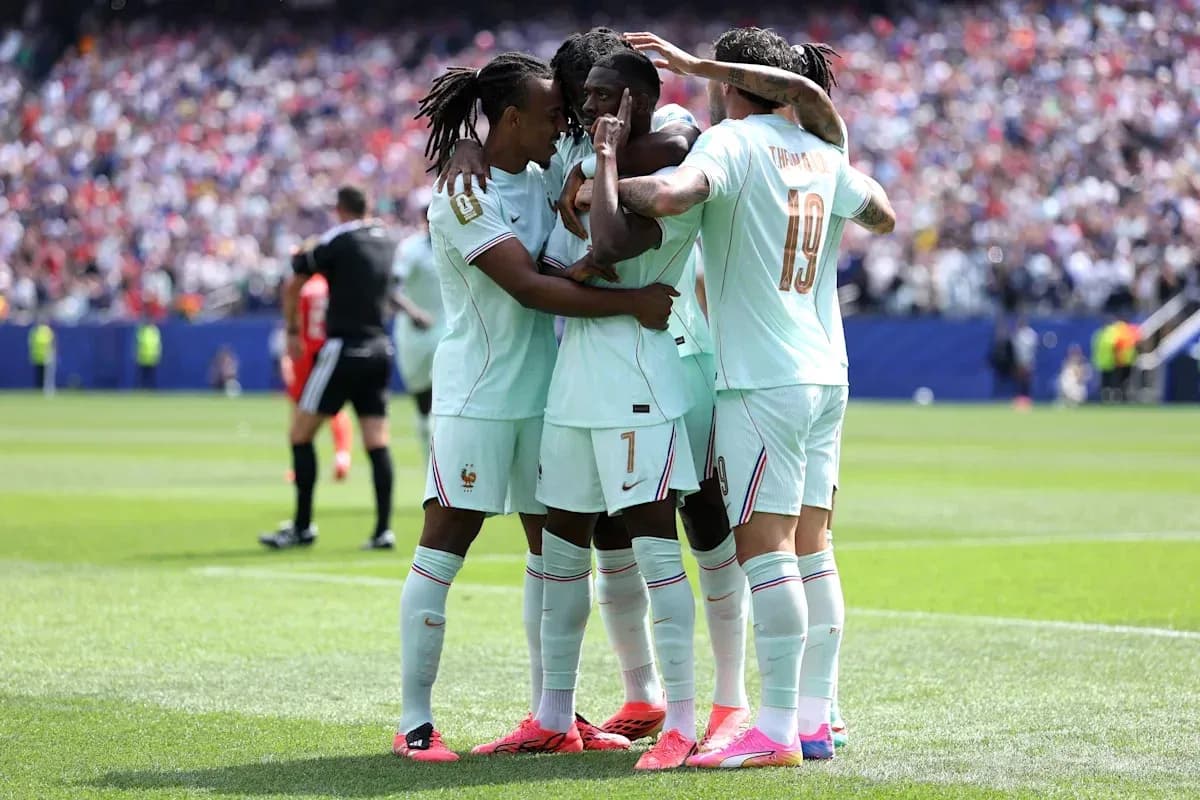
On the European side, a familiar figure has stepped back into the spotlight. Didier Deschamps has returned to the France squad setup with only hours to spare before their next assignment, a late but significant presence around a group that has lived with his voice and his methods for years.
His return lands at a delicate moment. France are managing both expectation and concern, with the status of one of their forwards in doubt ahead of the clash with Sweden. A potential absence in attack would reshape Deschamps’ options and could tilt the tactical balance in what already looks like a tight, nervy tie.
France know this terrain. They have lived deep into tournaments before. But knockout football does not care about history; it cares about who is fit, who is sharp, and who makes the right call in the 88th minute.
Brazil–Japan and Germany–Paraguay: A Heavyweight Evening
All eyes now turn to a stacked evening on the television schedule.
At 7 pm, Brazil face Japan. On paper, it is a meeting of contrasting traditions: Brazil, steeped in World Cup lore, against a Japan side that has spent the last decade turning promise into consistent performance. Japan’s pace and discipline have troubled bigger names before. Brazil, as ever, carry the burden of being judged by titles, not by performances.
Later, at 10:30 pm, Germany meet Paraguay. It has the feel of a classic World Cup trap game. Germany bring the usual expectation, the demand to control the tempo and the tie. Paraguay bring resilience, edge, and the kind of defensive stubbornness that can drag a favorite into a long, uncomfortable night.
By the end of that double bill, the knockout picture will look very different. Some contenders will have justified the algorithms. Others will have shredded them.
A Lighter Moment in the Stands
Not everything in this World Cup is tension and tactics. During South Africa’s meeting with Canada, the stadium produced one of those unscripted moments that only live sport can deliver.
As the famous Mexican wave rolled around the stands, a spectator lost her grip and watched her phone tumble onto the pitch. A small incident, a brief interruption, but a reminder of the human chaos wrapped around the precision of elite football.
The game went on. The crowd laughed. The wave continued its circuit.
The knockouts have only just begun, yet the stakes already feel brutal. Canada are through. France wait on fitness and lean again on Deschamps. Brazil and Germany step into the lights tonight, knowing that from here, every mistake is final and every 90 minutes can redraw the map of this World Cup.