World Cup Knockout Stage Matches Preview
The group-stage safety net has gone. One mistake now, and four years of planning disappears in a single bad touch. The World Cup steps into its ruthless phase this weekend, and the last 16 throws up a string of fixtures that feel more like quarterfinals and semifinals than early knockouts.
Over four days, giants, upstarts and old grudges collide. Here are the ties that will shape the bracket – and maybe the tournament.
Canada vs Morocco
July 4, Saturday, Houston Stadium – 17:00 GMT
Canada have already ripped up their own history. Two wins in the group stage, a first real statement on the world stage, and a sense that this is no longer a team just happy to be invited.
But the ghost in this matchup wears goalkeeper gloves.
Yassine Bounou could easily have been on the other side. Born in Morocco, he spent his first three years in Montreal, and former Canada coach Benito Floro once tried to persuade him to switch allegiance. Bounou said no. Canada have been paying for that ever since.
The last time they faced him at a World Cup, they battered away at his goal and still went home, beaten 2-1 and dumped out in the group stage in Qatar. Now they come again, armed with sharper weapons and a little more belief.
Tajon Buchanan will look to stretch Morocco down the right, while Alphonso Davies steps out of his more familiar left-back role and into something far more dangerous. Davies’ hamstring scare is in the rear-view mirror after he returned against South Africa – his first competitive minutes since Bayern Munich’s Champions League semifinal – and his surges from deep could rip open a tight game.
Jesse Marsch has already shown he’s willing to rip up his own plans. The Canada coach has reshuffled his midfield, turning to Nathan-Dylan Saliba after Ismael Kone’s World Cup ended with a broken leg against Qatar. It’s a big ask for Saliba, but this is knockout football; there is no gentle introduction.
Morocco, for their part, have reloaded without quite reigniting. The Atlas Lions are compact, disciplined and stubborn, but the attacking fluency that lit up Qatar has flickered rather than burned. They know, though, that with Bounou behind them, they can live with fine margins. If they drag this tie to penalties, they will fancy their chances against anyone.
The prize is brutal: a likely quarterfinal against France. For Canada, that’s the dream. For Morocco, it’s familiar territory. For Bounou, it’s another chance to shut the door on the country that once tried to claim him.
France vs Paraguay
July 4, Saturday, Philadelphia Stadium – 21:00 GMT
On paper, this looks straightforward. On memory, it never is.
France and Paraguay have history at World Cups, and it has rarely been comfortable for Les Bleus. In 1958, France trailed in the second half before detonating into life and running out 7-3 winners. In 1998, they needed a golden goal from Laurent Blanc in extra time to survive a suffocating last-16 tie on home soil.
This version of France, though, is built to run away from trouble rather than grind through it. They are not just winning; they are sprinting past opponents.
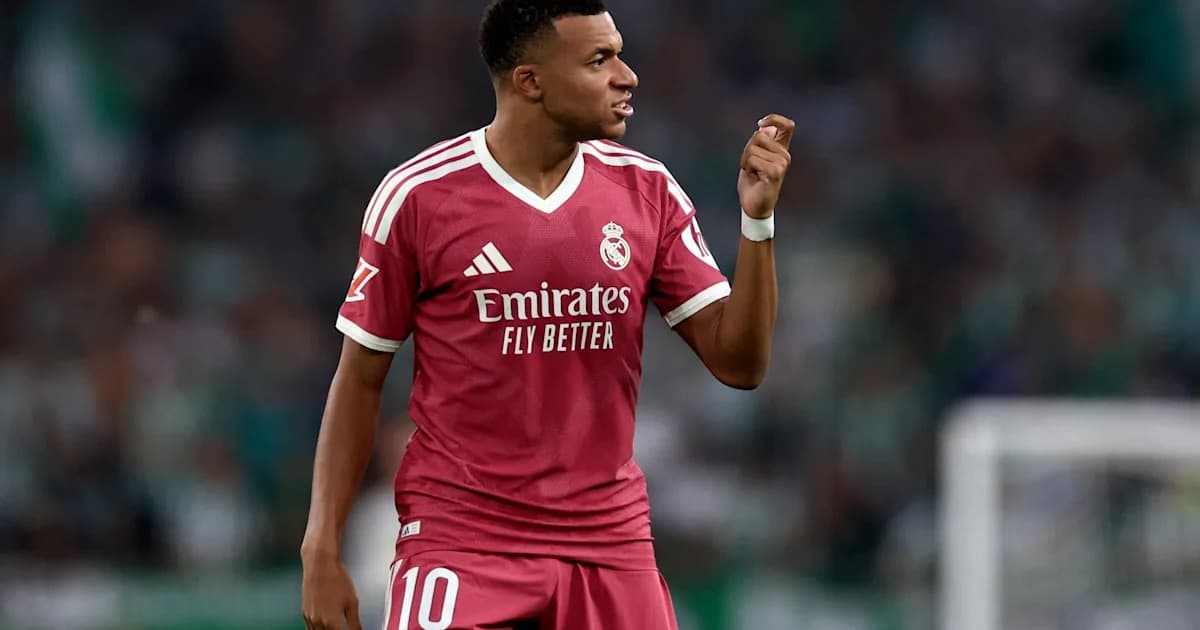
Paraguay arrive with a reputation for defensive resilience, fresh from stifling Germany’s attack. That discipline will be tested to the limit by Kylian Mbappe. Give him grass to run into and the Guaranies will be chasing shadows.
France will not just rely on pace in behind. Michael Olise and Adrien Rabiot will probe through the middle, slipping passes between the lines, drawing defenders out of shape. Width will come from the flanks, and once the ball is worked into shooting positions, Olise, Rabiot and possibly Theo Hernandez will not hesitate to pull the trigger from distance.
Paraguay know the script: stay compact, frustrate, drag France into a fight rather than a race. History tells them they can do it. Current form says France may not give them time to try.
Brazil vs Norway
July 5, Sunday, New York/New Jersey Stadium – 20:00 GMT
There are not many nations who can sit across from Brazil and say, with a straight face, “We’ve got your number.” Netherlands can. Hungary can. Norway can – and they say it the loudest.
Norway have never lost to Brazil. Two wins, two draws, and one of those victories still stings in Brazilian football folklore: the 2-1 triumph at the 1998 World Cup, decided by a late penalty that sparked fury across Brazil and endless replays everywhere else.
US referee Esse Baharmast saw what many missed in real time – a clear foul in the box. Kjetil Rekdal converted, Brazil still topped the group, but Norway squeezed past Morocco into second and the knockout rounds. That was Norway’s last appearance at a World Cup finals, and one of only two times they’ve ever made it out of the group.
The rematch has been a long time coming.
Brazil arrive searching for a spark, a flash of chaos in a team that sometimes looks too measured. They may have found it in Endrick. The teenager came off the bench against Japan and changed the temperature of the game, bringing direct running and fearless movement. He will be dwarfed by Norway’s towering defenders, but that has never stopped Brazilian forwards before.
Norway will lean into what they know: physical presence, aerial strength, a willingness to turn this into a battle of duels and second balls. Brazil will try to turn it into a game of angles and rhythm, of one-twos and sudden surges.
The history gives Norway a rare psychological edge. The shirt, the stage and the weight of expectation still belong to Brazil. Something has to give.
Mexico vs England
July 5, Sunday, Mexico City Stadium – 00:00 GMT on Monday
Altitude versus attitude. Juan Carlos Osorio once framed it that way, and the line still fits.
Mexico City sits 2,240 metres above sea level. The air is thin, the lungs burn, and El Tri know exactly how to weaponise it. Four games so far in Guadalajara and Mexico City, four wins, eight goals scored, none conceded. This is their terrain, their tempo, their roar.
Mexico set the rhythm with the ball. Their possession game is not slow; it is suffocating. Raul Jimenez offers guile and movement up front, while Julian Quinones, Colombia-born and thriving in green, brings power and penetration alongside him. Together, they have given Mexico’s attack a sharp, modern edge.
England arrive with history on their side but not in this city. Against Mexico, the Three Lions hold a 6W-2L-1D record, including that iconic 2-0 win at Wembley in the 1966 World Cup. In Mexico City, though, they have never won: two defeats, one draw, and one of those losses came wrapped in the most infamous moment in the tournament’s history – Diego Maradona’s Hand of God.
This time, they have Harry Kane. That changes everything.
Thomas Tuchel has tried to outthink the mountain, timing England’s arrival to limit the impact of the altitude. FIFA have even considered moving the kickoff to dodge potential storms. The science and the logistics matter, but once the whistle blows, it becomes about who can impose their style first.
If Mexico’s press bites early, England could spend long spells chasing. If England ride out the initial storm and Kane starts dictating play around the box, the thin air will not be the only thing making defenders gasp.
Waiting in the next round: Brazil or Norway. The path is brutal. The stage, perfect.
USA vs Belgium
July 6, Monday, Seattle Stadium – 00:00 GMT on Tuesday
USA keep asking the same question of the football world: “Do you believe us yet?”
A 2-0 win over Bosnia-Herzegovina in the last round was more than just progress. It was their first World Cup victory over a UEFA opponent since 2002, a psychological barrier smashed. But the win came at a cost. Folarin Balogun is suspended, and in a squad already light on out-and-out strikers, that hurts.
Mauricio Pochettino’s options up front are now brutally simple: Ricardo Pepi or Haji Wright. One of them must carry the line, occupy Belgium’s defence and make the most of the few chances that will inevitably come.
Belgium, for their part, arrive with a reminder that they can still flip a script in a heartbeat. Against Senegal, they trailed by two and looked dead on their feet. Then Rudi Garcia rolled the dice in a way few managers dare at a World Cup.
He hauled off Kevin De Bruyne and Jeremy Doku – his two most explosive creators – and threw on Dodi Lukebakio and holding midfielder Nicolas Raskin. It looked conservative on paper. On the pitch, it unlocked something. Belgium roared back, the attack finally clicked, and the comeback began in the 86th minute.
That ability to reinvent mid-game, to find a different route to goal when Plan A stalls, makes Belgium dangerous in knockout football.
History leans heavily their way. Since the nations first met at the 1930 World Cup, Belgium have beaten USA six times in a row. That streak now hangs over the tie like a challenge. For USA, it is motivation as much as burden.
The winner walks into a heavyweight clash with Portugal or Spain. For a country the size of Massachusetts, Belgium have long punched above their weight. USA are desperate to prove that, this time, they can punch back.
Portugal vs Spain
July 6, Monday, Dallas Stadium – 19:00 GMT
Some fixtures feel like tactical seminars. Portugal vs Spain feels like a referendum on footballing identity.
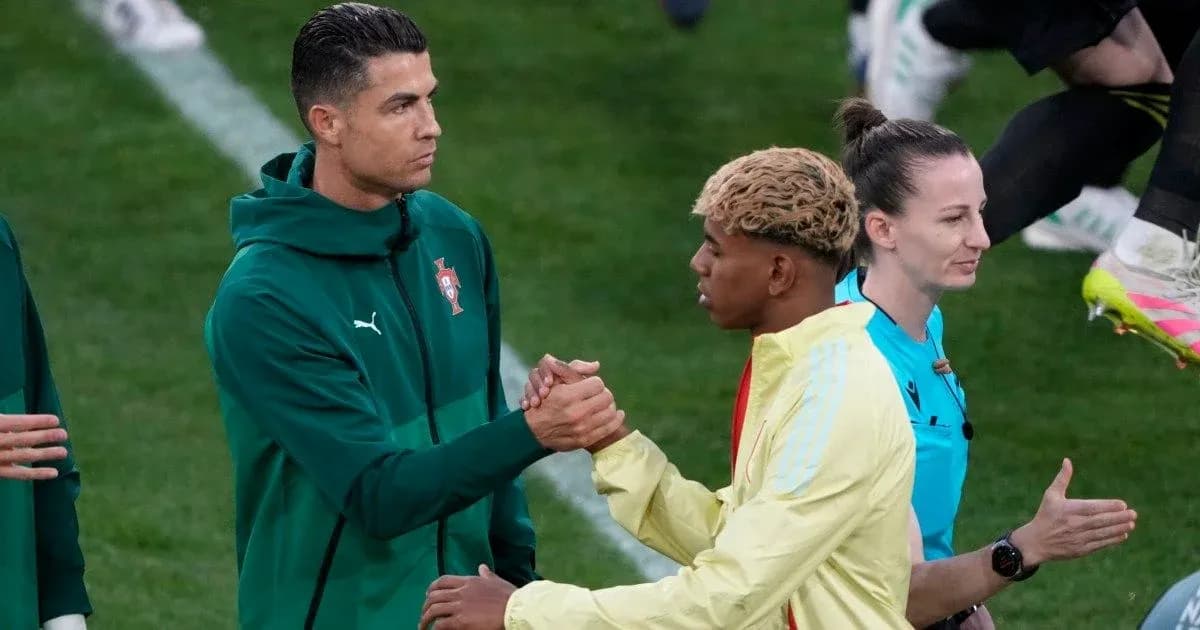
Portugal hired Roberto Martinez for nights like this. His task was not just to manage a transition; it was to harness Cristiano Ronaldo’s enduring presence without letting it define every decision. For a while, it looked like he had found that balance.
Then came Croatia. Chasing a late winner, Martinez made the kind of calls that define tenures. He had already withdrawn Bruno Fernandes and Vitinha. Then he turned to the touchline again and took off Ronaldo as well. The gamble paid off with a late winner, and with it came a clear message: reputation will not outrank the game plan.
Spain arrive with their own attacking story gathering pace. Dani Olmo is the engine in midfield, driving the ball between the lines, knitting together short passes and sudden bursts. Lamine Yamal, still so young, is beginning to look at home on this stage, his feet quick, his decisions sharper with every game. Mikel Oyarzabal provides the finishing edge, the final touch to moves that can stretch defences to breaking point.
There is history between these neighbours, and it cuts both ways. In 2010, on their way to lifting the trophy, Spain shut down Ronaldo and edged Portugal 1-0 in a tight, tense knockout tie. Eight years later, Ronaldo struck back with a hat trick in a wild 3-3 group-stage draw in 2018, dragging Portugal to a point almost by force of will.
This time, the stakes are the same but the dynamics are different. Spain’s collective is humming. Portugal’s star is still shining, but the team around him is evolving, sometimes with him, sometimes without him.
The winner steps into the quarterfinals with momentum and a statement. The loser goes home knowing they fell to a rival who knows every scar and every strength.
In a World Cup already crackling with storylines, this one feels like it might decide far more than just who advances.