World Cup Showdown: Key Matches on Friday
The World Cup tightens its grip on Friday. Twelve hours, six cities, three groups, and a stack of Round of 32 tickets still waiting for an owner.
By the end of the night, dreams will be extended, others quietly folded away.
A day loaded with consequence
Group G, H and I take centre stage, with storylines running in every direction.
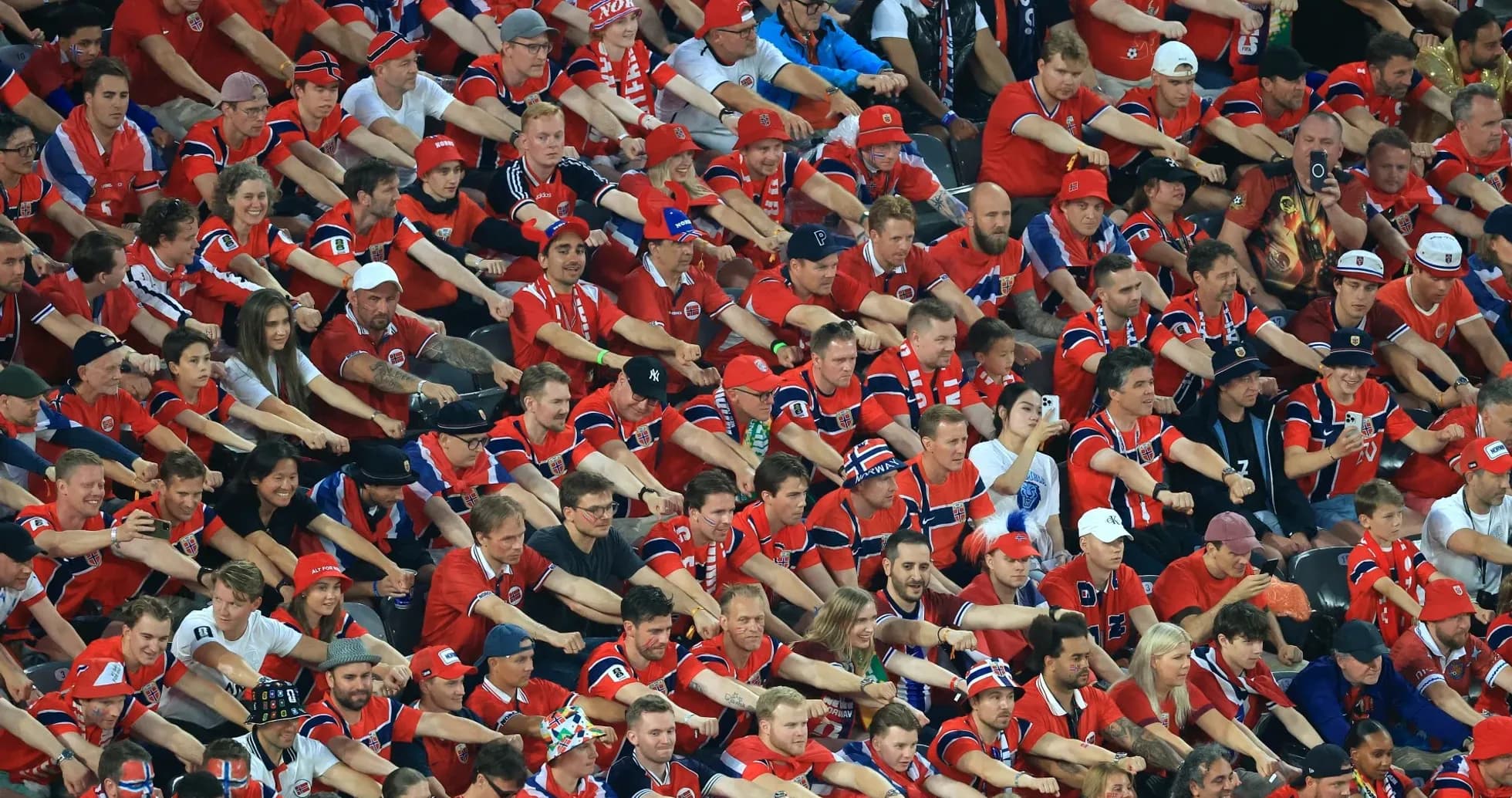
In Boston, Norway and France collide at 3pm EDT (19:00 GMT), a straight fight for top spot in Group I. At the same time in Toronto, Senegal face Iraq, clinging to their own route into the knockouts.
The evening belongs to the West. Cape Verde meet Saudi Arabia in Houston at 7pm CDT (00:00 GMT Saturday), Uruguay and Spain lock horns in Guadalajara at 6pm CST (also 00:00 GMT), while Egypt vs Iran in Seattle and New Zealand vs Belgium in Vancouver both kick off at 8pm PDT (03:00 GMT Saturday).
Six games, three continents, and 13 Round of 32 places still unclaimed across the tournament.
France, Norway and a fight for first
Norway and France know they are already through. The stakes now are about status, seeding, and sending a message.
They haven’t met at a World Cup since a 4-0 French win in a friendly back in 2014, but the history runs deeper: this will be the 16th meeting between the nations. Norway’s record in competitive games against Les Bleus is thin – just two wins – and their last came way back in a European Championship qualifier in 1987.
On the biggest stage, the numbers are even harsher. Norway are still hunting their first World Cup victory over European opposition, with two draws and three defeats from five such matches. France, by contrast, are in the habit of swatting aside their continental neighbours, winning their last five World Cup games against European teams.
Opta’s supercomputer leans heavily towards the reigning giants. France are given a 59.4 percent chance of victory, a draw sits at 20.6 percent – enough to keep them top of Group I – and Norway are handed a 20 percent shot at snatching first place.
Senegal in control, Iraq clinging on
In Toronto, Senegal face Iraq in a match that pits World Cup habit against World Cup inexperience in this specific matchup.
Senegal have never lost to AFC opposition at the tournament. They drew with Japan in 2018, then beat Qatar in 2022. Iraq, for their part, have never faced an African side at a World Cup. That unknown adds intrigue, but the probabilities are brutal.
Opta’s model gives Senegal a 77.2 percent chance of victory. Iraq sit at just 8.6 percent, with the draw at 14.2 percent. Senegal can no longer win Group I, yet they still hold a commanding 72.2 percent chance of reaching the last 32. Iraq’s hopes are hanging by a thread: 1.1 percent.
For Senegal, this is about doing their job and waiting for the bracket to open up. For Iraq, it’s about defying the odds for as long as they can.
Cape Verde and Saudi Arabia on a knife-edge
Houston hosts one of the day’s most delicately balanced fixtures.
Cape Verde and Saudi Arabia have never met at a World Cup. Saudi Arabia’s record against African nations on this stage is solid: just one defeat in five, with two wins and two draws.
Even so, the numbers ever so slightly favour the island nation. Opta gives Cape Verde a 40.8 percent chance of victory, with Saudi Arabia at 33.9 percent and the draw at 25.3 percent.
Behind those percentages lie the real stakes. Cape Verde have a 66.7 percent chance of reaching the last 32. Saudi Arabia’s chances stand at 33.3 percent. One result will flip those probabilities into reality.
Spain and Uruguay renew an old rivalry
Guadalajara feels like the perfect stage for a meeting between former champions.
Uruguay and Spain have crossed paths at the World Cup only twice before, and both times they refused to be separated: a 2-2 draw in the final round of the 1950 tournament, then a goalless stalemate at Italia ’90.
This time, the weight of expectation sits squarely on Spain’s shoulders. The reigning European champions dominate Opta’s simulations, winning 62.4 percent of 25,000 pre-match runs. Uruguay prevail in 15.7 percent, with a draw in 21.9 percent of scenarios.
History says this fixture likes balance. The algorithm says Spain should tilt it their way.
Egypt vs Iran: fine margins in Seattle
Seattle hosts a meeting loaded with subplots and very little shared history.
Egypt and Iran have only faced each other once before, at the 2000 LG Cup in Tehran. That finished 1-1 before Egypt edged an 8-7 penalty shootout. Hossam Hassan, now Egypt’s coach, scored that day. Ali Daei, Iran’s all-time great, replied.
At World Cup level, Iran have built a quiet, stubborn record against African sides: a win over Morocco in 2018 and draws with Angola (2006) and Nigeria (2014). Unbeaten, uncompromising.
Even so, Opta tips Egypt by a fraction. They hold a 42.9 percent chance of victory, with a draw at 32.2 percent and Iran at 24.9 percent. It feels like the kind of match that could turn on one moment of composure or one lapse of concentration.
Belgium heavy favourites, but history lurking
New Zealand and Belgium meet for the first time in Vancouver. On paper, it looks like a mismatch. On the pitch, World Cups have a way of ignoring paper.
New Zealand arrive with a curious record: unbeaten in their last two World Cup games against European opposition, drawing with Slovakia and Italy in 2010. Belgium, though, carry the weight of expectation and a curious footnote of their own.
If they draw, Belgium would become the first European team since their 1998 side to finish a World Cup group stage with three straight draws.
Opta doesn’t see that as the likely outcome. Belgium are overwhelming favourites, with an 80.3 percent chance of victory. A draw is rated at 11.8 percent, while New Zealand win in just 7.9 percent of simulations.
The table as it stands
By Friday, June 26, six groups are already done. Groups G to L are still sifting through their contenders.
The headline so far? Mexico stand alone as the only team with a perfect record: three wins from three, nine points, and a statement made.
A long list have already booked their place in the Round of 32: Mexico, South Africa, Switzerland, Canada, Bosnia and Herzegovina, Brazil, Morocco, USA, Australia, Germany, Ivory Coast, Ecuador, Netherlands, Japan, Sweden, France and Norway.
Elsewhere, the margins are tight:
- Group G: Egypt lead with 4 points, Iran and Belgium sit on 2, New Zealand on 1.
- Group H: Spain are top with 4, while Uruguay and Cape Verde both have 2.
- Group I: France and Norway are through, but the group winner is still undecided.
Groups J, K and L will have their say on Saturday. For now, 13 knockout places remain open. A long day of football will slash that number.
Drama and symbolism far from the standings
Not every story this week has altered a table. Some have simply reminded everyone why this tournament matters.
At SoFi Stadium, Turkiye beat the United States 3-2 with a 98th-minute winner in a Group D finale that meant nothing on paper and everything in the stands. The US had already secured top spot, Turkiye were already out, yet nearly 70,000 fans watched a wild, open game. Mauricio Pochettino rotated heavily, making nine changes and handing seven players their first World Cup starts. The players treated it like a final anyway.
Across the African continent’s contingent, a bigger picture is emerging. Ten African teams reached this expanded 48-team World Cup. As many as eight could yet reach the knockouts. Morocco, South Africa and Ivory Coast are already there. Egypt, Algeria, DR Congo, Ghana and Cape Verde go into their final group games with destiny still in their own hands. A historic showing is no longer a dream; it’s a live scenario.
In Group K, Colombian fans delivered one of the tournament’s defining human moments. Before their match against DR Congo, thousands of Colombia supporters fell completely silent so a lone DR Congo fan could sing his anthem alone, unbroken. When he finished, they roared, applauded, embraced him. The clip raced around the world. Colombia then won 1-0 and secured their own passage to the last 32, but the image that lingered came before a ball was kicked.
Infantino, double vision and Dutch orange
There have been surreal moments too.
During the final Group E fixtures, FIFA President Gianni Infantino appeared on the big screens at both Ecuador vs Germany and Curacao vs Ivory Coast – matches being played simultaneously in different cities. Social media lit up with jokes about him being in two places at once, a fittingly strange subplot on a night when Ecuador stunned Germany 2-1 and Ivory Coast beat Curacao 2-0 to move into the knockouts.
In Mexico, the cohosts have done exactly what their supporters demanded. A 3-0 win over Czechia completed a flawless Group A campaign. Already assured of top spot, Mexico still went through the gears at the Azteca. Mateo Chavez broke the deadlock after the break, Julian Quinones added his second of the tournament, and substitute Alvaro Fidalgo finished the job. Czechia’s hopes died with that result. Mexico marched into the Round of 32 with maximum points and the look of a side ready for anyone.
North of the border, Kansas City turned orange. More than 35,000 Netherlands fans flooded downtown for the Oranje Fanwalk before their match against Tunisia, following the famous orange bus from the Power & Light District to the FIFA Fan Fest. Songs, flags, chants, locals joining in – one city temporarily annexed by Dutch football culture.
Borders, barriers and what this World Cup really shows
Away from the noise of stadiums, another conversation has been taking shape.
Speaking on The Take, journalist Boima Tucker described how this World Cup has laid bare the tension between football’s promise of global unity and the hard reality of border controls. Travelling across host cities, he found Moroccan and Senegalese communities in New York, Cape Verdean fans in Massachusetts, thousands of Ghanaians in a Toronto watch party – all using the tournament as a reason to gather, to celebrate, to be seen.
“It’s been wonderful to get an intimate look at how the World Cup has affected people in their homes,” he said. “People are excited to talk about their teams and their countries.”
Yet many of those same communities have faced serious obstacles just to be part of it. Iran’s national team, for example, has been based in Tijuana, crossing into the US only for matches. Officials, family members and supporters have struggled with visas. Tucker argued that such hurdles inevitably seep into the football itself.
“When you’re an athlete, you want to be locked in. You want to be concentrating on the field, on the results,” he said. “If you have to jump through hurdles, that’s definitely going to affect the field of play.”
For him, this World Cup mirrors wider global inequalities: a system that restricts movement for many while allowing a few high-profile cases to grab attention without changing the underlying rules. “Their reunion is not going to lead to systemic change,” he warned.
Yet even within that reality, he sees something powerful. Immigrant communities celebrating side by side, strangers sharing songs, people crossing lines they rarely cross in everyday life. “I hope people remember this World Cup as one in which people across ethnic lines, national identities and class lines were able to briefly mingle and learn something about each other,” he said. “More than anything, those borders that we have in our daily lives were briefly overcome.”
On Friday, as France chase top spot, Senegal fight for survival, and Egypt, Iran, Belgium, Cape Verde, Saudi Arabia and others scrap for a place in the last 32, that’s the backdrop: a tournament where the margins on the pitch are tiny, and the lines off it feel bigger than ever.
How many of those lines will still feel so solid once this World Cup is over?