World Cup Final Preview: Messi, Mbappé, and the Political Backdrop
By the time the World Cup final kicks off on Sunday, the football will have a lot of work to do just to cut through the din. Politics, presidents, prime ministers, referees under police escort, a third-place game no one truly wants, and a Golden Boot race that might be decided in the least romantic way possible – via an assist tally.
This is the World Cup weekend in all its messy, compelling glory.
Messi v Mbappé, and the Golden Boot wrinkle
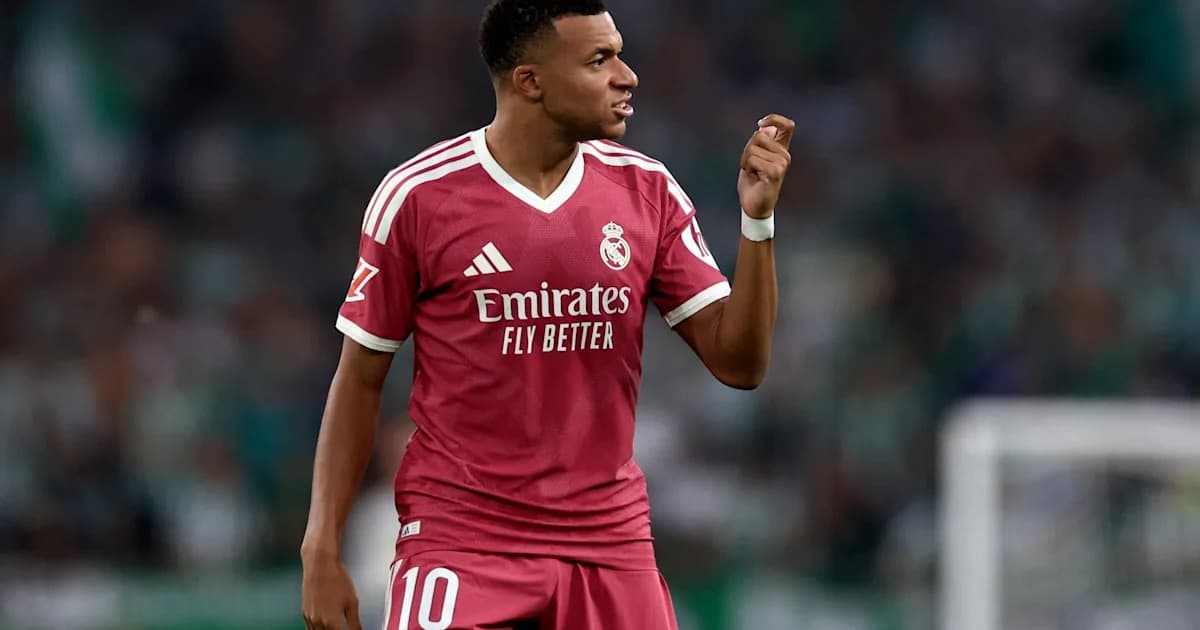
Kylian Mbappé and Lionel Messi are level on goals. The numbers say they are tied in the Golden Boot race; the rulebook says Messi leads because he has one more assist.
It has sparked a familiar argument: should a goal in a World Cup final carry more weight than one in a third-place match? It’s a pub debate with real consequence this weekend. Mbappé could fill his boots in a low‑pressure playoff while Messi wrestles with Spain in a final dripping with tension. Or the reverse. Either way, every finish will be measured not just in numbers, but in context.
For now, the spreadsheet wins. Goals are goals, wherever they land. But try telling that to the striker who scores in the 90th minute of a final, or to the defender whose only consolation is a brace in a game everyone labels “pointless”.
Rodri’s renaissance – and a looming question for Manchester City
If there is a player who has quietly owned this tournament, it is Rodri. Once there were fears his ACL injury might dull his edge for good. The hesitancy, the subconscious flinch when stretching for a 50-50, the nagging doubt that the body will not respond as it once did.
Those doubts have gone. At this World Cup he has moved with total authority, dictating rhythm, killing counters, stitching attacks together. It has taken him time to trust his body again, but the result is a midfielder operating at full throttle.
And yet, a suspicion lingers: has he just played his final match for Manchester City? The whispers will only grow louder in the coming weeks. For now, he belongs to this tournament, and to a Spain side that has built its entire identity around his calm brutality in midfield.
England’s postmortem and Tuchel’s uneasy triumph
Back in England, the autopsy continues. Thomas Tuchel remains in post, his job apparently secure despite a semi-final exit and a tactical approach that left his players – and much of the country – bemused.
Tuchel had been praised earlier in the tournament for his “game-changing” substitutions. They turned matches, they flipped momentum, they rescued results. Yet the pattern exposed something more awkward: if the bench constantly fixes things, what does that say about the starting XI?
One reader’s verdict was brutal: England were the weakest of the semi-finalists “by a country mile” and staggeringly fortunate to get as far as they did. In the age of five substitutions, managers increasingly plan for “finishers” to transform the last half-hour. Even so, the changes against Norway jarred. The sense persists that England never quite knew what they were supposed to be from the first whistle.
Tuchel will now have to navigate the ultimate no-man’s-land: the third-place playoff. Does he chase a hollow medal with his strongest side, or spread minutes around the squad? There are calls for both goalkeepers to share the game, for Ollie Watkins and Ivan Toney to finally start, for Kobbie Mainoo to be trusted with a proper stage. Whatever he chooses, it will say plenty about how he sees this group going forward.
A third-place game no one loves, but everyone argues about
The bronze-medal match sits in an odd space. Players rarely grow up dreaming of it. Managers treat it like a live-fire friendly. Fans call it “pointless” and then watch it anyway.
Yet the game now feeds directly into the Golden Boot race and the wider narrative of the tournament. Mbappé could turn it into a personal showcase. England’s fringe players could reclaim a little pride. Tuchel could use it as a lab, or as a line in the sand.
And for supporters whose body clocks have been rewired by midnight kick-offs and early alarms, it offers one more late-night fix before the void. Some are already wondering what to do when the final whistle blows on Sunday. South American leagues? MLS? Anything to avoid going cold turkey.
Presidents, prime ministers and politics on the touchline
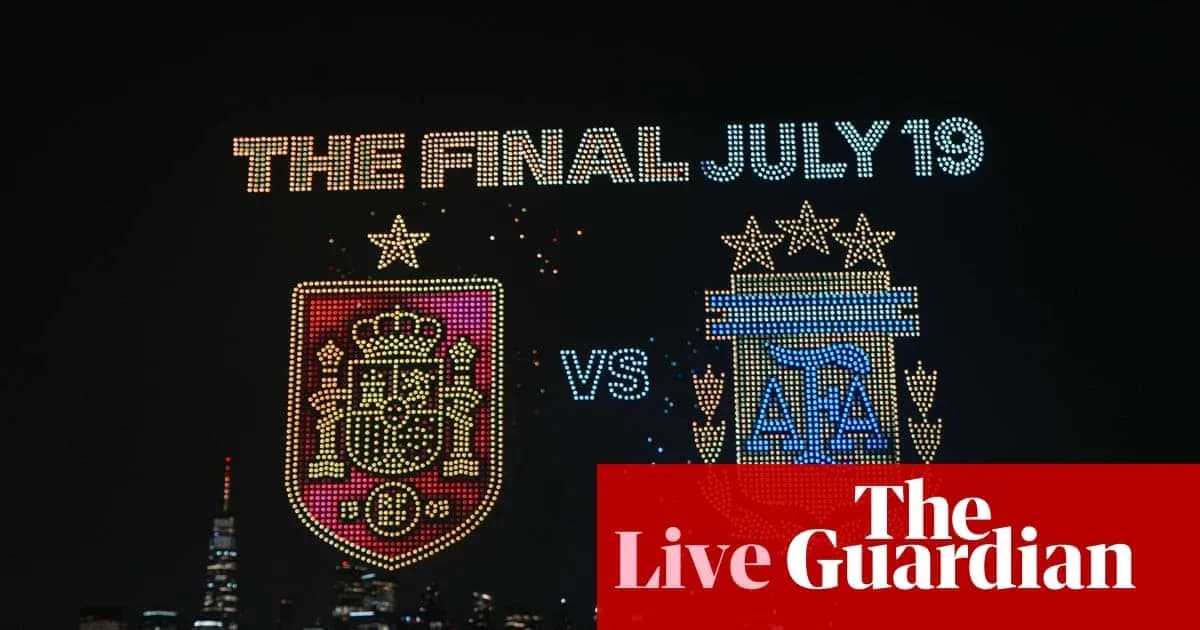
The final itself will have a heavy political backdrop. Spanish prime minister Pedro Sánchez will be in New Jersey to watch his country face reigning champions Argentina. Across the VIP aisle, Donald Trump will also be in attendance, the White House confirming the president’s plans and hailing the tournament as proof of America’s ability to host the world “on the grandest stage”.
There is tension off the pitch, too. Keir Starmer has backed calls for Fifa to investigate Argentina players who displayed a banner asserting their country’s claim to the Falkland Islands after the semi-final win over England. It is the kind of geopolitical flashpoint Fifa claims to avoid and then repeatedly finds itself dragged into.
Meanwhile, Gianni Infantino’s grip on power tightens. More than 200 of Fifa’s 211 member associations have formally endorsed him for a fourth term as president. Only a handful of federations, including Germany’s, have yet to offer official backing. The scandal around Folarin Balogun’s reprieve from suspension has not slowed the machinery. As one observer put it: football survived Blatter, Warner and Blazer. It will survive Infantino too.
Real Madrid, Mourinho and a new chapter for Alexander-Arnold
Away from the World Cup bubble, club football quietly stirs. At Real Madrid, Trent Alexander-Arnold is preparing for a different kind of reset under Jose Mourinho, who returned to the Bernabéu in June after a season that saw Madrid fall short in LaLiga and exit the Champions League at the quarter-final stage.
Alexander-Arnold, 27 now and no longer the precocious full-back of Anfield days, endured an injury-riddled first year in Spain. He drifted in and out of the starting XI, his rhythm broken, his status uncertain. The departure of Dani Carvajal in May has changed everything. The right-back slot is there to be claimed.
Working under Mourinho, Alexander-Arnold describes the sessions as intense, the demands unforgiving, the standards non-negotiable. He talks of learning, of being taught, of building a base for a “successful season” and of a group “eager to learn and improve”. For a player once defined by his creativity, this is a chance to become something more complete – and to do it at a club where full-backs are expected to define eras, not just flank them.
Argentina’s steel, Spain’s style and a final with teeth
On Sunday, Argentina will walk out for their third World Cup final in four tournaments. For all the focus on Messi and the romance of his late‑career odyssey, this version of La Albiceleste is built on something far more rugged.
Cristian Romero embodies it. In the blue and white, he turns into a one-man wrecking crew, the “relative hardman” alongside Lisandro Martínez, the last obstacle between attackers and Emiliano Martínez. Every yard contested, every stud shown, every duel treated as a personal affront. Outside of Messi and the Aston Villa goalkeeper, Romero has been arguably Argentina’s most consistent performer on this run.
Spain bring a different energy. Their midfield is controlled by Rodri, their attack lit by Lamine Yamal, the teenager whose fearlessness has cut through veteran defences all tournament. It is a meeting of an excellent team and a very good one; which is which depends on how you see the game.
The stands will be full of presidents, prime ministers, Fifa powerbrokers and television executives on their own farewell tours. Over in the US, Fox’s coverage prepares for its last hurrah, its cast of sideline reporters, studio storytellers and culinary sideshows about to step off stage.
But the real story will be written by the players, and by the scoreboard.
The World Cup has survived crooked officials, bloated politics and more than one president using it as a photo opportunity. It will survive this storm too. The only real question now is simpler, sharper, and entirely about the football: when the dust settles in New Jersey, whose era will we say this final truly belonged to?