World Cup Drama: Messi's Hat-Trick, Ronaldo's Challenge, and Portugal's Tribute
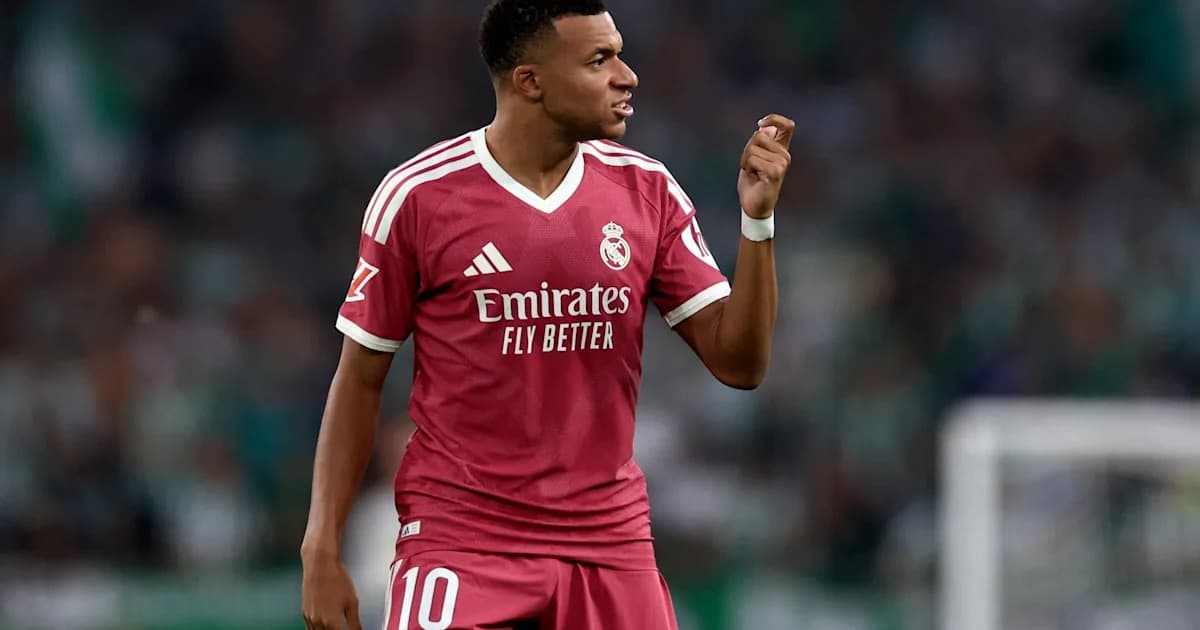
Lionel Messi lit the tournament on fire. A hat-trick, records matched, another night where the greatest of them all bent a World Cup to his will. North America finally felt like the center of the football universe as Kylian Mbappé and Erling Haaland weighed in with two goals apiece, a trio of superstars turning a group-stage day into something that felt like a final.
And just as the roar around Messi began to fade, attention swung to another giant who refuses to step aside.
Cristiano Ronaldo walks into this World Cup opener with Portugal fighting not just time, not just expectation, but something far heavier.
Portugal’s First Game Without Diogo Jota
For Portugal, the tournament starts with a scar.
Diogo Jota should have been here. In the starting XI, in the line-up graphic, in the tunnel with his teammates. Instead, his name hangs in the air as absence and ache.
The Liverpool and Portugal forward died last year in a car crash, alongside his brother André Silva. He had married his long-term partner, Rute Cardoso, less than two weeks earlier. Three children left behind. A dressing room gutted. A sport briefly reduced to something that felt trivial.
At Liverpool, players admitted the season blurred. Training sessions, matches, routines – all of it carried the weight of trying to grieve and perform at the same time. That same tension now follows Portugal into the World Cup.
Roberto Martínez refused to let Jota’s memory drift to the margins. He named him an honorary member of the squad, a symbolic gesture that still carries real emotional heft. Portugal’s Prime Minister, Luís Montenegro, added his own touch, gifting each player a bracelet with their own name alongside Jota’s.
They will wear them tonight against DR Congo at Houston’s NRG Stadium.
“They made sure that it was a wristband that we could wear on the pitch,” midfielder Vitinha explained. “He let us choose if we wanted to use it or not, during the day or during the match. We received it with a lot of affection and we chose to use it.”
Grief doesn’t follow a schedule. It doesn’t care about kick-off times or tactical plans. Yet this group must carry both the weight of a nation and the dreams of a teammate who never got to live his.
“We feel this and we want to win it, not just because it’s a World Cup and it’s everybody’s dream, but for him as well,” Vitinha told CNN Sports earlier this year.
So when Portugal step out in Houston at 1 p.m. ET, the game will be more than a hunt for three points. It will be a tribute in motion.
Ronaldo, One More Time
Of course, all eyes will find Ronaldo.
He is no longer the force who terrorized defenses a decade ago. The legs don’t spin quite as fast, the leap doesn’t scrape the sky in the same way. But he is still Ronaldo. Still the man who lives for nights like this.
Portugal’s midfield might be the sharpest in the tournament: Bruno Fernandes dictating tempo, Vitinha stitching play together, Bernardo Silva floating between lines, João Neves adding bite and balance. It is a core built for dominance.
The question hangs over it: does Ronaldo amplify that brilliance or blunt it?
In Qatar 2022, the five-time Ballon d’Or winner struggled. His form dipped, his influence waned, and he was eventually dropped. It felt seismic at the time, a symbol of a new Portugal stepping forward.
Drop him again now? That takes a different kind of courage. Messi’s masterclass last night serves as a reminder that class doesn’t retire on command. Put either of these men in front of goal and instinct takes over. Ronaldo still knows where the net lives.
Across from him, DR Congo will not come just to clap along. Yoane Wissa is the danger man, a striker who can punish any lapse. Around him, a disciplined, compact unit will try to squeeze space, frustrate Portugal’s creators and wait for their moment.
Portugal want a statement win. DR Congo want a statement of existence. Between them, the memory of Jota hovers like a banner.
England vs. Croatia: Old Wounds, New Manager
Later in the day, the World Cup leans into an old story with fresh cast notes.
England and Croatia meet again at AT&T Stadium in Arlington, Texas, at 4 p.m. ET. Two nations who have shared more than enough drama to fill a generation’s highlight reel.
England arrive, as ever, with hope stitched into every shirt. Sixty years since 1966. Sixty years of songs, near-misses, penalty shootouts and that familiar sense of “maybe this time.”
Thomas Tuchel has taken a scalpel to the squad list. He has chosen chemistry over celebrity, leaving out big names like Cole Palmer and Phil Foden. On paper, those omissions sting. On the pitch, Tuchel is betting that a tighter group can go deeper.
The spine still looks formidable. Declan Rice to shield and surge. Jude Bellingham to bend matches to his will. Harry Kane to finish and lead. England do not lack quality; they rarely do. The question is whether they can carry it when the pressure spikes.
Croatia, meanwhile, remain the inconvenient truth in England’s recent history. They knocked the Three Lions out in the 2018 World Cup semifinals, another chapter in a rivalry that keeps finding new edges.
And Luka Modrić is still here. Forty years old, still pulling the strings, still dictating rhythm as if time has agreed to slow down just for him. With him on the pitch, Croatia will believe they can torment England again.
Somewhere in the stands or in front of a screen, English fans who grew up on Diego Maradona’s Hand of God, on David Beckham’s red card in 1998, on penalty heartbreaks and ghost goals, will brace themselves. They know the script. They just hope someone tears it up.
Messi’s Relentless March
While England wrestle with history and Portugal wrestle with grief, Messi just keeps rewriting the record book.
His hat-trick against Algeria didn’t just light up the night; it dragged him level with Miroslav Klose for the most goals in World Cup history. Another milestone, another line added to a career already bursting with them.
He spoke modestly afterward, as he so often does. The truth? It is hard to imagine he can keep track of every record he breaks. Each game seems to bring a new one.
One detail cuts through the noise: Messi has now scored five World Cup goals from outside the box, equaling the mark set by Brazilian great Rivellino. It’s a statistic that underlines what everyone can see – his genius is not confined to the penalty area.
In Buenos Aires, fans poured into the streets to celebrate his first World Cup hat-trick. For them, this is more than sport. It is identity, catharsis, a shared heartbeat.
Iran’s Visa Headache Eases
Not every World Cup story plays out on the pitch.
Iran have endured more logistical turbulence than any other team at this tournament. Political tensions mean the squad has had to base itself in Mexico and travel into the United States for games, turning every fixture into a cross-border operation.
Then came another twist. Winger Mehdi Torabi discovered his visa had expired after the first match, throwing his participation into doubt.
The issue has now been resolved. A State Department official confirmed Torabi has been granted a new multi-entry visa, clearing him to play in as many matches as Iran manage this summer.
“As soon as we became aware of the issue, we worked to ensure that the player can participate in every game,” the official said.
For Iran, it’s one less headache in a tournament where even getting to the stadium has felt like a test.
Ghana, Panama and a Shot at History
At 7 p.m. ET, Toronto’s BMO Field hosts a meeting of two nations chasing very different milestones: Ghana vs. Panama.
Panama return to the men’s World Cup for only the second time. Their first taste, in 2018, was harsh. Three games, three defeats, including a 6-1 hammering by England. No points, no real foothold.
This time, fans are desperate for something more tangible – a first World Cup point, maybe even a first win. Ghana, on paper, might be their best chance.
The Black Stars once looked like Africa’s best bet to lift this trophy. In 2010, they stood on the brink of a historic semifinal before that infamous night against Uruguay. Since then, the trajectory has dipped. They haven’t escaped the group stage at a World Cup since.
This version of Ghana doesn’t boast the firepower of previous generations, but it does have one crucial weapon: Antoine Semenyo. The Manchester City forward arrives in form and full of confidence. If he clicks, Ghana have every chance of starting with three points.
They will, however, be without Thomas Partey in Toronto. The 33-year-old midfielder saw his visa application rejected, a decision upheld by a Canadian federal judge earlier this week, according to the Associated Press. Partey is awaiting trial on rape charges in the United Kingdom but remains eligible to play in Ghana’s remaining two group matches in the United States.
For Ghana, it’s a significant absence in the opener. For Panama, it’s a sliver of opportunity.
Uzbekistan’s Debut and Colombia’s Old Guard
The day closes at altitude and under history’s gaze.
At 10 p.m. ET, Uzbekistan walk out at Estadio Azteca in Mexico City to play their first ever World Cup match, against a seasoned Colombia side.
Uzbekistan are the last of this year’s debutants to appear, and they arrive with quiet ambition. Fabio Cannavaro, the Italian legend who lifted the World Cup as captain in 2006, leads them from the touchline. His presence alone gives this team a certain edge, a sense that they are not here just to make up the numbers.
The standout name is Abdukodir Khusanov. At 22, the defender has already become a regular for Manchester City, impressing in both the Premier League and the Champions League. He anchors a team that believes it can be the only one of the four new sides to win its opening game.
Colombia, though, bring experience and scars from tournaments past. James Rodríguez, the breakout star of 2014, still pulls strings in midfield. Around him, Luis Díaz offers pace, flair and ruthless end product from the wing, one of the most in-form players on the planet this season.
It is a classic World Cup clash: a newcomer with nothing to lose against a veteran with everything to prove.
Ebola Shadows DR Congo’s World Cup Moment
Away from tactics and team sheets, a darker storyline hangs over one of the tournament’s participants.
Health officials are watching an Ebola outbreak in the Democratic Republic of Congo with growing alarm, just as the country’s national team prepares to step onto the World Cup stage.
The head of the Africa Centres for Disease Control and Prevention has warned that the outbreak in the DRC could become the “worst ever” in the region if it is not contained. More than 800 cases have already been confirmed.
The challenge is brutal. The affected area is remote yet densely populated, beset by insecurity and ongoing humanitarian crises. This outbreak is driven by the Bundibugyo strain of the virus, for which there are no specific treatments or vaccines.
US authorities have moved to reduce risk. The Centers for Disease Control and Prevention and the Department of Homeland Security have introduced entry restrictions and passenger screening for travelers from the DRC, Uganda and nearby South Sudan. No Ebola cases have been identified in the United States. The World Health Organization assesses the risk as very high in the DRC but low globally.
During the World Cup, US health officials are tracking multiple viral threats. Ebola, though deadly, is not at the top of that list. Early in infection, it does not spread easily. Transmission becomes far more likely only when a patient is severely ill, with high levels of virus in the body – a stage at which they are unlikely to be traveling or attending matches.
Still, the juxtaposition is stark. As DR Congo’s players step out to face Portugal, bracelets on Portuguese wrists honoring a fallen teammate, their homeland battles a crisis that dwarfs any sporting stakes.
On days like this, the World Cup feels like everything and nothing all at once. The question now is simple: who will rise to meet that tension – and who will be broken by it?