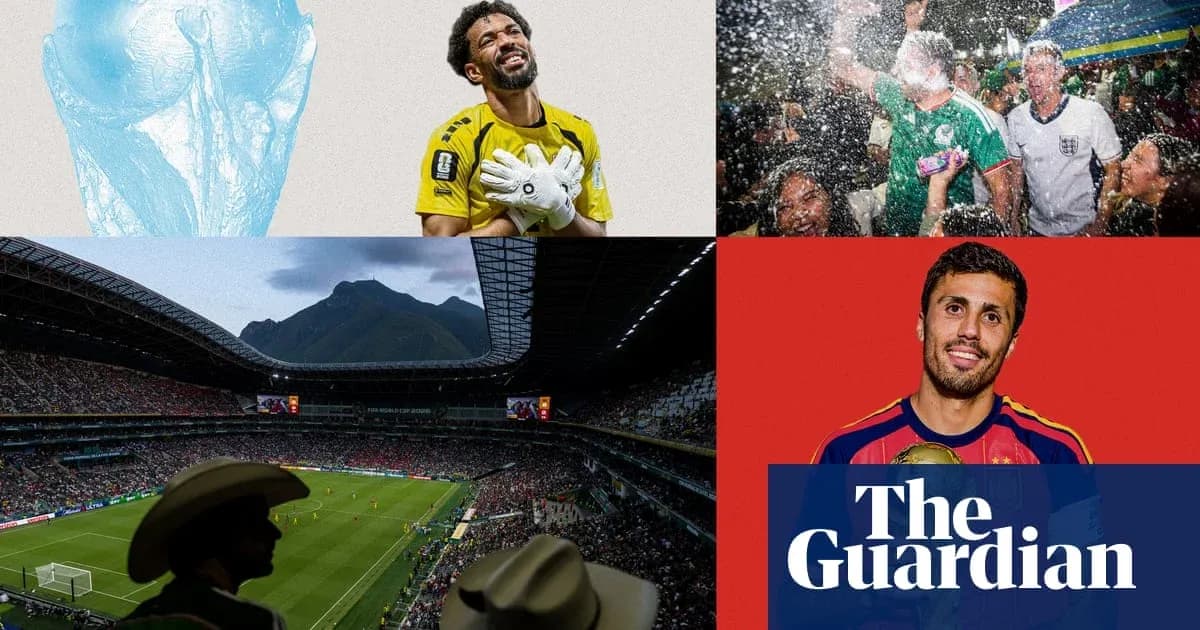
The World Cup of Chaos: Sidny Lopes Cabral and Unforgettable Moments
This was a World Cup that refused to behave. The giants turned up, the stars largely delivered, but the moments that will live longest came from the margins: from Cape Verde and Curaçao, from a 40‑year‑old goalkeeper without a club, from a full‑back bending reality against Argentina.
Ask those who criss-crossed North America and Mexico over the past month to name their defining memories and the answers scatter everywhere. Yet a pattern emerges: chaos, noise, and a tournament that kept slipping out of football’s usual grip.
Matches that bent reality
On paper, Paraguay 1-1 Germany in the last 32 was just another tight knockout tie. In reality, it produced the most gripping shootout of the tournament. Germany do not lose these. They did here, and they did it loudly. Every penalty felt like a small rebellion against decades of Teutonic certainty, the eventual German collapse as shocking as it was compelling.
Elsewhere, logic simply took the night off. Algeria 3-3 Austria was supposed to be a biscotto – a soft, pre-cooked draw that suited everyone and offended no one. For long stretches it looked exactly that: a gentle handshake between two teams already halfway through the door to the next round. Then stoppage time detonated. The game spun into chaos, the script burned, and what should have been a dead rubber became a fever dream.
Mexico 2-3 England at the Azteca belonged to a different category altogether. This was a fixture that seemed to start rumbling from the moment the draw was made. A thunderstorm delayed kick-off, the stadium crackled, and Mexico produced the kind of first half that felt like a national mission. Thomas Tuchel’s England somehow survived it, then clawed their way to what was described as their greatest away win – a wild, cortisol-soaked night that left everyone drained. For some, it was pure cinema even from a television screen; for those in the stands, it was an ordeal and a privilege rolled into one.
England were serial protagonists in the tournament’s strangest theatre. France 4-6 England veered into farce, a high-scoring epic that teetered on the edge of the ridiculous. Egypt 1-1 Iran in Seattle delivered a different kind of drama: Iran twice rattling the woodwork in the final minutes, a stoppage-time winner chalked off, and, in the end, an unbeaten side sent home with nothing but frustration and pride.
Argentina, as ever, existed at the heart of the chaos. Their 3-2 win over Egypt in the last 16 felt like a classic from another age. Two goals down, staring at an early exit, the defending champions looked finished. Then Lionel Messi took charge. A late, Messi-driven comeback flipped the tie on its head, dragged Argentina through and reminded everyone why, even in his late years, he remains football’s ultimate problem-solver.
The same Argentina side then found themselves dragged into one of the tournament’s great oddities: Argentina 3-2 Cape Verde. For some, it outstripped everything else. For others, it sat alongside Mexico v England and England 1-2 Argentina in a strange trinity of improbability, unpredictability and grim familiarity. What nobody disputed was the moment that defined it: Sidny Lopes Cabral, full-back turned sorcerer, stepping up in extra time and bending a long-range equaliser past Emi Martínez. It was the kind of goal that stops a stadium, a shot that seemed to hang in the air just long enough for everyone to realise what was happening.
Cape Verde had already left a mark in Miami, where their 2-2 draw with Uruguay showcased an attitude and discipline that won them admirers far beyond their own shores. For a debutant nation, they felt anything but overawed.
Somewhere beneath all that noise, Cape Verde 2-2 Uruguay, Mexico 2-3 England, Argentina 3-2 Egypt and Argentina 3-2 Cape Verde formed the spine of a tournament that kept finding new ways to surprise. Even the “game no one wanted to play” – that dreaded third-place affair – managed to inflate Kylian Mbappé’s Golden Boot tally and twist the narrative one last time.
Rodri’s iron grip – and a cast of challengers
In a World Cup where the marquee names largely turned up, one player imposed himself with unusual clarity. Rodri, Spain’s midfield axis and emotional reference point, emerged as the consensus choice for player of the tournament.
He anchored the best team with icy authority. As Spain shifted back towards a possession-heavy model, Rodri became their metronome and their shield, dictating tempo, killing counterattacks, and making the hardest parts of the game look routine. “Capitán, líder, leyenda,” as one observer put it, and not entirely in jest.
Behind him trailed a pack of stars who shone brightly but not quite long enough. Mbappé’s Golden Boot run, inflated by that wild third-place game, still felt like the work of the tournament’s most explosive forward on what, for long stretches, looked like the best side in the competition. Jude Bellingham drove Tuchel’s England with a force that made earlier doubts about his inclusion look absurd. Erling Haaland dragged Norway into a historic quarter-final, stitched together a credible Golden Boot campaign and, in the process, supercharged his appeal in the North American market.
Lionel Messi, even without the trophy, still bent matches to his will. Michael Olise glided through games, even if he left a hat-trick on the table against England. Dani Olmo quietly knitted Spain together, while Pau Cubarsí announced himself as the next great defensive project.
Yet the most romantic stories came from further down the food chain. Vozinha, Cape Verde’s 40-year-old goalkeeper, played the tournament of his life. Clubless, overlooked and suddenly omnipresent, he shut out or harassed some of the game’s biggest names and became the embodiment of a World Cup fairytale that needed no marketing spin. His compatriot Roberto “Pico” Lopes, throwing himself in front of everything, turned a late-career World Cup into a personal epic.
By the end, the verdict barely shifted. Rodri stood alone at the summit, the best player on the best team, the one presence who never blinked when the contest teetered.
When the ball flew, time stopped
If one moment captured the tournament’s spirit, it was Sidny Lopes Cabral’s equaliser against Argentina. The ball left his boot from distance and seemed to obey a different set of laws. It curled, dipped and slid past a full-stretch Martínez into the far corner, a strike so audacious that even neutrals gasped. The reaction matched the finish: hands clasped to his head, then a beeline to the crowd to find his girlfriend and share the chaos.
That goal became the default answer to any “best of the tournament” question. Even those who tried to argue for alternatives usually circled back to it. One exception came from Kansas City, where Julián Álvarez, quiet for much of the World Cup, detonated a vicious, swerving long-range effort in extra time against Switzerland. In a cauldron of noise, the ball’s flight drew a collective intake of breath.
Elsewhere, the catalogue of wonder strikes kept growing. Uzbekistan’s Eldor Shomurodov produced an instinctive lob from a tight angle against DR Congo that felt unlike anything else seen all month. Bosnia and Herzegovina’s 18-year-old Kerim Alajbegovic slalomed past defenders before lashing one in off balance against Qatar, a goal that justified every bit of pre-tournament hype around him.
Wilson Isidor gave Haiti a moment that will live for generations, thundering in a long-range strike against Morocco that some insisted belonged in any all-time World Cup compilation. Harry Kane’s second against DR Congo, and Haaland’s precise, low drive from outside the box to finish off Brazil, underlined how the established stars could still do the spectacular on command.
Even the goals that did not count left an imprint. An unnamed Uzbekistan screamer into the top corner was ruled out, yet still lodged itself in the memory. This was a World Cup where the ball seemed determined to fly in improbable ways, even when the officials refused to indulge it.
The hidden heroes and private epics
Away from the cameras, the tournament built its own mythology in quieter corners.
Eloy Room, 37 years old and unflappable, set a World Cup record for saves in a 90-minute match as Curaçao faced Ecuador. While Vozinha hogged the headlines, Room basked in a rare moment of global attention and joked he now deserved a statue back home.
In press boxes and mixed zones, journalists collected their own favourite images. Senegalese reporters sharing malted milk biscuits during the anthem before their team’s collapse against Belgium. A pack of Scots watching their national team finally walk out at a World Cup again, bagpipes blaring “Scotland the Brave” in Foxborough, before events on the pitch soured the mood.
There was the sight of Nestory Irankunda, 26 minutes into Australia’s opener against Turkey, reviving Tim Cahill’s iconic celebration – a ceremonial passing of the torch from one era to the next. There were the early Argentina games in Dallas, framed not just as football matches but as mass Messi pilgrimages, and the first deafening roar of the Azteca as Mexico beat Ecuador.
Some memories were surreal. Explaining the group-stage permutations to a mariachi in a giant sombrero. Watching a Spain team bus motorcade roll past the sixth-floor window from which Lee Harvey Oswald shot JFK. Standing knee-deep in Monterrey floodwater waiting for a bus, clutching an iPad that would be lost in Houston a week later anyway.
Others were intimate. Vozinha’s mother, against all odds, making the journey from Cape Verde to see her son play on the biggest stage. The quiet pride of those who had followed Pico Lopes’s career long before he became a World Cup cult hero. The sense, in US host cities, that football conversations had suddenly become part of everyday life.
When the stadiums emptied, another scene unfolded. Grounds that had been fiercely protected all month were finally handed over to the people who had kept the show on the road: stadium workers, volunteers, security staff, local club stalwarts. They spilled on to the grass, took selfies, knocked a ball around. For once, the World Cup stage belonged to those whose names would never appear on a teamsheet.
Hosts under the microscope
Across three countries, the tournament felt vast and uneven, often exhilarating, occasionally exhausting.
In the United States, the level of interest surprised even seasoned visitors. Strangers in host cities stopped journalists and fans alike to talk football. The sport, still fighting for space in a crowded landscape, suddenly felt omnipresent. The infrastructure told a different story. Distances were punishing, public transport patchy or non-existent in some cities, and traffic – Boston’s in particular – tested everyone’s patience.
Yet the stadiums themselves were immaculate, and the US team played some of the most aesthetically pleasing football the country has ever produced, only to fall short against Belgium. Off the pitch, there was warmth and curiosity almost everywhere, even as the Folarin Balogun reprieve, engineered by the US administration and indulged by Fifa, left a sour note.
Canada embraced its moment. Toronto buzzed as the national team finally played a World Cup match on home soil, a goalless draw with Bosnia and Herzegovina doing little to dampen the sense of occasion. In Vancouver, a 6-0 demolition of Qatar under Jesse Marsch’s hyperactive watch suggested a team eager to be seen as more than just polite hosts.
Mexico, though, offered the purest football culture. The Azteca lived up to its mythology – magical, monumental, deafening. The celebrations after Mexico’s win over Ecuador made sleep impossible but underlined the country’s deep bond with the game. Across the nation, fans treated visitors with warmth, even after England’s win in that searing 3-2 in Mexico City. The feeling lingered that Mexico’s fervour deserved a bigger share of the spotlight than the co-hosting structure allowed.
For all three, the verdict was similar: jobs well done on the pitch, varying degrees of success off it, and a shared sense that this World Cup had left a mark on their footballing identities.
A tournament that refused to settle
By the end, the storylines sprawled in every direction. Rodri ruled midfield. Mbappé, Haaland and Messi justified the billboards. Cape Verde walked away as the spiritual darlings. Germany lost a penalty shootout. Iran went home unbeaten. A 40-year-old keeper without a club became a global cult figure. Sidny Lopes Cabral scored a goal that people will be describing for decades.
The World Cup did not deliver a single, neat narrative. It offered something messier and far more human: a blur of noise, weather, travel, politics, wonder goals, dubious refereeing and nights that felt too big to process in the moment.
When the next tournament rolls around, the questions will return. Can Spain sustain their Rodri-era control? Will England find the missing piece they so clearly lacked? Can Mexico, Canada and the US turn this surge of interest into something lasting?
And somewhere, on a small island in the Atlantic, will there be another Vozinha or Sidny Lopes Cabral waiting for their chance to bend the World Cup to their will?