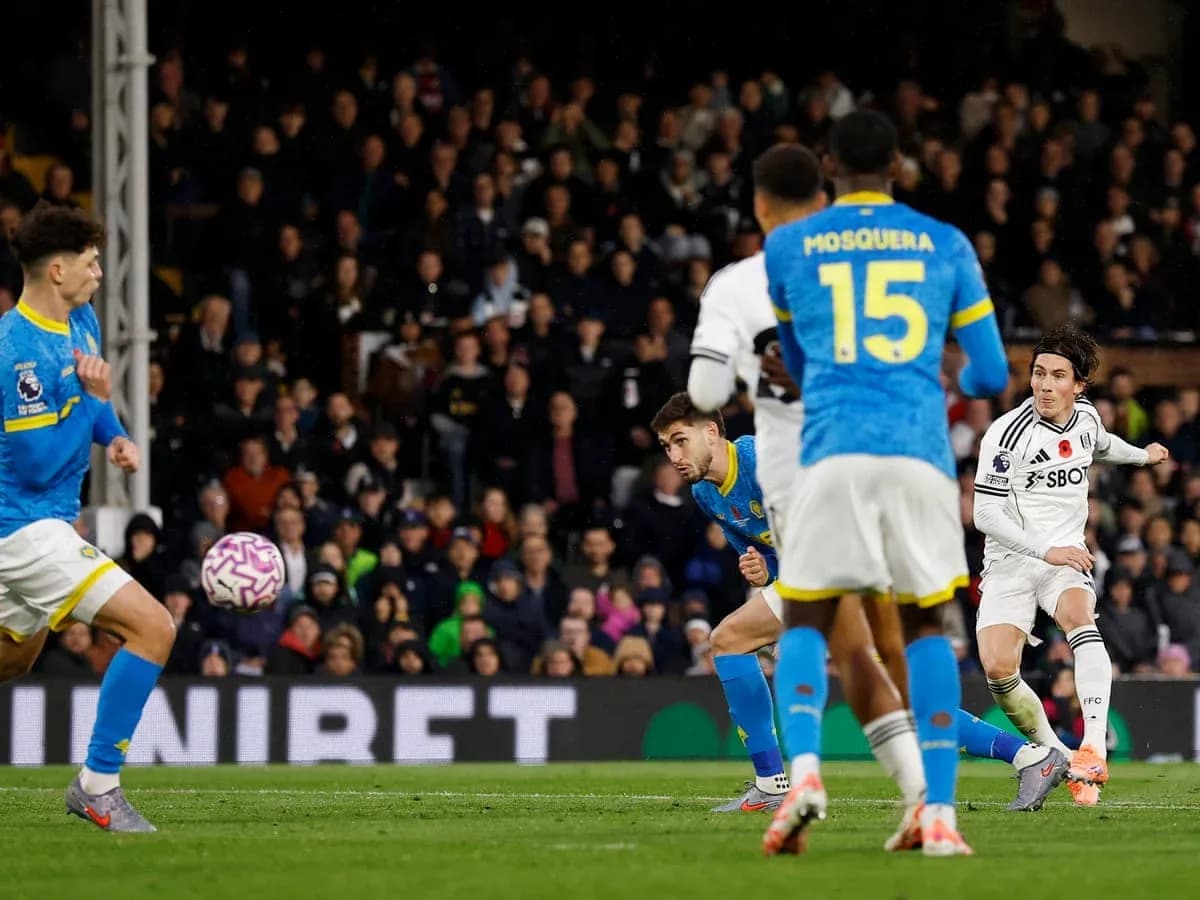
Wolves vs Fulham: Premier League Showdown at Molineux
Survival anxiety meets mid-table assurance at Molineux Stadium in Wolverhampton on 17 May 2026, as bottom‑placed Wolves cling to faint Premier League hope against a Fulham side looking to lock in a top‑half finish. Under the watch of referee T. Kirk, the home crowd will know anything less than a result could seal their fate, while the visitors arrive with the freedom of a team whose primary job is already done but whose pride – and league position – are still very much on the line.
Season Context
For Wolves, the table is brutal reading. They sit 20th with 18 points from 36 matches, having won just 3 times and lost 24, and with only 25 goals scored against a punishing 66 conceded (goal difference -41). The numbers underline a side struggling at both ends of the pitch (0.7 goals scored and 1.8 conceded per game), and the “Relegation - Championship” tag in the standings shows exactly what is at stake.
Fulham arrive in far calmer waters, 11th in the Premier League with 48 points from 36 games. They have 14 wins and 6 draws, backed by 44 goals scored and 50 conceded, leaving them on a goal difference of -6. Averaging about 1.2 goals scored and 1.4 conceded per match, they are a mid‑table outfit with enough attacking punch to win games but just porous enough at the back to keep opponents interested.
Form & Momentum
Wolves’ recent league form reads “LDLLL”, a sequence that captures a side in deep trouble (1 point from 5 games). With 25 goals for and 66 against across 36 matches (0.7 scored and 1.8 conceded per game), any description of their current state as fragile at the back is firmly rooted in the numbers. The prediction model’s last‑five index for Wolves – just 7% overall form with 8% in attack and 0% in defence – reinforces the picture of a team low on confidence and badly out of balance.
Fulham’s form string of “LLWDL” is inconsistent rather than catastrophic (6 points from 5 matches). Over the full campaign they have scored 44 and conceded 50 in 36 games (1.2 for and 1.4 against per match), suggesting a side capable of recovery even after setbacks. The model’s last‑five indicators – 27% form, 8% attack, 50% defence – point to a team that has tightened up somewhat at the back recently, even if the attacking output has dipped.
Head-to-Head Patterns
The recent history between these clubs has swung sharply in Fulham’s favour. On 1 November 2025, Fulham beat Wolves 3-0 at Craven Cottage in the Premier League (Premier League, season 2025, November 2025), a comprehensive home win that underlined their current superiority.
Earlier in the same rivalry arc, Fulham also left Molineux with all three points on 25 February 2025, edging a 2-1 victory over Wolves in the Premier League (Premier League, season 2024, February 2025). That result showed they can translate their game plan effectively to this very ground.
Wolves do, however, have relatively recent memories of turning the tables. On 9 March 2024, they defeated Fulham 2-1 at Molineux Stadium in the Premier League (Premier League, season 2023, March 2024), a reminder that, despite the current table, this fixture has been competitive and can tilt either way on the day.
Tactical Preview
Wolves’ season‑long profile is that of a team constantly searching for the right formula. Their most used shapes have been three‑at‑the‑back variants: 3-4-2-1 (11 times), 3-5-2 (9 times) and 3-4-3 (5 times), with occasional switches to 4-3-3 and 5-3-2. That suggests a coach leaning on numbers in defence to protect a back line that has still shipped 66 goals (1.8 per game), while trying to free wing‑backs to add width to an attack that has produced only 25 goals. In midfield, André and João Gomes are central: André has 11 yellow cards and 76 tackles, while João Gomes has 10 yellow cards and 108 tackles, illustrating a combative core that can disrupt but also risks disciplinary trouble (21 yellow cards between them). At the back, Y. Mosquera’s 11 yellows and 57 tackles emphasise how often Wolves are forced into last‑ditch defending.
Going forward, Wolves will look to their attackers – including Hwang Hee-Chan and A. Armstrong from the squad list – to exploit transitions from those three‑centre‑back systems. With only 18 goals at home in 18 matches (1.0 per game), they must be more clinical than the season’s numbers suggest if they are to trouble Fulham.
Fulham, by contrast, have a clear tactical identity. They have lined up in a 4-2-3-1 on 33 occasions, with only brief experiments in 3-4-2-1 (3 times). That stability underpins their 44 goals scored and 14 wins from 36 games, pointing to a side that trusts its structure. In this framework, J. Andersen is a key figure at the back: he has 45 tackles, 19 blocks, 36 interceptions and one red card, showing a proactive, front‑foot defender who can dominate but also occasionally overstep the line. Ahead of him, S. Lukić contributes 44 tackles and 27 key passes from midfield, linking defensive work with progression.
The main attacking star is H. Wilson. As Fulham’s top scorer and creator, H. Wilson has 10 goals and 6 assists in 34 appearances, plus 38 key passes and 48 shots (24 on target), making him the primary threat between the lines in that 4-2-3-1. His 7 yellow cards also show he works hard out of possession. With Fulham averaging 1.6 goals at home but 0.9 away, they may not be as explosive on their travels, yet their overall attacking structure and Wolves’ defensive record (66 conceded) suggest they will still generate chances.
Statistical Snapshot
- Competition: Premier League, season 2025 — 17 May 2026.
- Venue: Molineux Stadium, Wolverhampton.
- Prediction: Win or draw — Double chance : draw or Fulham.
- Win Probabilities: Home 10% / Draw 45% / Away 45%.
- Model: Wolves 39.2% — Fulham 60.8%.
Betting Verdict
The prediction model leans strongly towards Fulham avoiding defeat, and the odds market broadly agrees, with away prices clustered around 1.85–1.95 and Wolves out at roughly 3.6–3.9. Wolves’ “LDLLL” form, 18 points from 36 games and 66 goals conceded make it hard to back a home win, especially against a Fulham side that has already won 3-0 and 2-1 in the last two Premier League meetings cited. With those H2H results and Fulham’s more stable 4-2-3-1 structure, the analytical case supports the model’s advice: the safer angle is the double chance on draw or Fulham, with the draw itself also live given Fulham’s away scoring profile and Wolves’ desperation.