
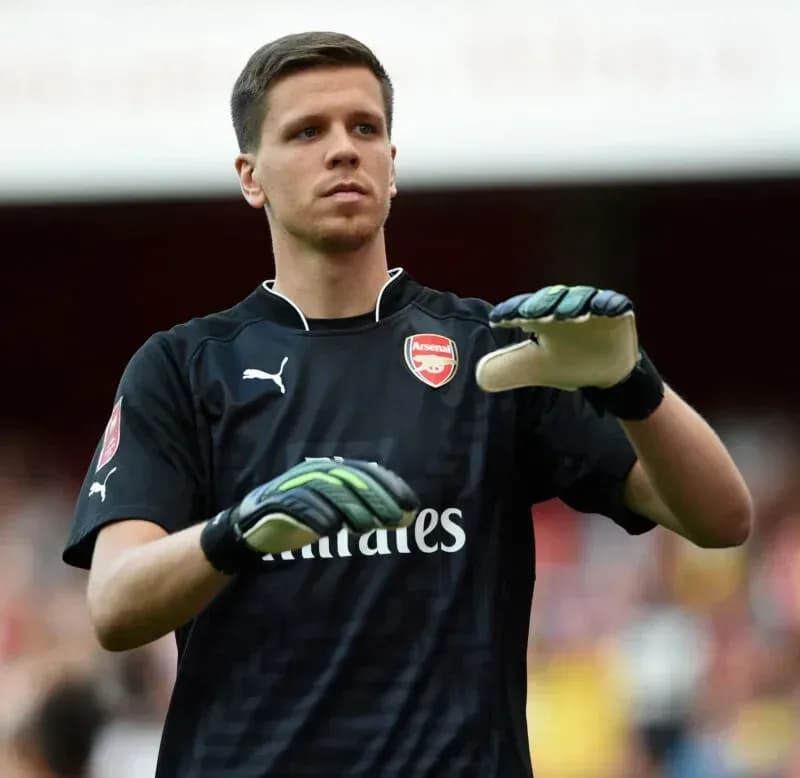
Wojciech Szczęsny: Living with Pain After a Career-Defining Injury
Wojciech Szczęsny still feels it. Every week. Every save.
Almost two decades after a freak accident at Arsenal’s training ground left him with broken bones in both forearms, the former Gunners goalkeeper has admitted the pain never really went away.
He was just 17 in 2008, a highly rated academy prospect at London Colney, when a routine bench press session turned into a nightmare. The bar slipped from his grip, crashed down onto his arms and fractured both radii, an impact Arsène Wenger later described starkly: it "crushed his forearms."
The initial fear inside the club was brutal and simple: that his career might be finished before it had properly started.
Szczęsny required surgery, with metal plates inserted into both forearms, and spent six to seven months on the sidelines. The timing could hardly have been worse. A planned loan move collapsed, his route towards the first team stalled, and a teenager who had been accelerating through the ranks suddenly had to relearn the basics with rebuilt arms.
He fought his way back. He eventually became Arsenal’s No 1, played in the Champions League, and built a career at the top of the European game. The scars, though, were never only cosmetic.
Now 36, Szczęsny has laid bare just how much that day at London Colney still shapes his life between the posts.
"It's not that I can catch the ball without feeling pain," he said. "There has not been a single shot that I have stopped without feeling anything. I've just gotten used to the pain and it's a very unpleasant feeling."
Every dive, every parry, every punch comes with a reminder. He knows his limits in the gym too. "I can do two workouts, but I already know that the third one will be an ordeal," he admitted, a line that underlines how carefully he has had to manage his body just to stay in the game.
The strain grew so intense that Szczęsny has revealed it pushed him towards walking away. The pain, accumulated over years of elite goalkeeping on damaged arms, was one of the reasons he decided to retire.
Then football pulled him back.
Within a month, Barcelona came calling. The lure of one of Europe’s giants convinced him to postpone the idea of quitting, even after he had already turned down an approach from Arsenal.
He plays on, still feeling every impact, still living with the consequences of a barbell that slipped in a quiet corner of London Colney 16 years ago.



