Will Keane's Journey: From Promising Prodigy to Resilient Veteran
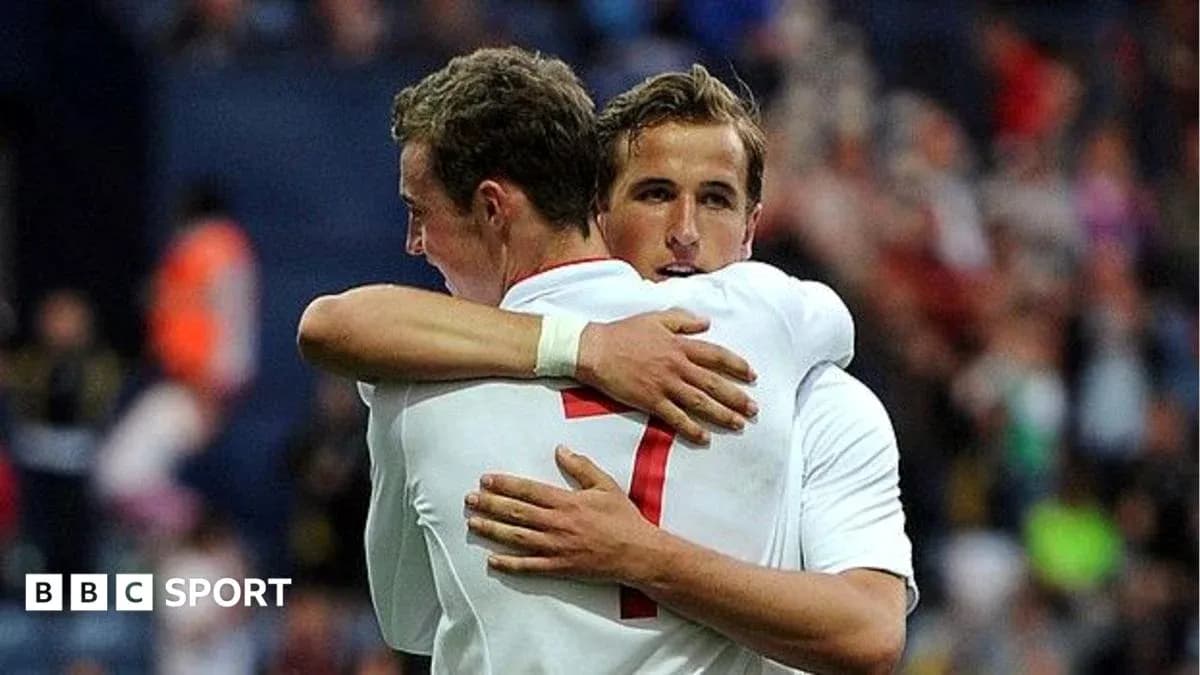
There is a photograph from May 2012 that tells a different story to the one the game eventually wrote.
England Under-19s, European Championship qualifier against Switzerland. Two centre-forwards in white shirts. One is Harry Kane. The other is Will Keane. Back then, if you were picking which of them would be preparing for a World Cup semi-final a decade on, most fingers would have jabbed towards the Manchester United prodigy.
Keane remembers that version of himself well.
"I'd never had any setbacks at that point," he says. "When you're young, you're fearless. The whole trajectory of my career was up. I made my senior debut for Manchester United. We won the Youth Cup. I was doing well for England. Everything was taking off."
Then, in the closing stages of that game against Switzerland, everything stopped.
A serious knee injury. Sixteen months gone in an instant. Sixteen months in which Kane went on loan to Norwich and Leicester, then forced his way into the Tottenham first team. Two careers, once side by side, suddenly on very different tracks.
"It's timing," Keane says. "Some lads go their whole career and have a few niggles, but nothing derails them too much.
"That first injury was at a crucial time. I had my foot in the door. The feeling was I would probably have been around the first team.
"If the injury had happened a couple of years later, I might have been an established squad player. When I had it, I missed 16 months at a crucial part of the transition from reserves to seniors."
While Kane now leads England into the biggest nights of his life, Keane is in Leicestershire, at Champneys Springs, chasing a different kind of opportunity.
A different kind of pressure, too.
A striker at the crossroads
Keane is one of 45 players on the PFA’s 12-week pre-season camp, a project now into its third year. It is designed for footballers without a contract, players who know the game can forget you quickly if you slip out of view.
At 33, Keane is not ready to be forgotten.
He has 335 senior appearances and 85 goals behind him. Eight clubs. Five caps for the Republic of Ireland after switching allegiance from England, where he played all the way up to Under-21 level. He still believes there is more to come.
"A couple of lads I know did the camp last season and spoke really highly," he says. "I almost feel like I'm part of a squad, and we're away for pre-season. There are so many staff; medical, coaching, administrative, media.
"It's quite competitive and there are seven or eight games, so clubs can see you're playing. There's an app clubs can sign up to. It's like a PFA transfer list - all our training data goes on it. Clubs can contact us directly, so hopefully if you go somewhere, you can go straight in."
This is not his first brush with uncertainty. He has already lived through the unease of being out of contract. In 2020, with Covid biting into budgets and logic, Ipswich chose not to trigger a one-year option. He was left hanging.
He eventually returned to Wigan, a club that would shape not only the next chapter of his career, but the way he thought about the game itself.
The day everything changed at United
The physical damage is easy to chart. The mental scars run deeper.
The first ACL injury would have been enough to derail most players. Keane’s body, though, had more punishment lined up.
In February 2016, in an FA Cup tie at Shrewsbury, he tore his groin. The timing could hardly have been crueller.
Three days later, United faced Midtjylland in the Europa League. Keane might reasonably have expected to be in the squad. Instead, his absence opened a door for a teenager named Marcus Rashford. Anthony Martial pulled out in the warm-up. Louis van Gaal turned to the 17-year-old.
Rashford scored twice that night, then twice more against Arsenal in the Premier League days later. A star was born.
Keane watched his own sliding door swing shut from an ocean away.
"I went to America for an operation, landed in Philadelphia, turned my phone on and saw he scored two more," he says.
At 23, he knew what that meant. The boy who had grown up in a United household, who had been tipped for the first team, could see the path closing in front of him.
"It was hard to take, but I had to move on. I got a good move to Hull, who had just been promoted to the Premier League," he says.
The fresh start lasted six games.
Another ACL tear. Another 14 months out. Another season wiped away. Hull went down. Team-mates moved on. Harry Maguire to Leicester. Andy Robertson to Liverpool. Sam Clucas to Swansea.
Keane, once again, was left to rebuild.
"It was crushing," he says. "I missed the whole season, and we got relegated. A lot of the young lads still got good moves."
For him, it marked the start of a different kind of work.
Rewiring the mind
By the time he reached Wigan, Keane realised he needed more than rehab programmes and gym sessions. His body had been patched up again and again. His belief had not.
"I'd used sports psychologists before and always tried to be positive and optimistic, but I started working with someone at Wigan who hadn't worked in football before," he says.
"He's a bit more of a spiritual psychologist. We focus on positive intentions, manifesting, visualisation.
"I'd tried everything in the box, and kept breaking down, so I wanted to do something a bit different."
It changed him.
"I wish I'd had that when I was younger, especially with the setbacks I had early on. It might have got me back into the right frame of mind.
"For any player if you've not got belief in yourself, and you're lacking confidence, you're not going to perform the way you can."
He looks back now at those early post-injury loans in the Championship and sees a player at war with himself.
"I was around the first team at United, then I got the injury, had a few loans in the Championship where I didn't do very well and I started to doubt myself. Wigan catapulted me.
"Before that I should have backed myself. I played with a lot of those lads all the way through, and that's where I was potentially heading.
"If I'd focused on the mental part earlier, it might have been a different outcome.
"Even at times when I picked up injuries, maybe I had a bit of self-doubt which led to something going wrong. If I was in the right frame of mind, maybe one of those bad injuries wouldn't even have happened."
It is a striking admission from a player shaped by academies, data and marginal gains. The turning point, he says, was not a new drill or a different manager, but a willingness to look inward.
The other Kane
While Keane wrestled with injuries and doubt, Harry Kane built the career everyone expected of the other lad in that Under-19 team.
His old strike partner has watched the ascent with admiration rather than envy.
"I remember when we were young, people said he wasn't mobile but technically, the time he put into his finishing and his obsessiveness to be the best in terms of shooting, you see it don't you?" Keane says.
"He's so sure of himself, because he's put the work in. He knows he's a complete striker.
"He's obviously got that belief in himself. He might miss one, but he's not going shy away from it. If he didn't have certainty in his mind, he wouldn't be as prolific.
"He's not arrogant, he's just got the confidence that sets top players apart."
The contrast is stark. One Kane captaining his country on the biggest stage. The other Kane running pre-season drills in front of scouts and analysts, pushing his data into an app and hoping a sporting director scrolls his way at the right moment.
Yet there is no bitterness in his voice, only a sense of how thin the margins really are.
One more move
After a loan spell at Reading last season, Keane left Preston when his contract expired. Another summer, another search.
He does not sound like a man panicking.
"There's been a few chats. I'm sure they're aware of me," he says. "They might be looking for A, B and C targets, but when the season does start, if a club doesn't have a great start, there's a bit of panic and maybe things open up."
That is the reality now. He knows the market. He knows how quickly plans change once results start to count. In the meantime, he runs, he finishes, he competes, he uploads the numbers that might persuade someone he is worth a deal.
Internationally, his loyalties are split but his pride is not.
"It's a hard one because I played for England up until Under-21s, and then seniors for the Republic of Ireland, so I've got a foot in both camps," he says.
"I am proud to represent Ireland. My dad was born there and moved to England. But I've also been born and raised in England, and my family's English."
So he watches England with affection, Ireland with identity, and Kane with the knowledge that, once upon a time, their paths ran almost perfectly in sync.
The sliding door closed years ago. The question now is simpler, and more immediate: which club will open the next one for Will Keane?