Werner's Numbers Say 'Extension'—Leipzig's Power Brokers Hesitate
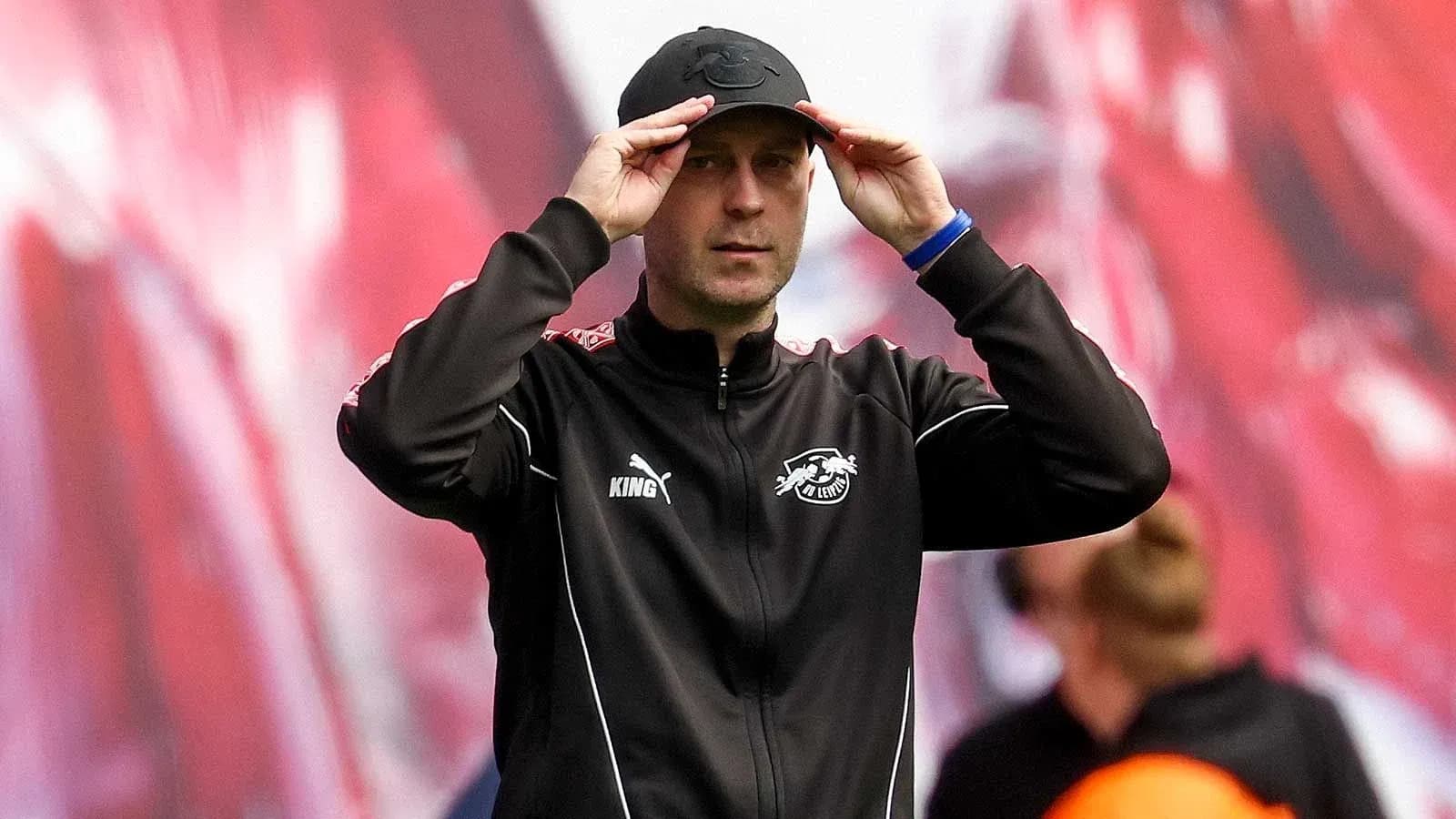
By any rational measure, Marco Werner should be sleeping soundly. The numbers, cold and unforgiving in most cases, are firmly on his side.
A year after RB Leipzig stumbled through their worst Bundesliga campaign of the modern era and crashed out of Europe altogether, Werner walked into the mess and dragged the club back to the top bracket. His Leipzig finished just two points shy of the club’s record haul from the 2016/17 season. The rebuild was brutal, the scrutiny relentless, yet the trajectory unmistakably upward.
On paper, this is what security looks like. Inside the “Global Team,” it feels anything but.
A Rebuild That Should Have Bought Time
Werner’s record reads like a coach who has earned the right to shape a project, not sweat over his next performance review. Across 38 matches, he has averaged 1.95 points per game — elite territory in any major league, let alone in a Bundesliga season that began with Leipzig stripped of its firepower.
The club lost its top three scorers from the previous campaign: Benjamin Sesko, Xavi Simons and Lois Openda. Two more pillars, Yussuf Poulsen and Kevin Kampl, also walked out the door. That is not a refresh. That is a teardown.
Werner didn’t hide behind it. He restructured on the fly, leaned into the new core and, crucially, got players to grow with him. Christoph Baumgartner looks sharper, more decisive. Nicolas Seiwald has stepped into responsibility rather than shrunk from it. And then there is Yan Diomande, the marquee signing whose impact has been so pronounced that some inside the club now talk about a “Diomande factor” when they discuss Werner’s success.
The dressing room, by most accounts, is with him. Players have rallied, performances have lifted, the points have followed.
Yet the coach looks over his shoulder.
The Doubt Behind the Data
The scepticism around Werner is not subtle. It is written, quite literally, into the briefings and reports that swirl around the Red Bull orbit.
“A bit of luck here, a bit of chance there, too much of the Diomande factor, no entirely convincing game plan,” is how Sky summed up the mood within the organisation when it comes to Werner’s future. In other words: is this really his team, or is he riding a hot streak and a standout signing?
That question has hung over Leipzig for months. Even as the league table improved, the atmosphere around the club cooled. By February, the discontent was no longer whispered. It was visible.
The flashpoint came not in a league collapse, but in a cup exit.
Bayern, the Cup, and a CEO Who Turned Up the Heat
Leipzig’s 0–2 defeat to Bayern Munich in the DFB-Pokal quarter-finals was, in sporting terms, no disgrace. Bayern have been ruthless this year, and Leipzig’s display was widely described as “decent” and “respectable.”
Oliver Mintzlaff was not interested in moral victories.
The Red Bull CEO acknowledged the performance against Bayern, then immediately twisted the lens back onto the Bundesliga. That is where, in his eyes, the real problem lay. Four points from matches against Mainz, St. Pauli and Cologne was not the return of a Champions League club.
“In the league, that wasn’t anywhere near what we want. I hold the team accountable for that,” he said, and the message was unmistakable. The pressure wasn’t just on the players. It was on Werner and his staff.
Up to that point, Leipzig had repeatedly pointed to the “massive overhaul” of the squad and framed any European qualification as the season’s realistic target. Survive the reset, get back into Europe, then build.
Mintzlaff cut through that narrative in a single line: “I want to be in the Champions League!”
Not just Europe. The Champions League. And he went further, labelling that ambition “achievable” because, as he sees it, “the team doesn’t lack experience, but the ability to deliver what they’re capable of for 90 minutes in every Bundesliga match.”
That is not a comment about potential. That is a comment about consistency, mentality, and yes, coaching.
Shortly after those remarks, Bild reported what many inside the club already sensed: Werner was under “increasing pressure,” and the mood around him was turning “increasingly frosty.”
Target Hit, Job Still at Risk
Here is the twist in the story: Werner delivered the demand. Despite the upheaval, despite the doubts, despite the public tightening of the screws, Leipzig hit the target that had been set internally at the start of the season — qualification for European competition — and did so while pushing close to a club points record.
The numbers justify him. The progress from last season’s chaos is obvious. Yet the coach still fears for his job.
The dynamic is now brutally simple. If the sporting leadership around Max Eberl’s successor in the operational structure — fronted by the sporting management figure Schäfer — cannot sell Werner’s value to the Red Bull board, the coach stands on thin ice. That board is led by Mintzlaff, whose standards are clear and whose patience, historically, is not endless.
So Werner finds himself in a strange place: statistically one of RB Leipzig’s most successful coaches, architect of a rapid rebound after a disastrous year, and still not certain he will be allowed to see where this rebuilt side can go next.
The numbers say he has earned the right. The question in Leipzig is whether the people who matter are still listening.