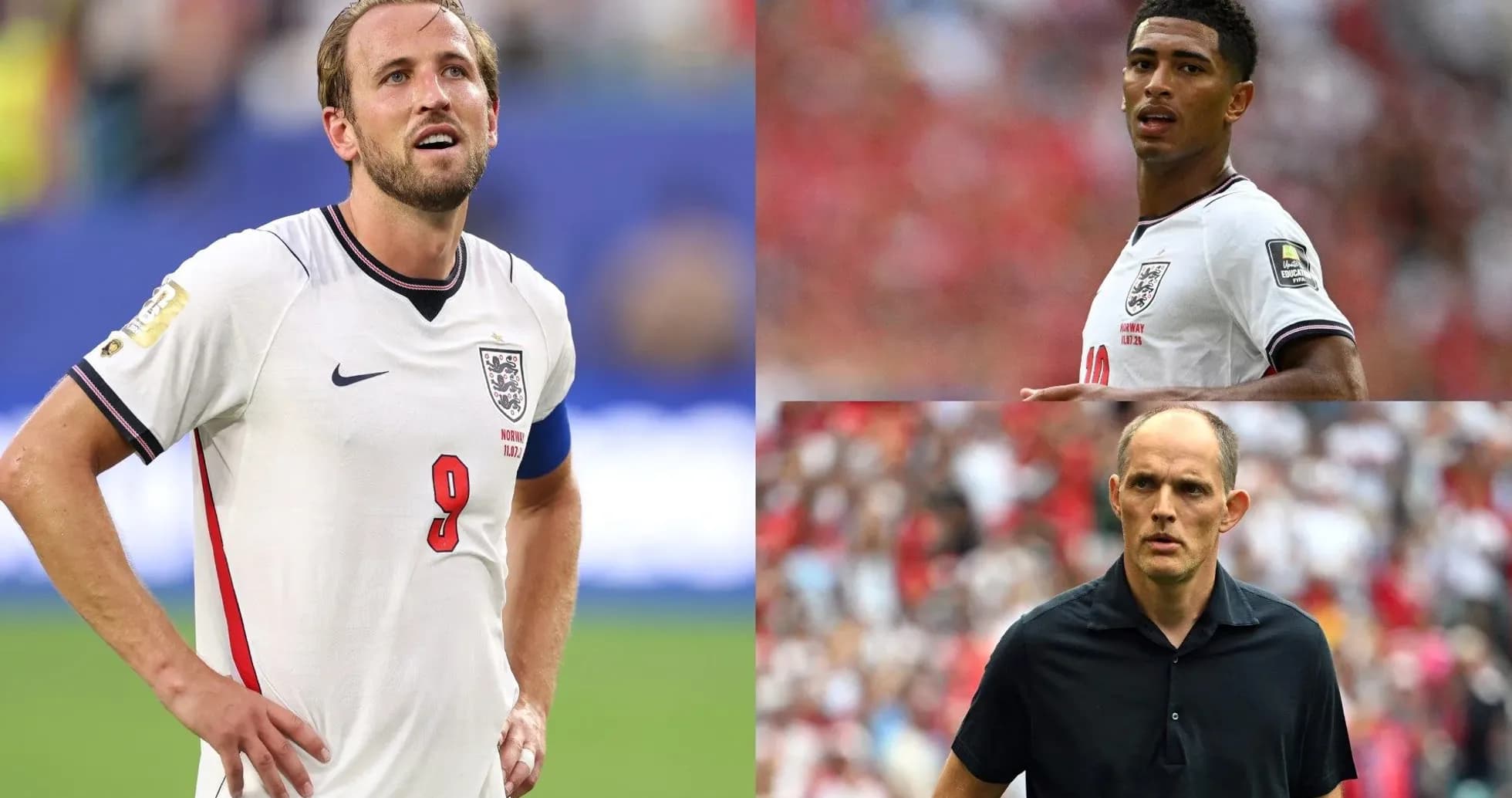
Harry Kane Addresses England Tensions After Tuchel and Bellingham Exchange
The mood around England should be buoyant. A gruelling 2-1 quarter-final win over Norway, an eight-game unbeaten run, a date with Argentina under the lights in Atlanta. Instead, the days after Miami have been thick with noise: Thomas Tuchel’s blunt verdict, Jude Bellingham’s icy reply, and whispers about cracks in the camp.
Tuchel didn’t bother with diplomacy after edging past Norway. England, he said, had “got lucky” and he was “not happy” with his side’s performance “in every sense.” For a manager still carving out his identity with the national team, it was a message aimed squarely at standards, not feelings.
Then Bellingham was asked about it.
The Real Madrid midfielder, still running hot from 90 minutes of attrition, offered a response that landed like a cold front. “Yeah, well, whatever. It’s difficult out there – it’s a tough shift.” Six words at the start, clipped and dismissive enough to send the speculation machine into overdrive. Was there a rift? Had Tuchel pushed too hard? Was England, once again, eating itself alive at a major tournament?
The pressure finally told, not on the training pitch, but at the microphone. Harry Kane stepped in.
In an interview with BBC Sport, the England captain went straight to the heart of the narrative and tried to rip it up. He reminded everyone of the reality players live in after a knockout tie decided by fine margins.
“When you are playing a game like that and to be asked a question five minutes after the final whistle, and he didn’t really know what had been said, what do you want Jude [Bellingham] to say?” Kane said. “We had just been through a battle.”
That word – battle – matters. Norway had dragged England into a fight, and Tuchel’s comments were as much about demanding more as they were about dissecting the 90 minutes. Kane knows that. So do the players. The captain’s frustration was not aimed at his manager, but at the swirl around the team.
“It is easy to try and create this division – it seems like an English thing to do at these major tournaments,” he added. “But it is the complete opposite. The group is where we are because of our complete togetherness – not just the players, the coach and the staff. Things sometimes get made out to be more than they are.”
That line cut through the noise. This was not a squad distancing itself from Tuchel. Quite the opposite: Kane framed the German’s rawness as a strength, not a fracture point.
The contrast with Sir Gareth Southgate, calm and measured in almost every public appearance, has been impossible to ignore. Southgate wrapped his players in a protective arm. Tuchel prefers a jolt to the system. Miami gave everyone a glimpse of that shift in real time.
Yet inside the dressing room, Kane insisted, the players have bought into it.
“He [Tuchel] wears his heart on his sleeve and people appreciate that,” the striker said. “When he talks, it is never scripted. That is what makes him who he is. When it just comes natural you believe in that, you believe in what he is saying, you believe in his approach. He is one of the best managers in the world for a reason. We understand it. Over the past two years we have got to know him and know what makes him happy.”
This is the bargain England have struck. With Tuchel, they get sharp edges, public honesty, and the occasional verbal grenade. They also get a manager with a Champions League on his CV, a coach unafraid to demand more even in victory, and a figure the players clearly trust enough to accept criticism in the open.
Now comes the test that will define whether all that fire forges something stronger or burns out under the brightest glare.
Argentina await at the Atlanta Stadium on Wednesday. The defending world champions arrive on a 13-game winning streak, carrying the weight of expectation and the swagger of a side that knows how to navigate these nights. England bring their own form – eight games unbeaten – but also a backline about to face the ultimate examination.
Because somewhere between the tactical boards and the press conferences stands Lionel Messi.
At 36, he still bends tournaments to his will. He currently sits atop the scoring charts with eight goals, level with Kylian Mbappé, and he has turned this competition into another personal canvas. England’s defenders have handled pressure, pace, and physicality so far. Now they must handle genius.
This is where Tuchel’s “not happy” matters. Against Norway, England survived. Against Argentina, survival might not be enough. The margins shrink, the stakes rise, and every loose touch or lapse in concentration invites Messi into the game.
Kane has drawn a line under the supposed rift. The players, he insists, are united. The manager, he says, is believed in. The words have been spoken.
The only thing left to judge now is what England look like when Messi, Argentina, and the world are staring straight back at them.