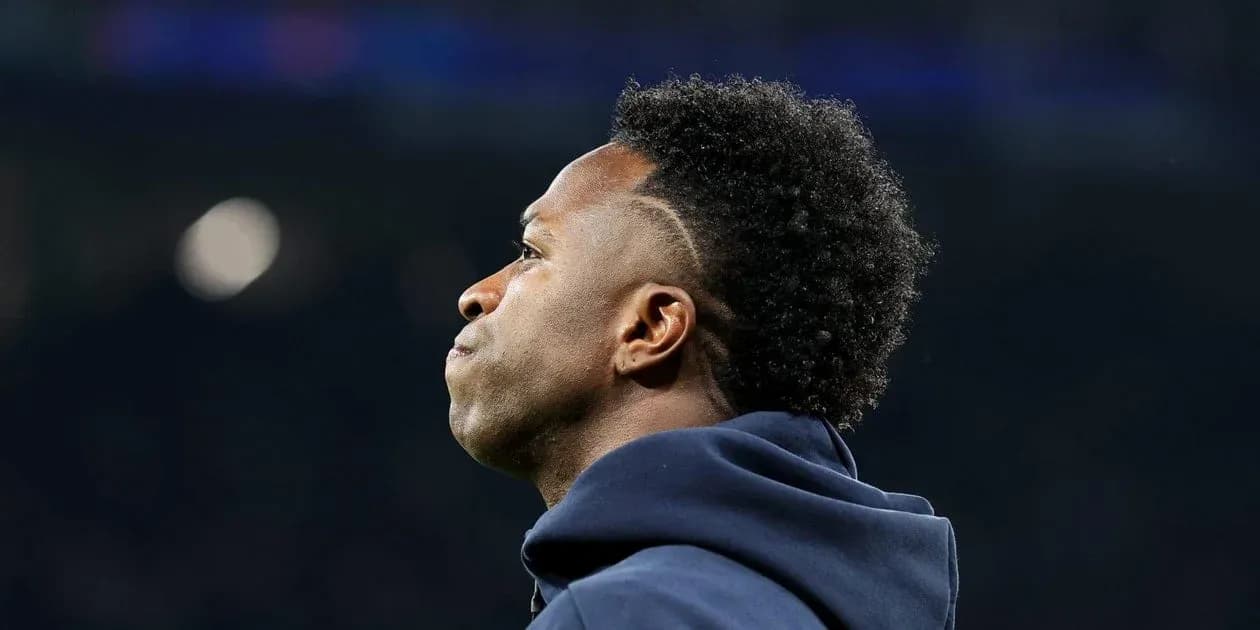
Vinicius Jr at a Crossroads: Real Madrid vs Arsenal Transfer Saga
The story was never meant to drag on like this. When Real Madrid sat down with Vinicius Junior and his camp a year and a half ago to discuss a new contract, the expectation inside Valdebebas was of a routine renewal for a player who had already delivered a Champions League final winner and grown into the face of the club’s attack.
Instead, Madrid now find themselves in a stand-off with one of their most important players, and Arsenal are quietly positioning themselves for what could become the defining transfer of the Premier League era.
A simple renewal that turned into a saga
Vinicius arrived from Flamengo in 2018 for €45 million, a teenager with raw edges and outrageous promise. By 2022, he had justified the investment and more, signing an extension through 2027 after his breakthrough season, capped by that decisive goal against Liverpool in Paris.
Even then, there were signs of what was to come. Madrid’s offer was tiered: different salaries depending on the length of the deal. Less money to sign until 2027 than he would have earned on contracts running to 2028 or 2029, like fellow Brazilians Eder Militao and Rodrygo Goes accepted that same summer.
Vinicius and his inner circle backed themselves. They saw that season not as a peak, but as a starting point. They chose the shorter option, betting that his trajectory would force Madrid back to the table on improved terms.
They were right about the trajectory. The money has not followed in the way they expected.
With a salary that escalates over time and bonuses triggered — notably after winning FIFA’s The Best award in 2024 — Vinicius now earns around €18 million net per season. Elite money, but in a dressing room where comparisons are unavoidable, not quite enough.
The numbers game: salary, bonuses and a hard line
In January 2025, the negotiations moved into a more serious phase. General manager Jose Angel Sanchez and chief scout Juni Calafat met Vinicius, two of his agents and his father at Valdebebas. Madrid put an offer on the table: about €20 million net per year.
The answer was no.
Vinicius’ camp responded with a counter-proposal. Madrid rejected that as well. By April, club briefings suggested a deal was close. Reports in Spain described the renewal as “very advanced”.
From the player’s side, the message was blunt: absolutely not.
The Brazilian’s camp, as revealed by The Athletic, were seeking a total package close to €30 million per year. Not just a bigger base salary and performance bonuses, but something Madrid have never agreed to before — a renewal bonus.
That single element has become the fault line in the talks. Madrid argue they are already pushing the limits of their wage cap. Vinicius’ representatives see the bonus as the only realistic way to bridge the gap, especially when they look across the dressing room at Kylian Mbappe.
Mbappe’s salary sits in the same bracket. The difference lies in the signing bonus he received when he arrived as a free agent from PSG in 2024. That windfall has reshaped expectations among the very top tier of players.
Madrid fear the precedent. Approve a renewal bonus for Vinicius and others will expect the same in future negotiations. Internally, that “knock-on effect” is viewed as dangerous.
Vinicius, for his part, is willing to soften his demands to keep the door open. But he has not walked away from the idea of being compensated in a way that reflects both his status and the market realities created by Mbappe’s deal.
The clock is ticking. His contract runs to 2027. The 26-year-old is due back in training next week, when fresh talks are scheduled and the club want clarity. Those conversations will go a long way to deciding whether this ends in a renewal, a sale, or a slow march towards free agency.
Three paths remain: extend with Madrid, leave now, or run the deal down and walk next summer.
Arsenal sense an opening
Into that uncertainty have stepped Arsenal.
The Premier League champions have been monitoring the situation for months, fully aware of the stalemate and of its impact on the player. Behind the scenes, they have done more than just keep an eye on it. They have moved.
Sporting director Andrea Berta has spoken with Vinicius’ camp. Key figures at the club have made their pitch: he would not simply join a strong team; he would be the star of a project that has just won the Premier League and lost the Champions League final on penalties to PSG under Mikel Arteta.
Inside Arsenal, there is no doubt. Vinicius is their top attacking target. The club’s owners have signed off on the idea and on the scale of the operation. If he does not renew at Madrid, a move to London appeals to the player. Those close to the talks believe personal terms would not be a problem if he decides he wants Arsenal.
“Mikel Arteta loves him,” says one person familiar with the manager’s view. “If he doesn’t renew, we will be there.”
Arsenal know they are not shopping in a normal market. Their wage structure would need to flex. Madrid’s proposal of €20 million net per year sets a baseline, and Arsenal are prepared to make an exception for a player of this calibre. A sign-on bonus and image rights arrangements would be key levers in making the numbers work.
On the Madrid side, there is a different kind of pressure. Letting Vinicius run his contract down would mean losing him for free in 2027 and paying out a significant loyalty bonus next season. Some influential voices at the club would rather cash in this summer than face that scenario. The final call, as ever, will rest with president Florentino Perez, long one of Vinicius’ staunchest backers, alongside Calafat.
Arsenal hope to exploit that risk. With one year left before free agency, they believe a reduced transfer fee is realistic, especially if the player makes clear he will not extend. Their ownership group has already approved the anticipated financial framework, convinced that the outlay would be offset by a surge in commercial revenue.
Vinicius is a marketing force. At Arsenal, he would not only front the team, he could front the league.
A football decision with commercial aftershocks
Inside the Emirates, they insist this is driven by football first. Arsenal’s recruitment team are under no illusion about how hard it is to improve a title-winning side. There are very few players who can genuinely alter the ceiling of this group. Vinicius is one of them.
The club’s summer plan reflects that ambition. A midfielder — with a deal for Newcastle’s Bruno Guimaraes close — a centre-back to cover William Saliba’s extended absence with a back injury, and a left winger to add another weapon to Arteta’s front line. Christos Tzolis has already arrived for €40 million. Vinicius, though, would sit in a category of his own.
So committed are Arsenal to this pursuit that they are not actively pushing for Bradley Barcola, despite previous interest. Liverpool are now preparing an opening offer for the France international. Arsenal’s focus is elsewhere.
They are operating under the impression that Vinicius would be open to joining. The work being done — extensive, detailed, months in the making — reflects that belief. They also know it guarantees nothing. Deals of this size are fragile. One decision from Perez, one shift in Madrid’s stance, and the landscape changes.
There is another moving piece. Madrid’s anticipated signing of Yan Diomande from RB Leipzig is being watched closely in London. Around Arsenal, that potential arrival is viewed as a sign that Madrid are thinking about life beyond Vinicius, or at least about protecting themselves. But that transfer is not yet complete. Its outcome could influence how hard Madrid hold the line in talks with the Brazilian — and how aggressively they resist an Arsenal bid.
Madrid’s dilemma, Arsenal’s moment
Inside the Bernabeu hierarchy, opinions are split. Some key figures favour selling this summer, banking a fee and avoiding the nightmare of losing a prime asset for nothing. Others, including Perez and Calafat, remain emotionally and strategically tied to Vinicius, the player they nurtured from a precocious teenager into a global star.
Jose Mourinho, now back in the Madrid dugout, admires him and has spoken with him. He will, though, ultimately accept whatever decision the club makes. The issue has outgrown the coach. It is about structure, precedent, and the future shape of Madrid’s wage bill.
For Arsenal, simply being in this conversation is a statement. A decade ago, they broke their own ceiling to sign Mesut Ozil from Real Madrid. That transfer symbolised a shift in how they were perceived. The pursuit of Vinicius operates on an even higher plane.
This time, they are not picking up a player deemed expendable by Madrid. They are trying to prise away one of the club’s central figures at his peak, from a team that still sees him as a cornerstone — if the numbers can be made to work.
Arsenal believe that if they land him, it would be the most high-profile signing into the Premier League’s modern era, a move that would reshape not only their own identity but the competitive and commercial balance of the division.
For now, the situation hangs on those talks scheduled for next week, when Vinicius returns to training and Madrid try once more to close the gap.
Does he sign and stay as one of the faces of the next Madrid cycle? Does he force a move now and become the spearhead of Arsenal’s project? Or does he run the clock down and walk away as a free agent, rewriting the rules of player power at the very top of the game?
The next few days will tell Madrid how much they are willing to bend. They will also reveal just how far Arsenal are prepared to go.