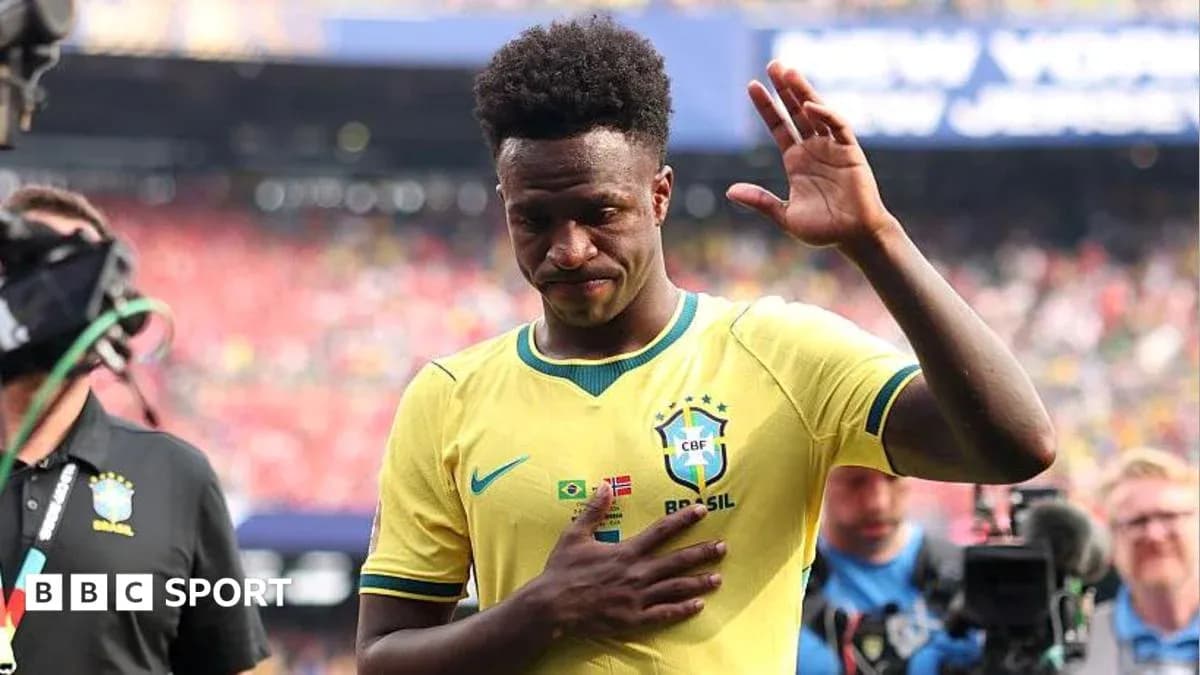
Vinicius Jr's Decision Highlights Premier League's Superstar Gap
If Vinicius Jr had walked through the doors at London Colney this summer, it would have been a rupture in the natural order of the modern game.
A genuine, fully-formed global superstar. In his prime. Swapping the Bernabeu for the Emirates.
Arsenal were ready. The plan was clear: if Vinicius ever pushed to leave Real Madrid, he would become their obsession, their statement to the rest of Europe. At 26, the Brazil forward was at least willing to listen.
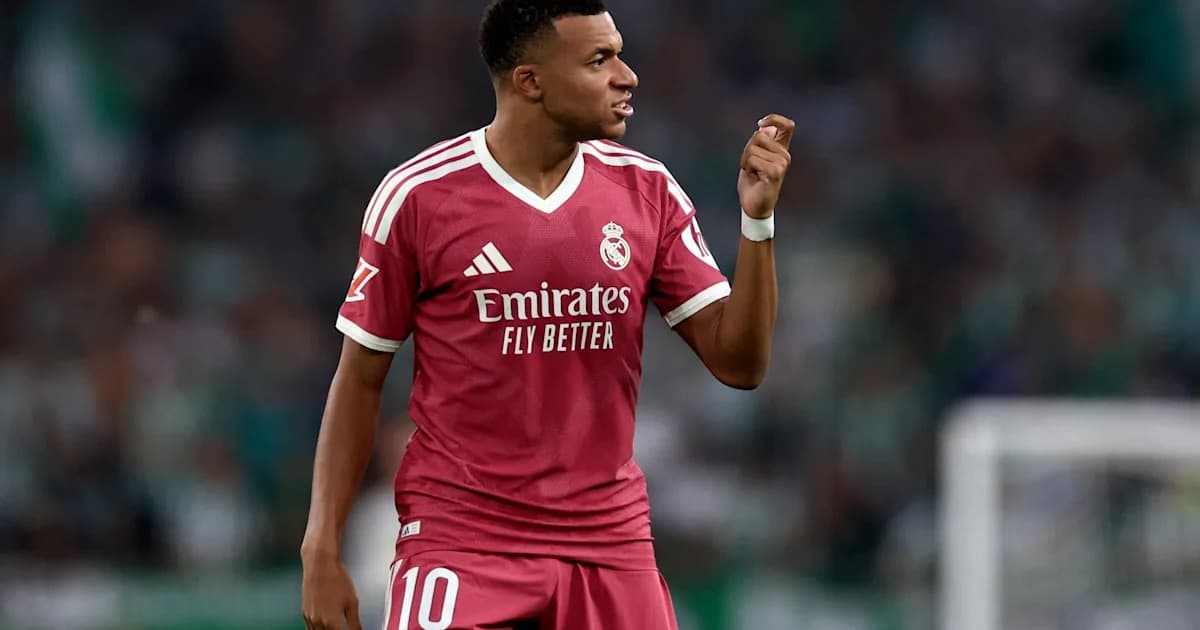
He has now answered in the most decisive way possible. A new Real Madrid contract, running to 2032. A decade-long commitment to the white shirt and a familiar reminder to English football of its most awkward contradiction.
England’s wealth, Europe’s hierarchy
No league spends like the Premier League. No league markets itself with the same relentlessness or boasts such depth from first to twentieth.
Yet when it comes to attracting the very top tier – the players who live permanently on the Ballon d’Or podium – England still stands on the outside looking in.
The pattern is stark. Since the league’s rebirth in 1992, only three men have lifted the Ballon d’Or while playing for an English club: Michael Owen with Liverpool in 2001, Cristiano Ronaldo at Manchester United in 2008 and Rodri with Manchester City in 2024.
Defenders and goalkeepers? The Premier League has no problem hoarding them. Elite centre-backs, world-class keepers – they arrive, they stay, they thrive.
The scarcity lies further up the pitch. The true A‑list attackers and playmakers, the faces of global campaigns and childhood bedroom posters, still so often choose Madrid, Barcelona, Bayern, or a different path entirely.
Vinicius would have broken that trend. Not a rising star, but a finished article with multiple Champions League titles and a place among the most recognisable players on the planet.
Instead, his decision underlines a familiar reality: the Premier League is where superstars are made, not usually where they arrive.
A league of alchemists
This has always been England’s strength. Turning promise into legend.
Dennis Bergkamp came to Arsenal after a difficult spell at Inter Milan and left as one of the most influential players the division has ever seen. Eric Cantona had flickered in France and briefly at Leeds, then became the defining symbol of Manchester United’s first great Premier League dynasty.
Thierry Henry landed in north London as a winger who had failed to convince at Juventus. He departed as one of his generation’s most devastating forwards.
Ronaldo joined United at 18, a thrilling but raw winger from Sporting. Five years later he was a Ballon d’Or winner, and within a year he was gone, sold to Real Madrid at the peak of his powers.
Erling Haaland offers the modern version of the story. When Manchester City signed him from Borussia Dortmund in 2022, he was already coveted across Europe, already prolific. But he was not yet the force of nature he has become in England, a number nine who bends defensive structures on his own.
That is a very different equation to signing someone like Vinicius after he has already conquered Europe.
The rare exceptions
There have been attempts to break the pattern. There have been names that carried that same global weight.
Andriy Shevchenko remains the clearest comparison. Chelsea prised him from AC Milan in 2006 at 29, only two years after he had won the Ballon d’Or and a year after he finished fifth in the voting. He arrived as an established superstar still close to his peak, not a project or a reclamation job.
Others came, but later in their journeys. Ruud Gullit and George Weah both pulled on Chelsea blue, though by then their greatest years were behind them. Ronaldo returned to Manchester United at 36. Zlatan Ibrahimovic arrived at Old Trafford at 34. Jurgen Klinsmann signed for Tottenham at 30.
They brought profile and pedigree, but not the sense of a player at the very summit choosing England over Madrid or Milan.
Once, it was different elsewhere. In the 1980s and 1990s, Serie A sat at the centre of the football universe – rich, glamorous and irresistible.
Diego Maradona left Barcelona for Napoli. Ronaldo, Brazil’s phenomenon, moved from Barcelona to Inter at his most explosive. Michel Platini, Marco van Basten, Lothar Matthaus, Zinedine Zidane – all spent some of their finest years in Italy.
The Premier League now holds the financial power that Serie A once enjoyed. The impact, though, has been more diffuse.
Depth over Galacticos
English clubs do not simply buy one star and build around him. They build squads, sometimes two-deep in every position, and spread the money accordingly.
Fees that once belonged only to the game’s absolute elite now circulate within the league itself. Alexander Isak, Morgan Rogers, Elliot Anderson, Moises Caicedo, Declan Rice, Jack Grealish – all have moved between Premier League clubs for sums north of £100m.
The model is clear. Pay huge money for players proven in the division or for those whose ceiling still lies ahead. Liverpool’s signing of Florian Wirtz from overseas fits that pattern: a player with a huge reputation, but with the expectation that his true peak is yet to come.
This is not the Galactico era. It is the age of the 18-to-22-man super-squad, engineered to survive 60-game seasons, injuries, fixture congestion and the relentless churn of domestic and European competition.
Haaland, again, is the counterpoint. City bought him at 21 and watched him turn into one of the most feared centre-forwards in the sport. He is proof that the Premier League can be both destination and launchpad.
But even his story hints at the ceiling.
The Madrid pull that won’t go away
During the 2026 World Cup, Haaland’s father, Alfie, sat down with DAZN and was asked the question that always hovers over any superstar who does not already wear white: what about Real Madrid?
"He's happy at City, he's got a long contract… but any player wants to play for Real Madrid," he said.
The answer did not herald an imminent move. It did, though, reveal something deeper. Even in an era when English clubs can outbid almost anyone, the lure of the Bernabeu still sits in a category of its own.
That is the challenge for the Premier League. It has proved, time and again, that it can turn promise into greatness. It can take Bergkamp, Henry, Ronaldo, Haaland and give them a stage to become global icons.
What it has rarely done is persuade those who are already there – those already at the summit – to choose England at the height of their power, and then to stay.
Vinicius Jr’s new deal is another reminder of that gap. The question now is whether the richest league in football can ever truly close it, or whether the very best will always, eventually, look towards Madrid’s white shirt and see the final step they still want to take.