Vancouver Whitecaps Reach MLS Finals with 3-1 Win Over San Diego
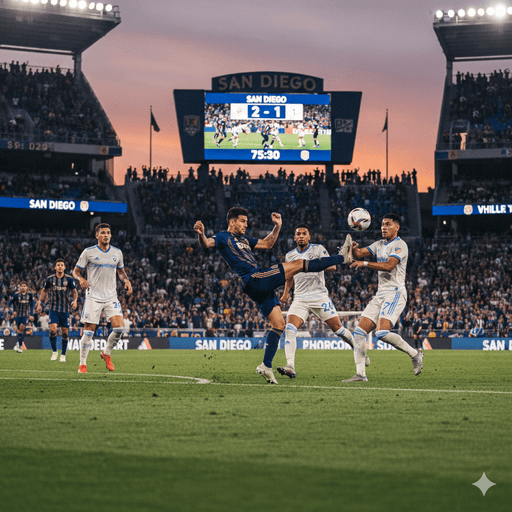
The Snapdragon Stadium in San Diego witnessed an electrifying encounter as the Vancouver Whitecaps secured a convincing 3 – 1 victory over the San Diego team in the semi-finals of Major League Soccer (MLS). The Whitecaps exhibited clinical finishing, maximizing their chances in a match that showcased a dramatic first half. With a total of 11 shots and an xG of 3.0, they dismantled San Diego's defensive setups, sending them through to the finals.
First Half Analysis
From the kickoff, Vancouver set the tone with an aggressive approach, demonstrating their intentions early on. Just eight minutes in, Brian White fired the first blow with a well-placed goal that caught San Diego's defense off-guard. An assist from the spirited attack initiated by the Whitecaps stunned the home crowd, setting the visitors up for early control. The Whitecaps doubled their lead in the 11th minute, thanks to an unfortunate own goal by San Diego's goalkeeper Pablo Sisniega, who inadvertently deflected the ball into his net.
Despite trailing 0 – 2, San Diego maintained possession, recording 54% as they tried to find a way back into the match. However, their efforts were ultimately undermined by numerous tactical fouls, bringing the total to 16 in the first half alone. Their frustration was evident, as Onni Valakari earned a yellow card in the 27th minute, further diminishing San Diego's composure.
In stoppage time of the first half, Vancouver struck yet again with White netting his second goal of the evening, this time assisted by Ali Ahmed. By halftime, the Whitecaps had built a commanding 3 – 0 lead, showcasing their prowess with 8 shots on target from 11 total attempts.
Second Half Narrative
Emerging from the break, San Diego made significant tactical adjustments, introducing Hirving Lozano and shifting their formation to a more attacking style. The persistence of their pressing game paid off in the 60th minute. Lozano, who entered with the intent to refocus the attack, scored San Diego's first goal of the match, assisted by Jeppe Tverskov. This brought the score to 3 – 1 and reignited hope for the home side.
In response, Vancouver's coach Jesper Ingemann Sørensen adjusted his tactics, utilizing fresh legs to maintain their lead. The second half saw San Diego increase their shot count to 12, but they struggled to efficiently convert their chances, reflecting their misfortune on the pitch. The Whitecaps managed to hold firm, absorbing the pressure while also threatening on the counterattack. As the clock wound down, the game opened up, leading to a flurry of thrilling moments as Vancouver fought off San Diego’s desperate bid to get back into contention.
The match did not come without discipline issues, with San Diego receiving another yellow card for a reckless challenge. The home side's defensive woes culminated with Sisniega receiving a red card in the 79th minute for reckless play, forcing San Diego to finish the match with ten men. Despite a stronger showing in the second half, San Diego could not find the net again and ultimately fell to the superior offensive capabilities of the Whitecaps.
Statistical Deep Dive
The match statistics tell a compelling story of two contrasting styles. Vancouver's 3 – 1 victory was not just a product of finishing; they had a shot accuracy of 73%, as opposed to San Diego's 41% (5 shots on target from 12 attempts). Vancouver's expected goals (xG) of 3.0 compared favorably against San Diego's 1.05, emphasizing the quality of chances created.
Additionally, while San Diego led in possession with 54%, the actual efficiency of their ball use fell short as they recorded an impressive 86% pass accuracy, on par with Vancouver's figures. However, the tangible results were stark: 3 goals from significantly higher quality chances underscored the effectiveness of the Whitecaps' attacking strategy.
Individual Performances
Vancouver's Brian White emerged as the standout player, netting two goals and providing a constant threat throughout the match. His sharp movements and positioning made it difficult for the San Diego defenders to contain him. Ally Ahmed also contributed significantly, providing a crucial assist. San Diego's Lozano showed glimpses of brilliance, and his goal demonstrated his potential to change games, even in defeat.
Conversely, San Diego's Sisniega faced scrutiny after his own goal and subsequent red card. His performance, combined with the team's collective frustration, detracted from their effectiveness, culminating in a disappointing exit from the tournament.
Match Significance & Conclusion
The victory propels Vancouver Whitecaps into the MLS finals, a significant achievement given their consistent form this season. Both teams finished with 63 points at the end of the regular season, but Vancouver's superior goal difference ultimately allowed them to edge past San Diego. This semi-final defeat raises questions about San Diego's tactical resilience, needing to reassess strategies as they move forward.
For now, Vancouver looks ahead to the finals, buoyed by this performance. Their clinical finishing and strong defensive organization provide a strong foundation as they aim for the championship. The statistics tell the tale—not just of a match won, but of a team ready to claim its place among the elite in Major League Soccer.