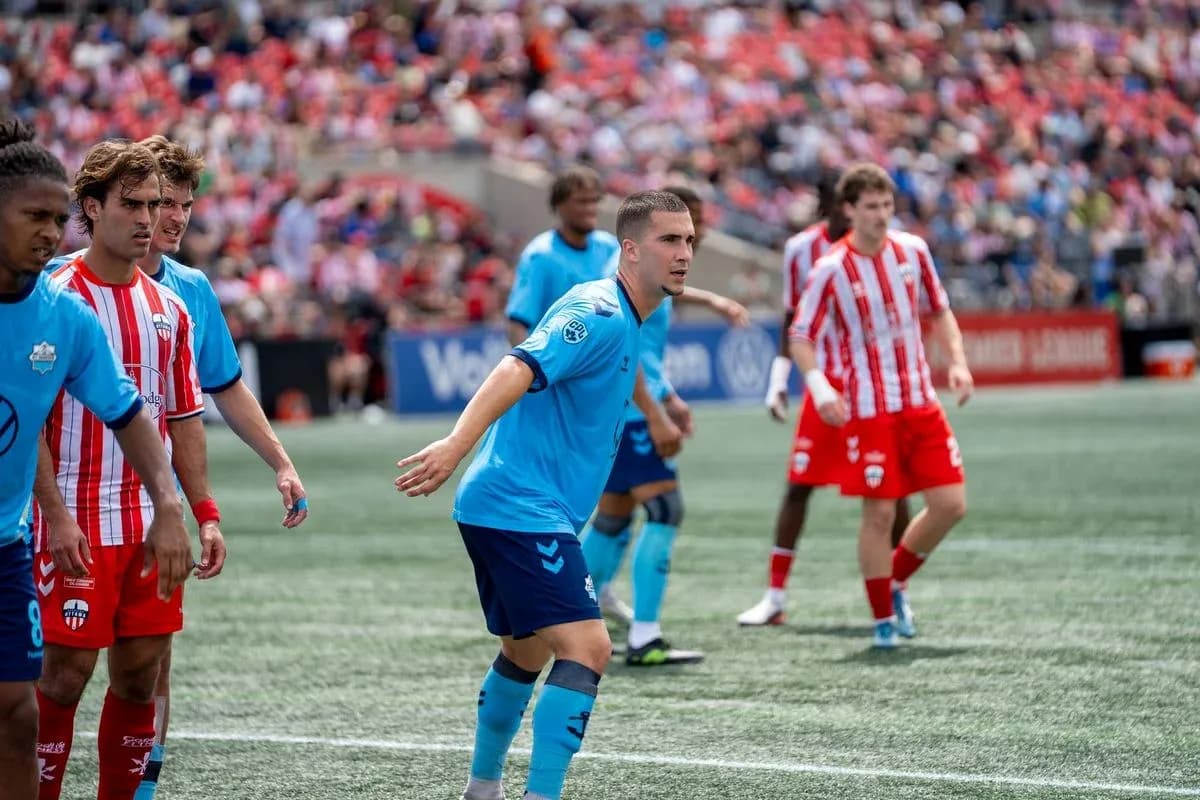
Vancouver FC vs Forge FC: Tactical Insights from a 1–1 Draw
The floodlights at Willoughby Community Park had barely cooled when the numbers began to tell a different story from the 1–1 scoreline. Vancouver FC, 4th in the Canadian Premier League on 33 points, had just gone toe‑to‑toe with a Forge side sitting 2nd with 47 points, and the draw felt less like a stalemate and more like a tactical sketch for how these squads are evolving heading into the final stretch of the Group Stage.
I. The Big Picture – Two Identities Colliding
Across the season overall, Vancouver FC have been a team of fine margins. Their goal difference of 2 comes from 35 goals scored and 33 conceded in 25 matches, and that balance was echoed here: a first half where they were punished, a second half where their attacking structure finally bit back.
At home this campaign, Vancouver have been quietly efficient: 6 wins, 4 draws and 3 defeats in 13 games, with 21 goals scored and 15 conceded. An average of 1.6 goals scored at home against 1.2 conceded paints them as a side that usually finds a way to score, but rarely puts games fully to bed. That pattern held: they allowed Forge to control key phases early, then clawed their way back.
Forge arrived with the aura of a contender. Overall, they have 35 goals for and only 17 against, a goal difference of 18 across 23 matches. On their travels, they have 6 wins, 3 draws and 3 defeats from 12 away games, scoring 18 and conceding 11 – a sturdy, well‑drilled unit that tends to travel with purpose. Their overall scoring rate of 1.5 goals per match is matched both at home and away, and it showed in the way they crafted their first‑half chances: measured, patient, and ruthless when space appeared.
II. Tactical Voids and Discipline – Where the Edges Fray
With no official list of absentees, the lineups themselves told the story of who the coaches trusted. M. Nash set Vancouver up in a 4‑3‑3, leaning on a back four of M. Doner, M. Campagna, Thomas Geoffrey Field and K. Proctor in front of goalkeeper C. Irving. Ahead of them, a midfield trio of Benjamin Lee, M. Polisi and L. Toomey was tasked with knitting transitions to a front three of T. Bah, T. Campbell and A. Traore.
The structure mirrored Vancouver’s seasonal tendencies. Overall, they concede most heavily between 61–75 minutes, where 24.24% of their goals against arrive. That vulnerability in the third quarter of games often stems from midfield fatigue and stretched distances between lines. Here, the onus fell on Polisi and Lee to hold shape and delay Forge’s counters in that danger window.
Discipline has been a subplot of Vancouver’s season. Their yellow card profile spikes late: 23.81% of bookings arrive between 76–90 minutes, with another 16.67% in added time. Players like Polisi (7 yellows overall) and Bah (5 yellows overall) embody that edge – combative, sometimes over the line. In a tight match like this, it meant the closing stages were always going to be played on a disciplinary knife‑edge, even if no red card drama unfolded on the night.
Forge, meanwhile, brought a 4‑3‑3 of their own under Bobby Smyrniotis. Dino Bontis started in goal, protected by a back line of R. Rama, D. Nimick, Manjrekar James and B. Paton. In midfield, the blend of T. Borges, A. Aromatario and N. Jensen offered craft and control, with a front three of M. Bourgeois, L. Cavallini and M. Filion providing varied movement.
Forge’s disciplinary record is more volatile. Overall, they have a noticeable cluster of yellow cards between 31–45 and 61–75 minutes (each 21.57% of their bookings), and a worrying red‑card history: R. Rama and others have seen straight reds this season. Aromatario, with 8 yellows overall, and Rama, with both yellow and red card history, are constant flashpoints. In a match where Vancouver’s late‑game aggression meets Forge’s combustible back line, any small tactical misstep can quickly become a numerical disadvantage.
III. Key Matchups – Hunter vs Shield, Engine Room Battles
The “Hunter vs Shield” duel began with Vancouver’s attack. Overall, Vancouver score 1.4 goals per match, but at home that rises to 1.6. Forge’s defence, however, is one of the league’s most secure: they concede only 0.7 goals per match overall, with just 0.9 on their travels. Breaking them down requires both variety and patience.
T. Campbell, Vancouver’s leading scorer with 4 goals overall, operated as the central reference point. His profile is that of a penalty‑box forward who can also contribute in build‑up: 16 shots, 6 on target, and 8 key passes overall. Around him, Bah brought chaos from wide areas. With 3 goals, 1 assist and 27 dribble attempts overall, Bah is Vancouver’s primary ball‑carrier, drawing 33 fouls and forcing defenders into decisions they do not want to make.
They were up against a Forge rearguard that has conceded just 11 goals away overall. Rama, who has 36 tackles and 19 interceptions overall, and the aerial presence of Nimick and James, formed a shield that initially kept Vancouver at arm’s length. The first half belonged to Forge’s defensive structure; the second half saw Bah and Campbell finally drag them into uncomfortable spaces, especially as Vancouver’s attacks tilted towards the wide channels.
In the “Engine Room”, the duel between Vancouver’s Polisi and Forge’s Aromatario framed the rhythm. Polisi, with 588 passes at 85% accuracy overall, is Vancouver’s metronome, but he also carries a disciplinary weight with those 7 yellows. Aromatario, meanwhile, is Forge’s enforcer and distributor: 637 passes at 84% accuracy, 54 tackles and 32 interceptions overall. This is a midfielder who not only breaks up play but dictates it, and his 36 fouls committed overall underline the physical cost of his role.
Around them, Borges floated between the lines. With 4 assists and 31 key passes overall, he is Forge’s primary creator, and his presence in the right half‑spaces forced Vancouver’s midfield three to constantly adjust their cover. Every time Vancouver’s press was even slightly mis‑timed, Borges had the vision to exploit the gap.
IV. Statistical Prognosis – What This Draw Really Says
Following this result, the data suggests a story of two teams whose trajectories may be converging. Vancouver’s overall goal difference of 2 against Forge’s 18 still underlines a gap in long‑term dominance, but the way Vancouver matched Forge across 90 minutes hints at a side learning to manage game states better.
The timing patterns are crucial. Vancouver’s goals for are spread, with strong surges in the opening 15 minutes (22.86%) and just before half‑time (31–45, also 22.86%), while Forge’s attacking peak arrives between 61–75 minutes, where 25.71% of their goals are scored. That intersection – Vancouver’s known defensive weakness in the 61–75 window against Forge’s most dangerous attacking spell – is where future meetings will likely be decided.
Forge’s penalty record overall (3 scored, 1 missed from 4) also matters. They are not flawless from the spot, and in tight, physical contests like this, that 25% miss rate can swing margins.
Tactically, this 1–1 feels like a preview of playoff‑level football. Vancouver’s 4‑3‑3, with Bah and Campbell as twin threats, has enough to trouble even the league’s best defence, especially at home where their scoring rate is higher. Forge, with their layered midfield and disciplined back line, still project as the more stable side over a season, but their vulnerability in disciplinary terms and their reliance on key peaks in the middle third of matches leave small cracks.
If these sides meet again with stakes higher than a Group Stage point, expect the battle to revolve around that 60–75 minute corridor: can Vancouver shore up the soft underbelly that has cost them 24.24% of their goals against overall, or will Forge once again turn that window into their killing ground? The numbers suggest that whoever wins that spell will write the next chapter of this quietly growing rivalry.