Valencia and Rayo Vallecano Share Points in La Liga Stalemate
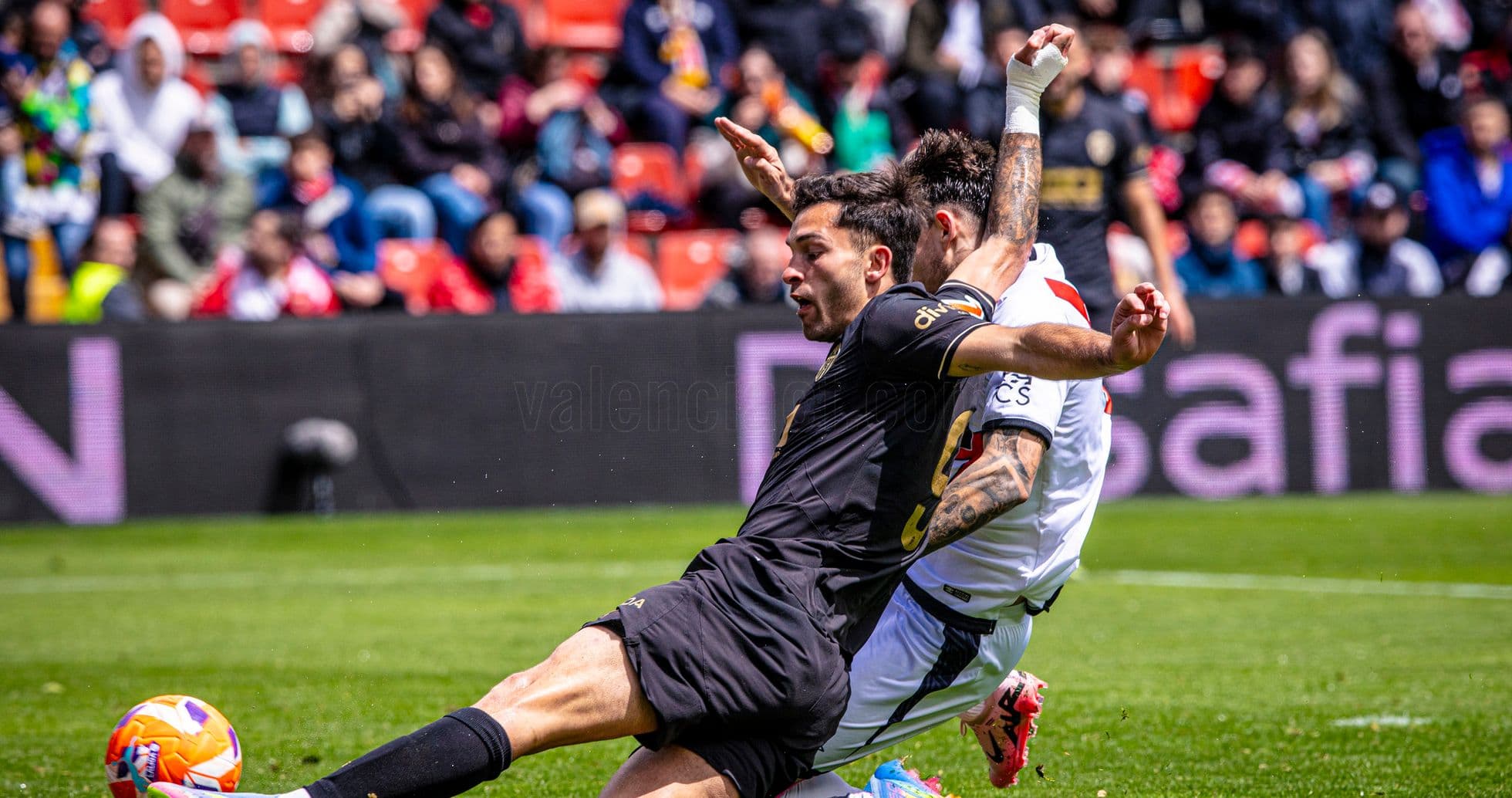
The evening at Estadio de Mestalla ended with the scoreboard frozen at 1-1, but the draw between Valencia and Rayo Vallecano felt more like a snapshot of two mid‑table identities colliding than a dead rubber in Round 36 of La Liga’s 2025 season. Following this result, Valencia sit 11th with 43 points and a goal difference of -12, while Rayo Vallecano hold 10th on 44 points and a goal difference of -6. Both have travelled a long, uneven road across 36 matches, and this game distilled their strengths and limitations into 90 tense minutes.
I. The Big Picture – Two Systems, One Stalemate
Valencia went with their familiar 4-4-2 under Carlos Corberan, a shape that has underpinned 22 league lineups this season. At home they have been relatively solid: in total this campaign at Mestalla they have played 18 times, winning 7, drawing 6 and losing 5, scoring 24 and conceding 22. That home average of 1.3 goals scored and 1.2 conceded per match framed the expectation: competitive, rarely spectacular, but hard to put away.
Rayo Vallecano arrived as one of the league’s draw specialists. Overall they have 14 draws in 36 games, and their season has been built on a compact, possession‑aware 4-2-3-1, used 22 times. On their travels, they mirror Valencia’s away record almost eerily: 18 away matches, 4 wins, 4 draws, 10 defeats, 15 goals scored and 28 conceded, for an away average of 0.8 goals for and 1.6 against. This is not a side that often overwhelms opponents away from home; instead they grind, frustrate, and wait for moments.
In that context, a 1-1 full‑time scoreline after a 1-1 half‑time felt statistically on script.
II. Tactical Voids – Who Was Missing and What It Cost
Both coaches had to navigate important absences. Valencia were without L. Beltran (knee injury), J. Copete (ankle injury), M. Diakhaby (muscle injury) and D. Foulquier (knee injury). The effect was most visible in defensive rotation and depth: with Diakhaby out, the central pairing of C. Tarrega and E. Comert had no like‑for‑like reinforcement from the bench, pushing U. Nunez and Rubo into pure cover roles rather than tactical options.
Rayo’s voids were even more structurally significant. I. Akhomach (muscle injury), A. Garcia, Luiz Felipe, D. Mendez (knee injury) and, crucially, Isi Palazón (suspended after a red card) all missed out. Isi’s absence in particular removed one of La Liga’s most disruptive wide playmakers, a player whose 3 goals, 3 assists and 10 yellow cards speak to both his creativity and edge. Without him, Inigo Perez leaned on a band of technicians—F. Perez, P. Diaz and Pacha—behind R. Nteka, but the right‑side spark and set‑piece threat were diminished.
Disciplinary trends from the season added an undercurrent of risk. Valencia’s yellow cards have a late‑game surge, with 22.86% of their bookings arriving between 76-90'. Rayo’s distribution is more spread but still spikes between 46-75' (a combined 38.38% from 46-75'), and their red‑card profile is alarming: 11.11% of reds between 46-60', 22.22% between 61-75', 22.22% between 76-90' and 33.33% between 91-105'. Those numbers framed the final quarter of an already tight contest as a discipline minefield, especially for Rayo.
III. Key Matchups – Hunter vs Shield, Engine Room vs Enforcer
The “Hunter vs Shield” duel took a slightly unusual form here. Rayo’s most prolific attacker this season, Jorge de Frutos, did not start but loomed in the squad as the late‑game weapon. With 10 league goals and 1 assist in 34 appearances, plus 47 shots (26 on target), he has been Rayo’s sharpest finisher. Deploying R. Nteka as the lone forward in the 4-2-3-1 signalled an intent to use physicality and link play early, then potentially unleash de Frutos as legs tired.
Against that, Valencia’s “shield” at home has been collectively average rather than elite: in total this campaign they have conceded 22 at Mestalla, 1.2 per game. The back four of Renzo Saravia, C. Tarrega, E. Comert and José Gayà was therefore less about dominance and more about cohesion. Gayà, who has 69 tackles, 7 blocked shots and 23 interceptions this season, again embodied Valencia’s defensive personality: aggressive in the duel, occasionally walking the disciplinary line, but crucial in transition.
In midfield, the “Engine Room” duel was compelling. For Valencia, Pepelu and D. Lopez anchored the central band, with G. Rodriguez and Luis Rioja working the flanks. Rioja’s season numbers—6 assists, 2 goals, 37 key passes and 61 dribble attempts with 35 successes—explain why he is among La Liga’s top providers. His presence on the left, dovetailing with Gayà, was Valencia’s primary territorial weapon.
Rayo’s double pivot of O. Valentin and G. Gumbau had a different brief: shield the back four and connect quickly to the line of three—F. Perez, P. Diaz and Pacha. Without Isi Palazón, P. Diaz’s role as an interior creator became heavier, but the structure remained cautious, reflecting a team that, overall, scores 1.0 goals per match and concedes 1.2.
IV. Statistical Prognosis – What This Draw Says About Both Sides
Following this result, the numbers confirm what the eye suggests: these are two mid‑table sides whose margins are thin. Valencia’s overall record of 11 wins, 10 draws and 15 defeats, with 39 goals scored and 51 conceded, paints a picture of a team that lives on the edge of its own limitations. Their penalty record—5 taken, 5 scored, 100.00%—adds a small but important layer of clinical edge in tight matches, even if none were needed here.
Rayo’s profile is even more finely balanced: 10 wins, 14 draws, 12 defeats, 37 scored and 43 conceded. On their travels, their 15 goals for and 28 against underline why a point at Mestalla is valuable. Their own perfect penalty record (3 scored from 3, 100.00%) hints at composure in decisive moments, offset by a worrying red‑card history that already cost them Isi Palazón for this fixture and could yet shape their run‑in.
In xG terms—reading from shot volumes, chance quality and seasonal trends—this felt like a match where neither side consistently generated high‑value opportunities. Valencia’s home average of 1.3 goals for and Rayo’s away average of 0.8 for converge neatly around a shared expectation close to a single goal apiece. Defensively, both sides performed roughly to type: Valencia conceding in line with their 1.2 home average, Rayo improving slightly on their 1.6 away average by holding Valencia to just one.
The tactical story, then, is of two systems functioning within their statistical ceilings. Valencia’s 4-4-2 created width and crossing lanes but lacked a ruthless edge in the box, even with H. Duro and J. Guerra starting as the front two. Rayo’s 4-2-3-1 controlled certain phases and limited space between the lines, but without Isi’s chaos and with de Frutos not leading from the outset, their threat was more sporadic than sustained.
As the season edges toward its conclusion, this 1-1 at Mestalla feels like a fair reflection: two teams whose numbers, shapes and narratives are tightly matched, sharing the points because neither could quite bend the game away from the equilibrium their campaigns have defined.