USA Dominates Bosnia & Herzegovina in World Cup Round of 32
Under the California lights at Levi’s Stadium, this Round of 32 tie brought together two very different World Cup stories. USA arrived as group winners from Group D, six points on the board and a goal difference of 4 after three matches (8 scored, 4 conceded). Bosnia & Herzegovina came through a more turbulent Group B journey, third in their section with four points and a goal difference of -1 from three games (5 scored, 6 conceded).
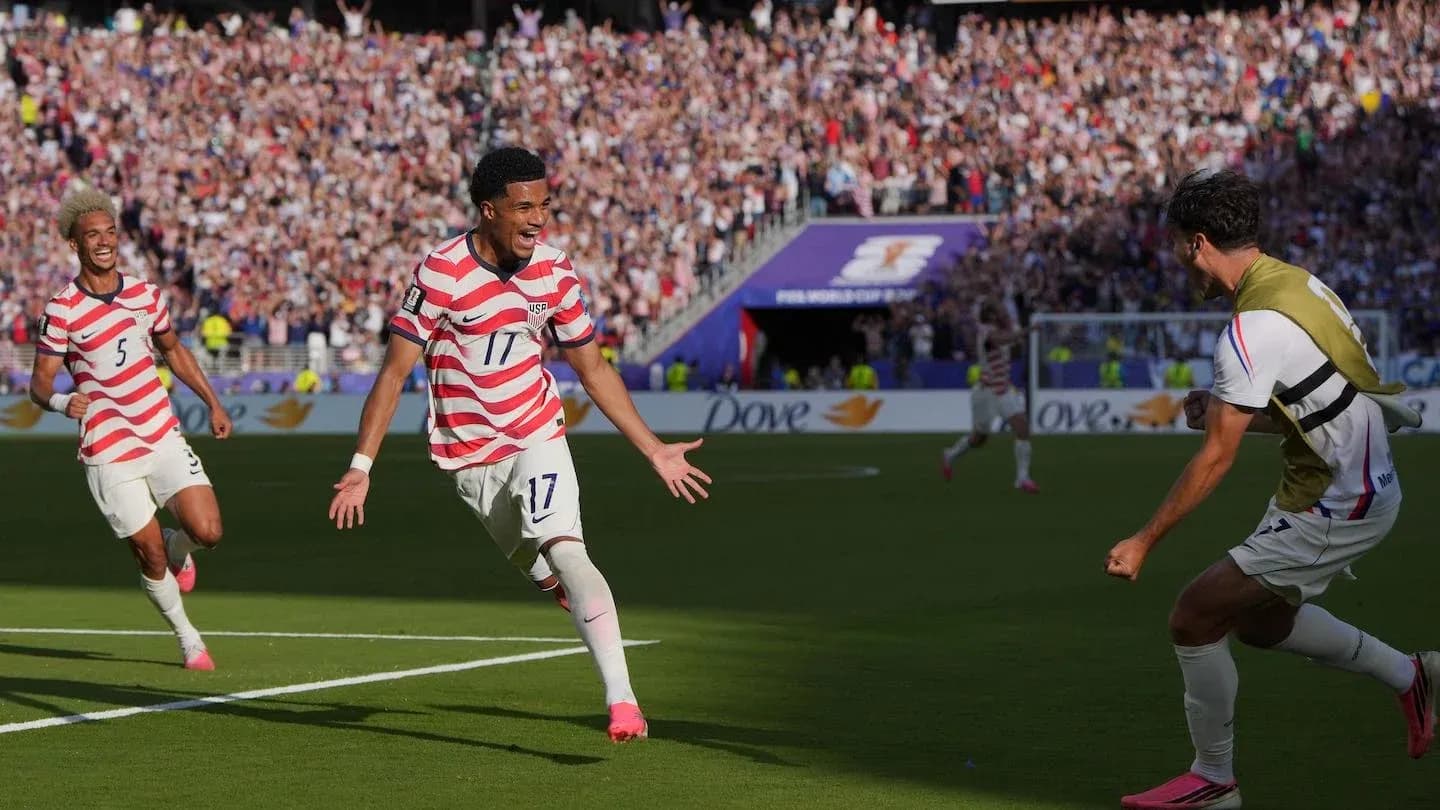
Final Score: USA 2–0 Bosnia & Herzegovina
By full time, the scoreboard read USA 2–0 Bosnia & Herzegovina, a result that felt like the logical extension of both teams’ seasonal DNA. USA had already built a profile as front‑foot hosts: heading into this game they had played four World Cup matches, winning three and losing one. All three wins had come “at home” in World Cup terms, with USA scoring 8 goals at home and only conceding 1. Their home attacking average stood at 2.7 goals per game, while they allowed just 0.3 at home. On their travels they had been more fragile, scoring 2 and conceding 3 in a single away outing, but Levi’s Stadium suited them: it was another night when their high‑octane, crowd‑driven version of the tournament took center stage.
Bosnia & Herzegovina, by contrast, had lived a split personality. Overall they had played four matches, with one win, one draw, and two defeats. At home they had been dangerous, scoring 3 and conceding 1 in a single game, an attacking average of 3.0 and a defensive average of 1.0. But away from home they were brittle: across three away fixtures they had scored just 2 goals and conceded 7, averaging 0.7 for and 2.3 against. This Round of 32 clash, played “on their travels”, always threatened to expose that away‑day fragility.
Lineups
Mauricio Pochettino leaned into USA’s established identity, naming a bold 4‑3‑3. M. Freese started in goal behind a back four of S. Dest, C. Richards, T. Ream and A. Robinson. In front of them, W. McKennie, T. Adams and M. Tillman formed a dynamic midfield triangle designed to compress the center and spring transitions. Up front, F. Balogun led the line between C. Pulisic cutting in from the left and Dest pushing high on the right, effectively turning the nominal full‑back into a wide forward.
Pochettino’s hand was not completely free. USA’s depth chart had been thinned by the absence of M. McKenzie (bruised foot) and C. Roldan (muscle bruise), both ruled out of this fixture. Neither is a nailed‑on starter, but in a knockout tie their flexibility would have been useful: McKenzie as a left‑sided defensive option for back‑three switches, Roldan as a plug‑and‑play midfielder or wide shuttler. Their absence nudged Pochettino toward trusting the ball‑playing axis of Ream and Richards and leaning heavily on Adams as the single pivot.
On the opposite bench, Sergej Barbarez adjusted to the occasion by rolling out a 5‑3‑2. N. Vasilj was shielded by a back five of A. Dedic, N. Katic, T. Muharemovic, S. Radeljic and S. Kolasinac. In midfield, A. Gigovic, I. Sunjic and K. Alajbegovic formed a compact trio behind the veteran strike pair of E. Dzeko and E. Demirovic. It was a clear statement: Bosnia & Herzegovina, who had mostly operated in a 4‑4‑2 across the tournament, were willing to sacrifice a wide midfielder to create a third center‑back and try to smother USA’s wide overloads.
Discipline and Tactical Picture
Discipline loomed large over the tactical picture. Across the tournament, USA’s yellow cards had been spread but clustered most notably between 46–60 minutes (40.00% of their yellows) and with smaller spikes at 16–30, 76–90 and 91–105 minutes (each at 20.00%). Their single red card had arrived between 61–75 minutes. Bosnia & Herzegovina, meanwhile, had shown a worrying tendency to unravel late: 37.50% of their yellows had come from 76–90 minutes, with another 25.00% between 46–60, and their only red card had also arrived between 76–90 minutes. In a knockout environment, those patterns hinted at a key intersection: USA’s habit of ramping up intensity after the break against a side prone to late‑game disciplinary lapses.
That dynamic fed straight into the “Hunter vs Shield” matchup. F. Balogun entered the Round of 32 as USA’s spearhead and one of the World Cup’s most efficient forwards. Over three appearances and 225 minutes he had scored 3 goals from 8 shots, 4 of them on target, posting a rating of 7.23. He had drawn 7 fouls and committed only 3, living permanently on the defensive shoulder. His duels record (27 contested, 10 won) and dribble profile (7 attempts, 3 successful) underlined a striker who relishes contact and chaos in the box.
Opposite him, Bosnia & Herzegovina’s “shield” was really a collective that had struggled under sustained pressure. Overall they had conceded 8 goals in four matches, with 7 of those coming away from home. Their biggest away defeat, a 4‑1 loss, reflected what happens when their back line is stretched and forced to defend large spaces. Within that unit, T. Muharemovic was a standout individual defender. Across the tournament he had played 260 minutes, making 8 interceptions, 1 successful block and winning 16 of 24 duels, while completing 84% of his 157 passes. Yet he also carried a red card in his record, underlining the fine line he treads between assertive defending and over‑aggression.
Engine Room Battle
The “Engine Room” battle was no less decisive. USA’s midfield blend of Adams, McKennie and Tillman offered bite, distribution and vertical running. Adams’ role as the screening pivot was central to protecting a defense that, overall, had conceded just 4 goals in four matches and kept 2 clean sheets, both at home. McKennie, arriving late into the box and contesting second balls, was the chaos agent Bosnia & Herzegovina’s more rigid 5‑3‑2 had to track. On the other side, I. Sunjic and A. Gigovic were tasked with compressing central spaces, denying USA’s midfield time to turn and feed Balogun and Pulisic.
From a statistical prognosis standpoint, the trends always leaned toward USA. Heading into this game they averaged 2.5 goals per match overall, with a defensive average of 1.0 conceded. Bosnia & Herzegovina, by contrast, averaged 1.3 goals scored and 2.0 conceded overall, with a stark drop‑off in away attacking output and a spike in away defensive vulnerability. Neither side had taken or missed a penalty in the tournament, so the margins were always more likely to be found in open play structures and discipline than in spot‑kick variance.
The 2–0 scoreline ultimately mirrored those underlying numbers. USA’s attacking rhythm and home‑field profile translated into sustained pressure, especially in the period after half‑time where their historical card and intensity spikes lie. Bosnia & Herzegovina’s defensive effort, anchored by Muharemovic and Kolasinac, could not fully contain Balogun’s movement nor the constant rotations between Dest, Pulisic and McKennie.
Following this result, USA’s World Cup narrative continues as that of a high‑scoring, front‑foot side whose 4‑3‑3 is now firmly imprinted on the tournament. Bosnia & Herzegovina exit with their split identity intact: dangerous in flashes, particularly at home, but ultimately undone by away‑day frailty and the inability to keep clean sheets when the pressure rises in the final third of major tournament matches.