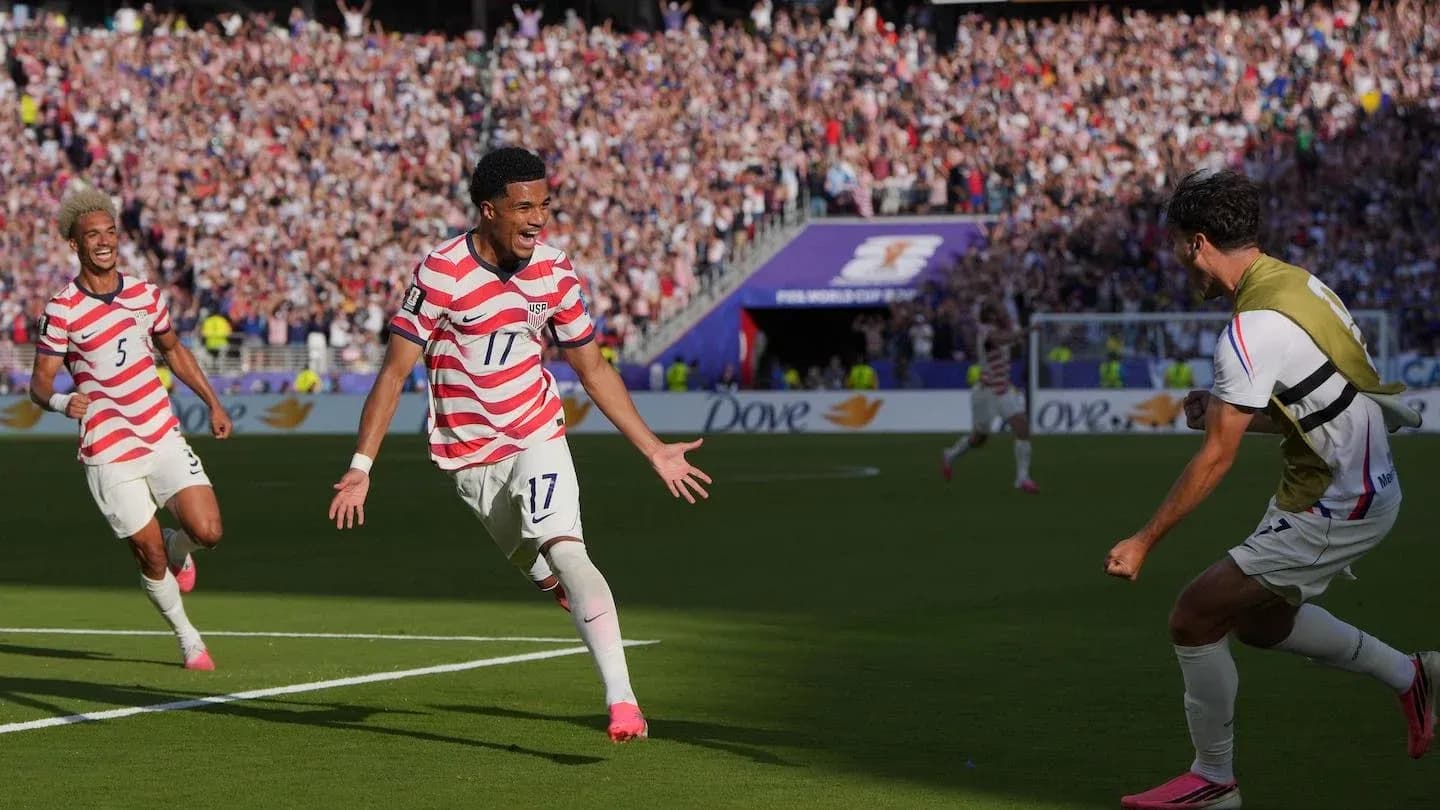
USA Controls Match for 2-0 Victory Over Bosnia & Herzegovina
USA’s 2-0 win over Bosnia & Herzegovina at Levi's Stadium in this World Cup Round of 32 tie was defined less by volume of chances and more by control of key moments. USA built their victory on a 4-3-3 structure that maximized central stability and wide threat, while Bosnia & Herzegovina’s 5-3-2 offered more of the ball but far less penalty-box clarity. The match turned on sharp execution at the end of the first half and in the final quarter-hour, plus a disciplined defensive response after going down to ten men.
USA’s 4-3-3 was clearly ball-oriented rather than possession-obsessed. With 48% of the ball and 415 passes (346 accurate, 83%), Mauricio Pochettino’s side focused on verticality and timing. Tyler Adams anchored the midfield as the single pivot, with Weston McKennie and Malik Tillman stepping higher to connect with the front three. The full-backs, Alexander Freeman on the right and Antonee Robinson on the left, provided width while the nominal wide forwards, Sergiño Dest and Christian Pulišić, frequently moved inside to attack the half-spaces.
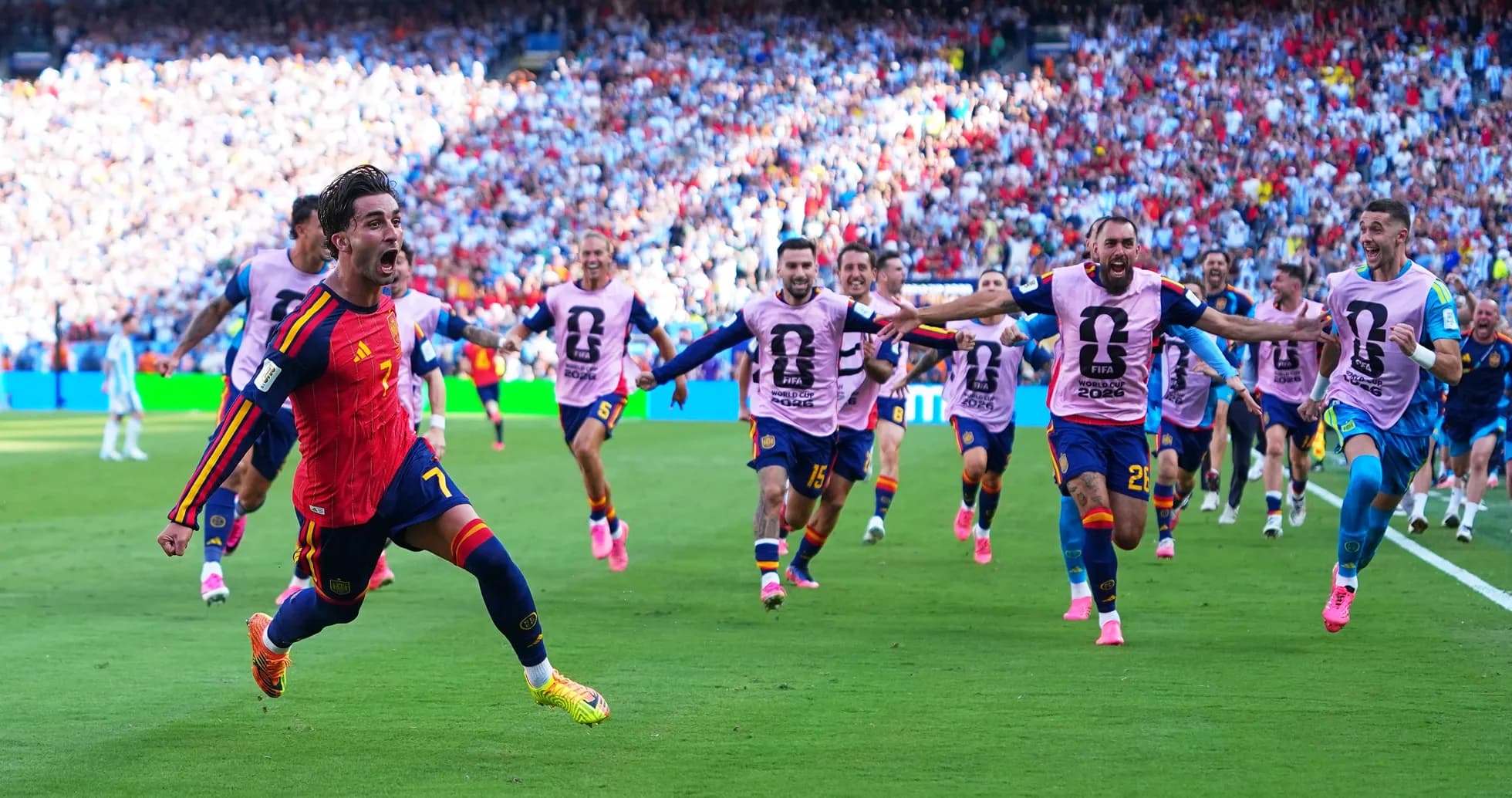
This structure produced a shot profile that was modest in volume but efficient in territory: 8 total shots, 6 from inside the box, and only 2 blocked. The expected goals figure of 0.92 underlines that USA did not flood Bosnia & Herzegovina’s area but did reach good positions when they chose to attack. Folarin Balogun’s goal at 45' epitomized this: a late-half surge where the front three and advanced midfielders pinned the back five deep, allowing Balogun to finish one of the few but clean looks on goal.
Out of possession, USA were compact rather than hyper-aggressive. Seven fouls and three offsides suggest a side managing the line carefully, stepping up to compress space between defense and midfield rather than flying into duels. Chris Richards and Tim Ream formed a composed central pairing, protected by Adams’ screening. The defensive shape was tested more after the 64' red card to Balogun (“Serious foul”), which forced USA into a deeper 4-4-1/4-5-0 hybrid without a clear central reference up front.
From that point, USA’s tactical emphasis shifted decisively to game management. With ten men, they ceded more of the ball but remained structurally sound. Bosnia & Herzegovina finished with 52% possession and 446 passes (364 accurate, 82%), yet their 10 total shots yielded only 0.25 xG – a striking indicator of how effectively USA kept them to low-quality areas. The back four compressed the box, while the midfield line dropped to deny central lanes into Edin Džeko and Ermedin Demirović before Džeko was withdrawn on 51'.
The second goal at 82', scored by Malik Tillman, showcased USA’s transition threat even a man down. With Bosnia & Herzegovina pushing more bodies forward out of their 5-3-2, spaces opened between their midfield and defense. USA exploited one such gap with a direct, vertical attack that allowed Tillman to arrive from midfield and finish, effectively killing the contest despite the numerical disadvantage.
In goal, Matthew Freese (USA) had a quietly important night. USA’s statistics show 3 saves and a goals prevented figure of -1.73. The negative goals prevented value, despite a clean sheet, suggests that the model rated the conceded shot quality as relatively low, but it also underlines that Freese was not required to produce spectacular interventions; the defensive block in front of him restricted Bosnia & Herzegovina to largely manageable efforts. On the other side, Nikola Vasilj (Bosnia & Herzegovina) did not record a save, with USA’s 2 shots on target both ending in goals. That, combined with an identical -1.73 goals prevented value, points to clinical finishing from USA rather than sustained pressure.
Bosnia & Herzegovina’s 5-3-2 under Sergej Barbarez was structurally conservative but lacked progression once USA settled into their block. The wing-backs, Amar Dedić and Sead Kolašinac, had to balance depth against Pulišić and Dest with the need to advance; too often they remained pinned, leaving the front two isolated. The midfield trio of Armin Gigović, Ivan Šunjić and Kerim Alajbegović circulated possession but struggled to play through USA’s central congestion. The shot map – 5 attempts from inside the box, 5 from outside, 3 blocked – indicates that when Bosnia & Herzegovina did reach the final third, USA’s defenders were well-positioned to step out and block or force low-percentage efforts.
Discipline and physicality also framed the tactical battle. Bosnia & Herzegovina committed 13 fouls and received 1 yellow card for Stjepan Radeljić at 80' (“Holding”), while USA, with only 7 fouls, suffered the more consequential sanction via Balogun’s red. That red card could have tilted control, but Bosnia & Herzegovina’s response was more territorial than incisive; their possession advantage did not translate into clear chances because USA’s mid-block remained compact and the Bosnian back line was reluctant to fully commit numbers forward, wary of USA’s counter-attacking speed.
Set plays offered limited differentiation: USA had 4 corners to Bosnia & Herzegovina’s 3, but neither side carved out decisive set-piece xG. Offside numbers – USA’s 3 versus Bosnia & Herzegovina’s 0 – reflect USA’s willingness to play on the shoulder and stretch the last line, particularly in the first hour before the dismissal.
In statistical terms, the match reads as a controlled, professional knockout performance from USA. They created slightly better chances (0.92 xG to 0.25), were more efficient with their shots on goal (2 shots on target, 2 goals), and defended their box with enough structure that Freese (USA) was not overworked despite Bosnia & Herzegovina’s territorial edge. Bosnia & Herzegovina’s higher possession and passing volume did not overcome their lack of vertical penetration against a disciplined 4-3-3 that adapted intelligently after going down to ten men. The 2-0 scoreline, home team first, accurately reflects a contest where USA managed moments and space better, rather than one dominated by sheer attacking volume.