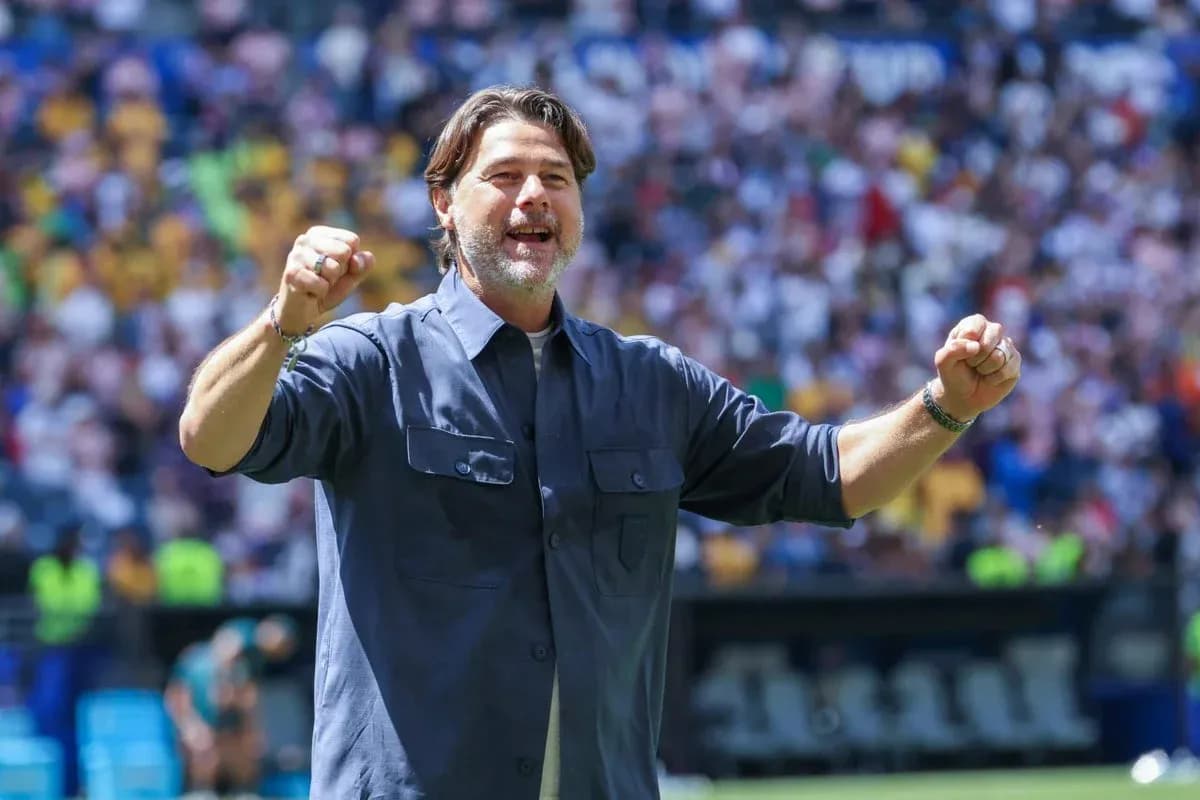
U.S. Soccer's Proposal for Pochettino: A Long-Term Vision for 2030
U.S. Soccer has put its cards on the table. Mauricio Pochettino has a formal proposal in front of him to stay with the USMNT for a second World Cup cycle through 2030 — but no one will touch the final decision until the 2026 tournament is over.
The Argentine’s current deal runs only through this World Cup on home soil. Yet for months, according to sources briefed on the talks, the federation has been in regular contact with Pochettino, outlining a four-year extension and making clear they want him at the center of their long-term project.
The offer landed before a ball was kicked this summer. A signal, more than a negotiation. A way of saying: we want you here, beyond the party we’re hosting now.
Everyone agreed on one thing: wait. Performances at a home World Cup were always going to shape the future. For Pochettino. For the federation. For the entire direction of the program. But U.S. Soccer also knew that if they stayed silent, their coach could be a free agent within weeks, with Europe ready to pounce.
Dream start, rising stakes
On the pitch, Pochettino has done his part to complicate the decision.
The USMNT has surged into the round of 32, beating Paraguay and Australia and turning Thursday night’s loss to Turkey into a dead rubber. Expectations have already been exceeded. The draw looks inviting. A country that usually braces for disappointment is now daring to imagine a deep run.
Every win increases his leverage. Every performance strengthens the argument that this is a project worth staying for.
And this isn’t just about another World Cup cycle. The next four years in American soccer are loaded: a home Olympic Games in Los Angeles, a Copa America expected to be staged in the United States in 2028 with the USMNT involved, and the opening of a $250 million national training center in Atlanta that will serve as the federation’s flagship base.
For a coach obsessed with structure, development and environment, it is a tempting playground.
Power, influence and a long runway
If Pochettino signs on, he would gain more than job security.
The extension would give him greater influence over the national team’s broader ecosystem: shaping the pathway from youth teams to the senior side, having a say in player development, and contributing to coach education — an area he has long taken seriously.
The federation sees him not just as a tactician for matchdays, but as an architect for an entire era.
To support that vision, U.S. Soccer has been in constant dialogue with donors and sponsors to ensure it can continue to compete financially for elite coaching talent. This is not a federation content to shop in the bargain aisle. Before hiring Pochettino in September 2024, they held talks with Jurgen Klopp, a clear statement of intent about the level they want to operate at.
Money, Milan and the pull of Europe
The market knows Pochettino’s value.
It emerged before this World Cup that he had spoken with AC Milan in late May. Chief executive JT Batson framed that as the cost of doing business in “the big leagues” with an in-demand manager whose CV includes Chelsea, Tottenham Hotspur and Paris Saint-Germain. If he keeps impressing on the biggest stage of all, those calls will not stop. They will multiply.
Financially, U.S. Soccer has stepped up. A historical tax filing covering April 1, 2024 to March 31, 2025 projected Pochettino’s pro-rated base salary at around $4 million, with bonuses and incentives pushing his annual take into the $5-6 million range in a non-World Cup year. An extension would keep him among the best-paid international coaches on the planet and competitive with the upper tier of European club offers, if not the stratospheric wages of the very richest clubs.
His current deal was made possible in “significant part” by a philanthropic leadership gift from Ken Griffin, the Citadel founder and CEO, with additional backing from Scott Goodwin of Diameter Capital and several commercial partners. That model will likely underpin any new agreement as well.
Still, the question lingers: does Pochettino want another extended spell in international football, with its long gaps between games and slow-burn projects, or does he crave the daily rhythm and relentless pressure of a top European club?
A coach weighing legacy
At 54, he stands at a crossroads.
The assumption in some quarters was that he would bolt back to club football as soon as the World Cup ended, especially after sporting director Matt Crocker — the man who worked with him at Southampton and helped bring him to U.S. Soccer — left abruptly for a role in Saudi Arabia in April.
Yet Pochettino has been careful not to close any doors.
“It’s difficult to describe or know your future,” he said this week. “But when you are here, I think it’s difficult now to see yourself living in another place, because for sure, we will miss it if one day we don’t stay here in this country.”
“We told the federation we are open,” he added, “but we don’t want to distract when all the energy needs to be with my players.”
There is something else tugging at him too: the idea of building something that lasts.
“If the American people start to show passion in our sport too, why not be here being part of something that can create a legacy?” he said in an interview with several outlets. “The legacy is not to win the World Cup. Of course, we want to win, but that [connection] is the legacy we need if one day we want to be very successful and be consistent. Why not be part of that?”
That is the pitch, laid out in his own words. A country awakening to the sport. A home World Cup as a launchpad, not a one-off. A coach who has managed some of Europe’s giants, now tempted by the chance to leave fingerprints on an entire football culture.
U.S. Soccer has made its move. The nation waits to see whether the man at the heart of this World Cup surge decides that his greatest work in America is still to come.