
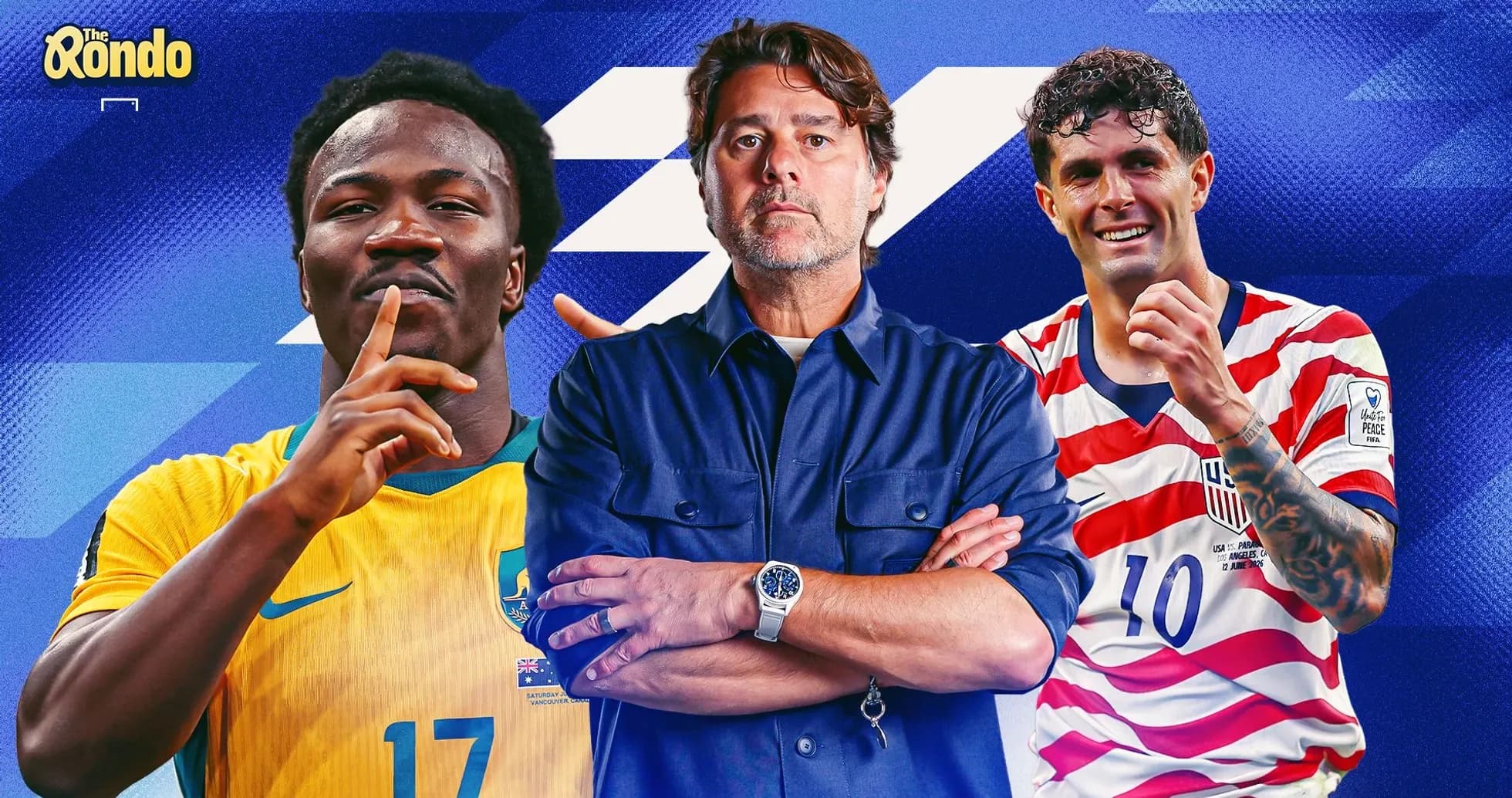
U.S. Soccer: Expectations and Challenges Against Australia
The United States walk into this one as clear favourites. Nobody on the pundit desk is really dancing around that. After dismantling Paraguay, the expectation is simple: repeat that level and Australia should be handled.
But this isn’t being billed as a stroll. It’s being billed as a test of nerve.
Tom Hindle doesn’t see much jeopardy in the result itself. For him, the gulf in quality is obvious. The U.S. were “simply too good” against Paraguay, and if they hit anything close to that standard again, this should be “comfortable enough.” The pre-game chatter has added some edge, a bit of needle, but in his eyes the U.S. still have “a bit too much on the day.”
Ryan Tolmich agrees on the outcome, not on the route. He expects a scrap: physical, tight, decided by game-changers. Australia have a few. Nestory Irankunda showed exactly that against Turkey. The difference, in Tolmich’s view, is volume. The USMNT just have more players capable of flipping a match in a moment. They’ve also had the benefit of watching Turkey get punished for their own arrogance. Lesson learned, he suggests; they won’t stroll into this one half-awake.
Alex Labidou leans the same way: U.S. win, but not without drama. He can see it going to the wire, a late moment deciding it, with Gio Reyna extending what he calls a redemption arc. The message from all three is consistent: the U.S. should win. The path there might be far from smooth.
The Pulisic dilemma
Then comes the complication that can flip any script: Christian Pulisic’s fitness.
Hindle doesn’t sugarcoat it. “Losing your best player ain’t good.” The U.S. might have depth at striker, but Pulisic is the one who stitches everything together. Without him, this is not the same team. The intrigue, he says, is in how Mauricio Pochettino plays it. Does he risk his star, try to secure the win, and then rest him in the final group game? Or does he take the long view and park him on the bench? Hindle’s instinct would be to play him, then “wrap him in cotton wool for two weeks,” but Pochettino is the one making that call.
Tolmich is bluntly “pretty concerned.” Australia will be hard to break down, and there are few in this squad who can unpick a defence like Pulisic. The opening goal in the last match underlined that: one moment of individual quality to create something from nothing. On Friday, Sergiño Dest was asked who the best 1v1 attacker in the USMNT is, after himself. His answer was immediate: Pulisic. If the captain can’t go, someone else has to find a way to make Australia deeply uncomfortable.
Labidou takes a wider lens. He believes the U.S. should still have enough to beat Australia without Pulisic. The real worry is what comes after. This feels like a tournament where the Americans could do something special, push into a new tier. To do that, they need their best player fit and firing, not limping through the early stages.
Australia’s wild card
This Australia side is an odd one. As Hindle points out, it’s a “weird generation” in that there aren’t many names shining at the top end of the Premier League. That can skew perception. The sport’s lens is “painfully Eurocentric,” and just because these players aren’t weekly fixtures in England doesn’t make them “rubbish.”
One name cuts through the noise: Nestory Irankunda.
Hindle calls him a livewire on the left, the kind of winger who will keep Dest busy all night. Tolmich goes even further. He labels Irankunda the obvious breakout threat against a U.S. back line that has been “a little bit sloppy” in recent months and has a known weakness: pace in behind.
If Irankunda gets into a straight sprint with Tim Ream, Tolmich asks, how does that end? Everyone knows the answer. Chris Richards is just back from an ankle injury, the fullbacks love to bomb on, and that leaves space. Irankunda is exactly the type of player who can explode into it. If he breaks out, Tolmich warns, “he’ll break out fast.”
Labidou, while agreeing on Irankunda’s danger, shifts the spotlight to the other end of the pitch. He picks Mathew Ryan as a potential difference-maker. The veteran keeper has been talking confidently all week about Australia’s chances. Against Paraguay, Matt Freese barely faced a serious test. If this tightens into a match where a single save swings everything, Ryan’s experience at a high European level could suddenly loom large.
U.S. match-winners under the microscope
If Australia dig in with a back five, as expected, this becomes a day for U.S. difference-makers in the final third.
For Hindle, the answer starts with the obvious: Pulisic. But he wants more from Malik Tillman. The Leverkusen midfielder’s off-ball work against Paraguay was “elite,” his pressing and positioning top notch, yet he didn’t quite deliver when the ball arrived at his feet. A goal or an assist here, Hindle argues, could change everything for his confidence.
Tolmich circles Folarin Balogun. Paraguay offered space; Australia probably won’t. Balogun has to adjust to a match that’s tighter, more congested, and still find a way to shoulder attacking responsibility, especially if Pulisic is limited or absent. He can do it by scoring himself or by knitting the attack together, bringing others into the game. Either way, his role becomes central.
Labidou returns to Tillman, particularly if Pulisic is sidelined or short of full sharpness. He notes that Pochettino may have unlocked something new by dropping the prototypical No. 10 into a No. 8 role. If Tillman keeps this form going, Labidou believes the Americans “should have no issues locking up the group.”
That’s the bar now. Not just winning, but winning in a way that underlines control of the group.
The cost of a misstep
So what if they don’t?
Hindle calls a loss “bad, but not the end of the world.” In many tournaments, three points can still be enough to escape a group. But momentum matters. You don’t want to walk into the final group game needing a result, and certainly not needing a win. Better to “get it done early.”
Tolmich is harsher. For him, dropping this one would be “pretty bad.” It would make topping the group extremely difficult and open up the possibility of a date with Argentina later on. This match, he says, “sets up the entire rest of the tournament” for this team. Fail here, and the path gets steep in a hurry.
Labidou zooms out to the bigger picture of U.S. Soccer. A defeat wouldn’t be “devastating,” but it would feel familiar. Two decades of near-misses, of chances to take the next step only to stumble at the wrong moment. This program needs the USMNT to win the group, to prove that the investment in Pochettino is justified and that this team can finally progress beyond promise into proof.
The stakes, then, are layered. On paper, it’s a match the United States should win. On the pitch, it’s a test of depth without Pulisic, of defensive discipline against Irankunda’s pace, of whether this group can seize a moment that has slipped away too often before.
Get it done now, and the road ahead opens up. Fail, and the old questions come roaring back.



