U.S. Men's National Team Faces Paraguay in World Cup Opener
INGLEWOOD, Calif. — The World Cup is back in the United States, and this time there are no excuses.
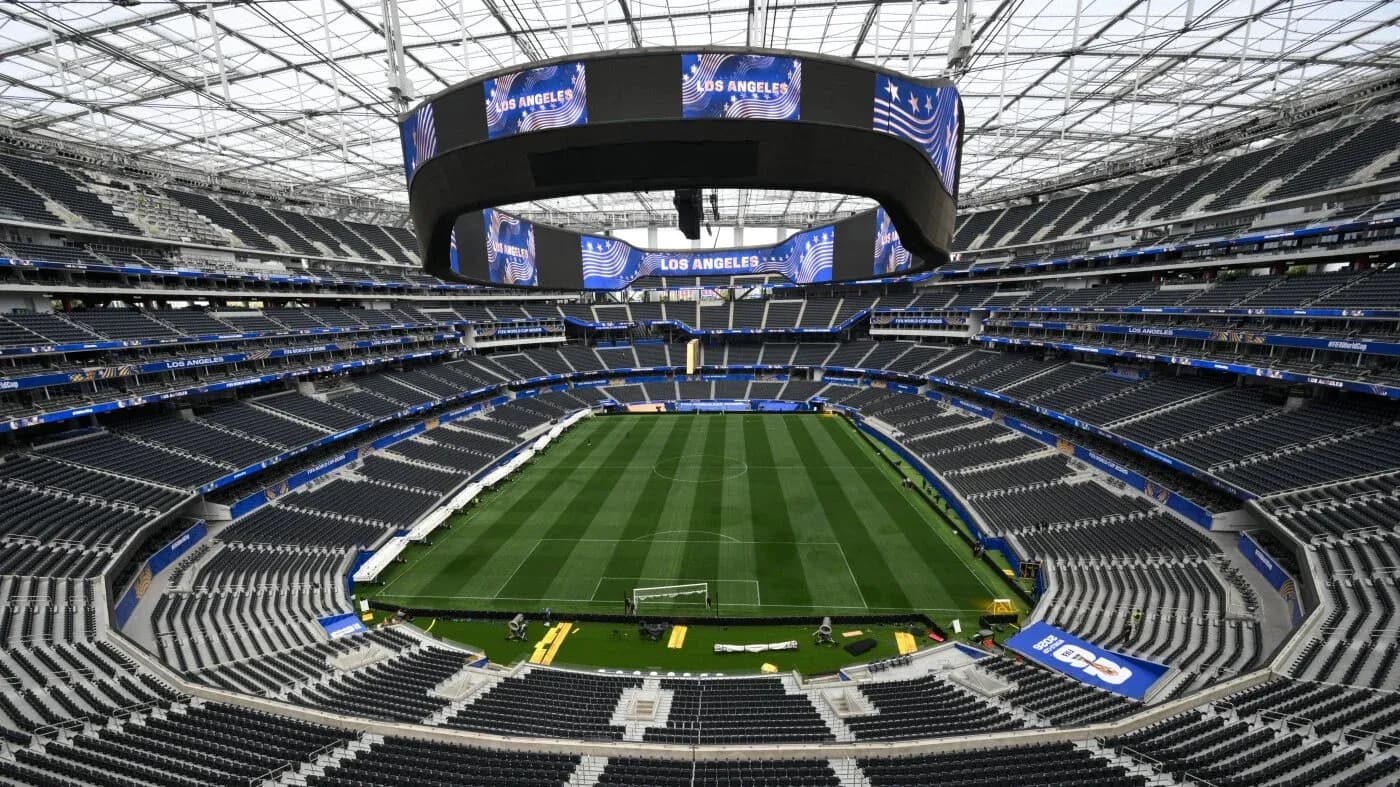
Under the glow of Southern California floodlights on Friday night, the U.S. men’s national team walks into a moment it has been chasing for nearly a decade: a home World Cup opener against Paraguay, and a chance to finally step out of the sport’s supporting cast and into its main storyline.
This is not 1994 revisited. The game has changed. So has the country. And so, unmistakably, has the U.S. team.
A generation built for this stage
For years, American soccer spoke in future tense. One day the players would go abroad. One day they would start for the giants of Europe. One day the team would belong on the same field as the traditional powers.
That day has arrived.
For the first time in its history, the U.S. enters a World Cup with its core players not just surviving but thriving in Europe’s elite leagues. Tyler Adams, Chris Richards and Antonee Robinson are entrenched in the unforgiving grind of the Premier League. Weston McKennie is a trusted figure at Juventus. Christian Pulisic, no longer the teenage prodigy but a 27-year-old centerpiece, has been reborn as a star at AC Milan.
They are not tourists in those dressing rooms. They are central pieces.
“This is for me the biggest opportunity to grow the game, to inspire people, to show that American players are at the level of the rest of the world,” Adams said on Thursday, framing the tournament as something larger than a month of matches.
That ambition collides with a sobering record. Since that quarterfinal run in 2002, the U.S. has managed only three World Cup wins in total. For all the investment, for all the talk of “the project,” the modern benchmark remains two decades old.
Hosting the 2026 tournament was always supposed to change that. U.S. Soccer circled this World Cup long before FIFA’s ink dried, betting that its rising generation would peak just as the world arrived on American soil. The bet now gets tested in real time.
A bruising opener
Paraguay, ranked No. 40 by FIFA, will not arrive in Inglewood to play the role of polite guest.
The two sides met in a friendly last November, a 2-1 U.S. win that dissolved into a stoppage-time scuffle. The tape from that night will not need much explanation in the American film room.
“We know that they’re gonna be super, super aggressive, so we’re going to have to match that. We saw that the last time we played them,” forward Tim Weah said, summing up what awaits.
Paraguay’s edge may be dulled by misfortune. Their brightest young talent, 22-year-old midfielder Julio Enciso, was stretchered off in the first half of their final warm-up match last week and is a major doubt for the opener. If he cannot go, Paraguay lose a key creative spark, but their identity will not soften. This is a team that leans into physical duels, lives off chaos, and drags opponents into uncomfortable games.
For the U.S., that may be the perfect early examination. A side that wants to prove it belongs among the world’s elite must first show it can handle a scrap on home turf.
A group with no hiding places
The stakes extend well beyond one night in California. After Paraguay, the U.S. faces Australia next week before closing the group on June 25 against Turkey. It is a slate with no obvious soft landing and no room for early complacency.
Win the opener, and the path through the group sharpens into focus. Drop points, and the pressure of a home World Cup tightens quickly, especially on a squad carrying the weight of a country’s expectations and the burden of its own rhetoric.
The setting, though, is exactly what this generation has craved: a World Cup on American soil, a roster stacked with players hardened by Europe’s biggest stages, and a fan base that no longer sees itself as an outsider in the world’s game.
The World Cup has come back to the United States. Now the question hangs over Inglewood and over an entire summer: is this finally the moment the U.S. stops talking about potential and starts delivering on it?