U.S. Men's National Team Advances with Convincing Win Over Australia
SEATTLE — No Christian Pulisic. No problem, at least for now.
The U.S. men’s national team marched into the World Cup knockout rounds on Friday night with a controlled, convincing 2-0 win over Australia, a result that underlined the depth of this squad and delivered a small piece of tournament history.
For the first time, the Americans have secured a place in the knockouts after just two group matches. No waiting on calculators. No nervy final-day permutations. Job done early.
Life without Pulisic
The storyline before kickoff at a buzzing Seattle venue was simple: no Pulisic, no certainty. The AC Milan forward, owner of 33 goals in 87 international appearances, sat out with a calf injury, leaving a creative and emotional void.
What followed was a clear answer from the rest of the locker room.
From the opening whistle, the U.S. played on the front foot. Folarin Balogun, fresh off his two-goal display in the 4-1 win over Paraguay on June 12, again drove the attack. His direct running down the left unsettled Australia’s back line and set the tone for the night.
The breakthrough came early. In the 11th minute, Balogun tore down the left sideline, cut inside and whipped a centering ball toward Ricardo Pepi, starting in Pulisic’s place. The pass never reached its target. Instead, it clipped defender Cameron Burgess and spun past the helpless goalkeeper for an own-goal and a 1-0 U.S. lead.
It wasn’t pretty. It was ruthless. And it was exactly what the Americans needed.
Freeman steps into the spotlight
With the advantage, the U.S. tightened its grip on the match. Australia tried to settle, but the American press kept the Socceroos pinned for long stretches, forced into hurried clearances and hopeful diagonals.
Then came the moment that may linger far beyond this group stage.
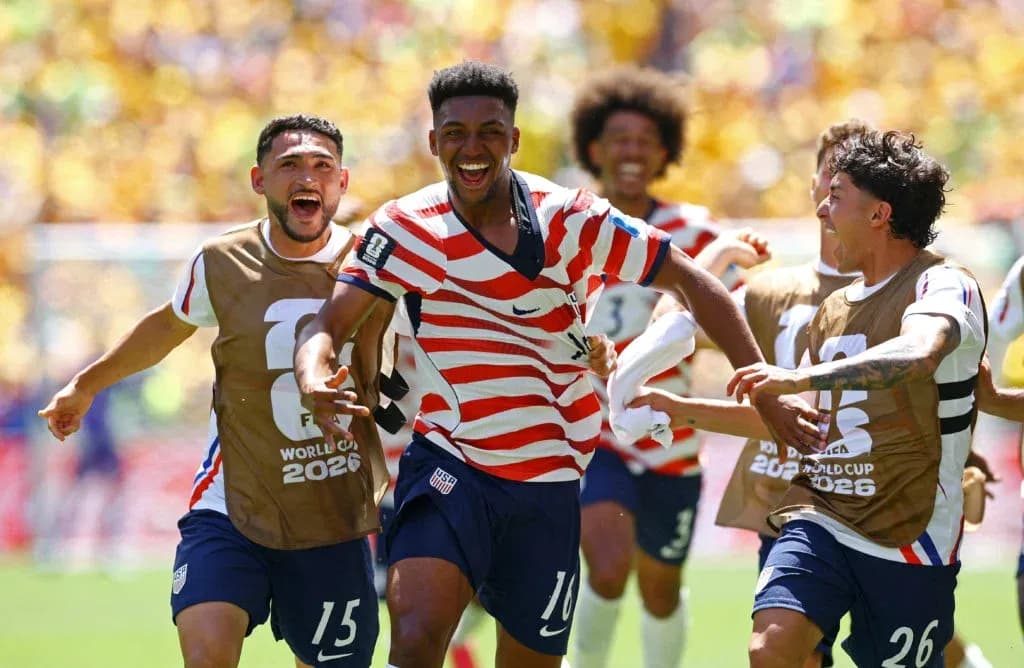
In the 43rd minute, the youngest player on the team, 21-year-old Alex Freeman — son of former Super Bowl champion Antonio Freeman — rose to meet the occasion and the ball. Off a set piece, Sergiño Dest’s effort took a deflection and looped dangerously into the box. Freeman reacted first, attacking the ball and driving a header into the net for a 2-0 lead.
It was his first World Cup goal, confirmed after a brief video review, and it felt like a statement: this isn’t just Pulisic’s team anymore.
The goal didn’t just double the score. It seemed to drain Australia. The U.S. walked to the dressing room at halftime with a two-goal cushion and a sense of control that rarely accompanies this tournament’s chaos.
A different kind of World Cup for the U.S.
Hosting the World Cup has not always brought this kind of assurance. In 1994, the last time the U.S. staged the tournament, the Americans squeezed through as one of the best third-place teams before falling to eventual champions Brazil in the round of 16.
This time, the path looks different. Two matches, two wins, knockout place secured. The group finale now becomes an opportunity to manage minutes, monitor Pulisic’s recovery and sharpen details rather than fight for survival.
Balogun again looked like a constant threat, even without adding to his Paraguay tally. Pepi’s movement created space. Dest’s involvement in the second goal underlined the importance of the fullbacks in this setup. More importantly, the collective handled the absence of its star without losing identity or intensity.
The U.S. will know tougher nights are coming. The knockout rounds always ask harder questions, expose weaker links, punish lapses that group play occasionally forgives.
But on a night when Pulisic’s name was on every pregame lips and absent from the team sheet, the rest of the squad provided the only answer that matters at a World Cup: they’re still here, still advancing, and no longer just along for the ride.