Tottenham vs Everton: A Goalless Draw Reveals Season Struggles
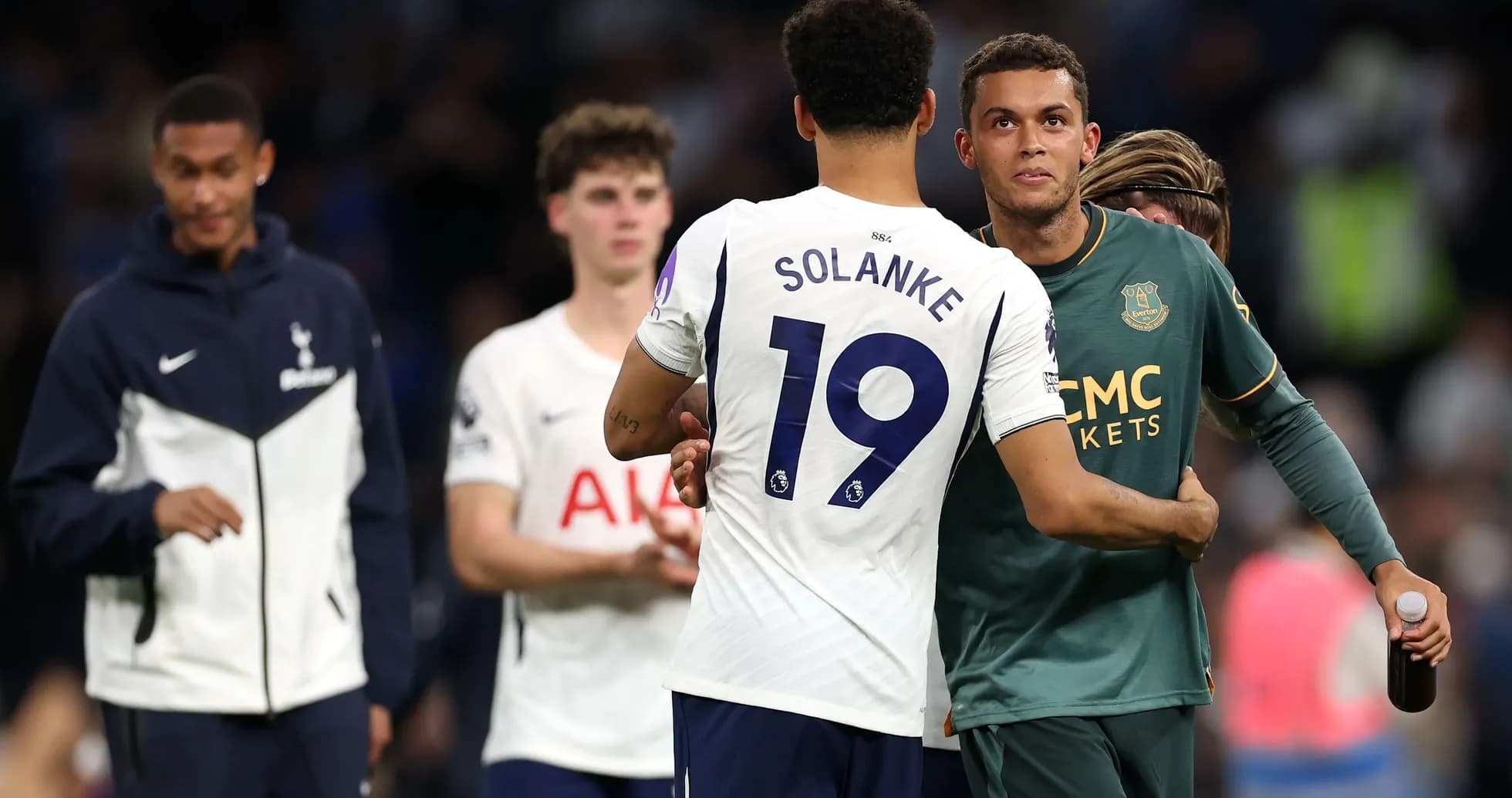
The evening at Tottenham Hotspur Stadium closed on a goalless draw, but beneath the 0-0 scoreline lay two very different stories of where these squads stand heading into the heart of the Premier League season. Tottenham, rooted in 17th with 2 points from 4 matches and a goal difference of -5, are still searching for an attacking identity. Everton, up in 8th with 6 points and unbeaten, continue to look like a side built on structure, discipline, and incremental gains.
Both managers leaned into familiarity, mirroring each other in a 4-2-3-1 that revealed as much about their constraints as their ambitions. For Roberto De Zerbi, the shape is supposed to be a platform for fluid, positional rotations; for David Moyes, it is a framework for compactness and transition.
Tottenham’s XI told the tale of a side patched together around absences. D. Kulusevski, M. Mudryk, W. Odobert and X. Simons were all missing through injury, while Richarlison was out due to transfer negotiations. Those are not just names; they are the very profiles De Zerbi would typically lean on to stretch a block, carry the ball between lines and threaten the box. Instead, the creative burden fell on a less-established attacking band behind D. Solanke.
A. Kinský in goal fronted a back four of A. Robertson, M. van de Ven, J. van Hecke and A. Gray. On paper, this is a back line capable of progressing the ball: Robertson as the aggressive outlet on the left, Gray offering width on the right, Van de Ven and Van Hecke tasked with stepping into midfield. In front of them, the double pivot of R. Bentancur and S. Tonali was designed to dictate tempo and connect third to third. Ahead, Sávio, Mateus Fernandes and Omar Marmoush supported Solanke as the lone forward.
Yet the numbers framing Tottenham’s season so far are stark. Heading into this game, they had played 4 league matches overall, failed to score a single goal in total, and averaged 0.0 goals for both at home and on their travels. They had been shut out in all 4 fixtures, and their total goals against stood at 5, with 2 conceded at home and 3 away. The goal difference of -5 is the pure arithmetic of a side whose attacking patterns are still theoretical rather than real.
The structure is there. Tottenham have already kept 2 clean sheets overall, one at home and one away, hinting at a defensive platform that is not entirely fragile. Their disciplinary profile also points to a team that tends to get dragged into scrappier phases late on: 40.00% of their yellow cards come between 76-90 minutes, the single most card-heavy period of their matches. It suggests a squad that tires or chases games late, forced into riskier challenges as control slips away.
Everton arrived in London with a very different emotional weight. Unbeaten in 4 league matches overall, with 1 win and 3 draws, they had scored 5 and conceded 3, giving them a positive goal difference of +2. At Goodison, they have been relatively expansive, scoring 4 and conceding 2 in 2 home games, an average of 2.0 goals for and 1.0 against. On their travels, they have been pragmatic: 1 goal scored and 1 conceded in 2 away matches, averaging 0.5 goals for and 0.5 against.
Moyes’ lineup reflected that balance. J. Pickford anchored a back four of A. Maitland-Niles, J. Tarkowski, J. Branthwaite and V. Mykolenko. In front, H. Armstrong and J. Garner formed a double pivot designed less for artistry and more for control and coverage. Ahead of them, B. Johnson, K. Dewsbury-Hall and Tyrique George worked in support of T. Barry.
The absence of C. Norgaard through injury removed a natural defensive metronome from Everton’s midfield, but Garner has been quietly central to their season. Across 4 appearances, he has logged 240 minutes, making 128 passes with 3 key passes and a 90% accuracy rate. His defensive output – 11 tackles and 2 interceptions – underpins Everton’s compactness, while his 2 yellow cards and presence in both yellow and red card leaderboards underline how often he operates on the edge of the contest.
Everton’s disciplinary curve is more evenly spread but still reveals a pattern. They see 28.57% of their yellow cards between 61-75 minutes, with additional clusters early (0-15) and late (76-90, and even 91-105). This is a side that increasingly fouls as the game stretches, often in that awkward third quarter where legs tire and spaces open.
Tactically, the “hunter vs shield” battle here is inverted. Tottenham’s nominal hunter, Solanke, is starved by a system that has yet to produce a single league goal. With no penalties awarded and thus none scored or missed this season, there is not even the crutch of set-piece variance to lean on. His duel is not so much with Tarkowski and Branthwaite as with his own team’s inability to create sustained, high-quality chances.
Everton, by contrast, bring a collective threat rather than a single prolific scorer, supported by a defensive shield that has conceded only 1 goal away from home. The centre-back pairing of Tarkowski and Branthwaite is built for aerial dominance and penalty-box defence, ideal against a Spurs side that, in the absence of Kulusevski, Mudryk and Simons, is more likely to resort to crosses and hopeful final balls.
The “engine room” contest between Bentancur–Tonali and Armstrong–Garner is where the tactical narrative crystallises. Bentancur and Tonali want the ball to live at their feet, drawing Everton out, rotating positions and releasing Sávio and Marmoush between the lines. Armstrong and Garner, by contrast, are tasked with narrowing those corridors, screening passes into Solanke and springing Johnson and Dewsbury-Hall on transition.
From a statistical prognosis, Everton’s defensive solidity and balance between home and away performances suggest they are better equipped to manage tight margins. With 2 clean sheets overall and only 0.8 goals conceded per game in total, they are comfortable in low-scoring scenarios like this one. Tottenham’s 1.3 goals conceded per match overall is not disastrous, but when paired with 0.0 goals scored, it creates a razor-thin margin where any mistake is fatal and any opponent with structure can suffocate them.
Following this result, the story for Spurs remains one of potential without end product. The shape, the names and the ideas are there, but until the missing attackers return and patterns in the final third solidify, they will continue to live on the edge of stalemates like this. Everton, meanwhile, will quietly bank another clean sheet and another point, their identity as a hard-to-beat, structurally sound side increasingly etched into this Premier League season.